Design Build Port Charlotte: Choose the Right Contract
Explore Our Services
Contact Us Today!
(239) 322-9295
Two homes can look similar at completion, yet the people responsible for getting there may be organized very differently.
If you're researching design build Port Charlotte options, you're likely comparing one company for design and construction against separate contracts with an architect and builder. That choice affects communication, pricing, schedule changes, and who handles problems when plans and field conditions don't match.
Neither approach is universally better. Your project type, design goals, available time, and comfort with coordination should guide the decision. Start by understanding what each contract actually places on your shoulders.
Design build Port Charlotte: Start with the contract
Design-build is a project delivery method. One company holds the primary agreement with the homeowner and coordinates both design services and construction. The company may hire or work with licensed architects, engineers, and specialty contractors for the parts that require their credentials.
Florida does not treat "design-build" as a stand-alone professional license. The people performing architectural, engineering, and contracting work still need the appropriate qualifications for their scopes.
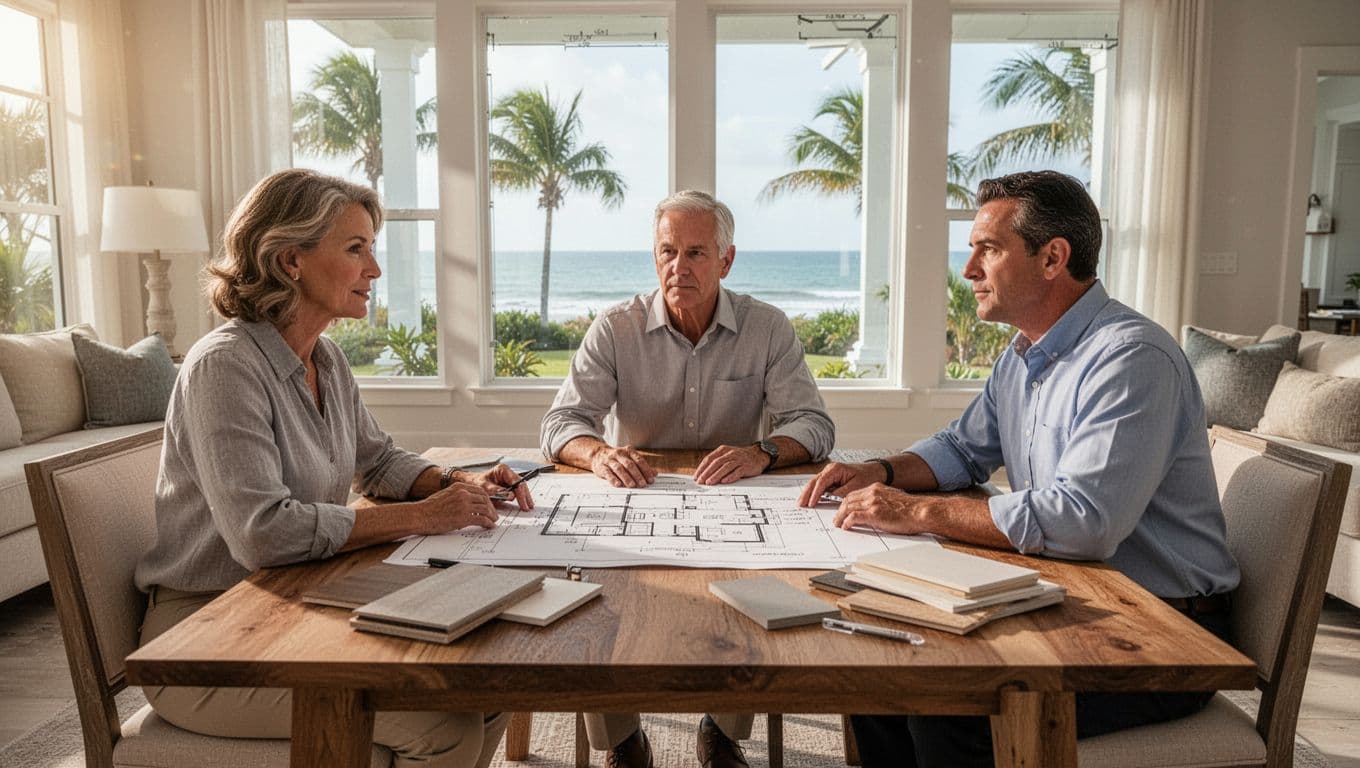
One contract places coordination with the design-builder
With a design-build agreement, the homeowner usually has one primary point of contact. That party coordinates design revisions, pricing, construction questions, subcontractors, and project updates.
This can reduce the number of handoffs. For example, if a roof detail affects framing or a pool location affects drainage and outdoor electrical work, the design-builder can bring the related parties together under one management structure.
However, one contract doesn't remove the need to read the details. The agreement should identify the architect or engineer, explain who prepares each document, and state how design changes, permit comments, and construction corrections are handled.
A design build Port Charlotte contract should also explain whether the builder fee applies to design changes, allowances, permits, supervision, deliveries, and change orders.
Separate contracts give the homeowner more direct control
Under the traditional approach, the homeowner hires an architect or designer first. The builder then prices the plans and signs a separate construction agreement with the homeowner.
The architect may help develop the design, coordinate engineering, prepare drawings, and assist with construction administration. The builder prices the work, manages construction, and hires subcontractors under the construction contract.
This structure can suit someone who wants an independent architect to lead the design. It can also work well for homeowners who have enough time to compare bids, attend meetings, review documents, and resolve questions between the design and construction teams.
The tradeoff is coordination. The homeowner often becomes the connection between the architect and builder, unless an owner's representative or another party takes that role.
Which option fits your Port Charlotte project?
The best choice depends on how much design involvement you want and how many moving parts the project contains. A custom home has different coordination needs than a roof replacement or a focused kitchen remodel.
Custom new homes often benefit from early builder input
A new home involves site planning, architecture, structural design, mechanical systems, electrical work, plumbing, permits, finishes, and exterior improvements. A pool, lanai, driveway, or landscaping plan may also affect the site layout and budget.
Design-build can fit homeowners who want construction input before the plans are complete. A builder may identify a difficult detail, a material lead-time issue, or a scope gap while the design team can still make changes.
This option also fits busy homeowners who prefer one company to organize meetings and questions. It can be useful when the project includes several related scopes, such as a new home with a pool and outdoor living area.
A separate architect and builder may suit homeowners with a strong design vision or a preference for an architect-led process. It may also appeal to someone who wants to complete the plans before requesting competitive construction proposals.
Remodeling, roofing, and pools need clear scope boundaries
Whole-home remodeling can uncover conditions that weren't visible during the initial design. Existing framing, electrical systems, plumbing, moisture damage, or prior work may change the scope after demolition.
A design-builder can coordinate those discoveries quickly, but the contract should explain how unknown conditions are priced and approved. A separate architect and builder can provide design independence, but the homeowner may need to coordinate revised drawings, pricing, and field decisions.
Roof replacement and repair usually have a narrower scope than a full home build. A separate architect may not be needed for every roofing project, although design or engineering services could apply when the work changes structure or involves a larger renovation.
Pool construction also needs clear boundaries. Confirm whether excavation, drainage, decking, screen enclosures, electrical work, landscaping, and final inspections are included. The phrase design build Port Charlotte may describe a broad service, but only the written scope tells you what the contractor actually agreed to provide.
Side-by-side comparison of both delivery methods
This comparison shows where the practical differences usually appear. The contract can change the result, so use it as a starting point rather than a substitute for reviewing the agreement.
| Topic | Design-build | Separate architect and builder |
|---|---|---|
| Primary agreement | One main contract with the design-builder | Separate contracts with the architect and builder |
| Coordination | The design-builder usually coordinates design and construction | The homeowner or owner's representative usually coordinates the gap |
| Design input | Builder input can begin during design | Builder often joins after plans reach a bidding stage |
| Pricing | May use fixed-price or cost-plus terms under one agreement | Design fees and construction pricing appear in separate agreements |
| Design conflicts | Homeowner contacts the design-builder first | Homeowner may need to bring the architect and builder together |
| Competitive bidding | May use selected subcontractors or negotiated pricing | Completed plans can be sent to multiple builders |
| Homeowner involvement | Often lower day-to-day coordination | Usually higher coordination and document review |
| Independence | Design and construction teams work within one delivery structure | Architect and builder have separate contractual relationships |
Design-build is not automatically less expensive, and separate contracts are not automatically more transparent. A cost-plus agreement can provide detailed visibility when it lists the builder fee, allowances, receipts, approvals, and credits. A fixed-price agreement can provide a defined price when the plans and scope are complete, but exclusions and allowances still matter.
Who handles errors, delays, and changes?
Responsibility depends on the contract, but the starting point differs between the two models.
In design-build, the design-builder usually carries the main coordination duty. If architectural drawings conflict with structural details or a construction decision requires a design revision, the homeowner generally brings the issue to the design-builder first. That does not mean the builder is responsible for every design error. Licensed architects and engineers remain responsible for the professional work within their scopes, while contractors remain responsible for their construction work.
With separate contracts, the homeowner may need to determine whether a problem comes from the drawings, construction, an owner-requested change, or an unknown existing condition. A design error may relate to the architect's contract. A workmanship issue may relate to the builder's contract. Some problems involve both parties, which can create delays while each side reviews its responsibility.
The same distinction applies to schedule changes. A design-builder may manage permit review, design revisions, subcontractor scheduling, and material changes through one project structure. With separate contracts, the homeowner may need to track how one delay affects the next party's work.
Ask for written start and substantial-completion targets. The agreement should also explain how it handles permit review, severe weather, material backorders, owner changes, and other delays that may affect the schedule.
Port Charlotte factors that deserve early review
Port Charlotte properties don't all have the same site conditions. Flood conditions, elevation, wind exposure, drainage, existing structures, utilities, and access can affect design decisions and construction scope.
Check the lot before finalizing the design
Before signing, confirm who will handle surveys, site plans, engineering, soil or drainage questions, utility coordination, and permit submissions. Ask whether those services are included, carried as allowances, or billed separately.
Port Charlotte is in Charlotte County, so permitting questions should be directed to Charlotte County Community Development. Requirements can vary by parcel and project scope, so avoid relying on assumptions based on a nearby home.
A detailed Southwest Florida preconstruction checklist can help organize site costs, design fees, permits, utilities, driveways, landscaping, pool plans, and contingency items before construction begins.
Connect the house, roof, pool, and outdoor work
A home project can become difficult to price when related work sits outside the main contract. For example, a new pool may affect grading, drainage, electrical service, decking, and the location of future landscaping.
Ask whether the same party coordinates those connections or whether you must hire separate companies. Also confirm who obtains approvals, schedules inspections, documents changes, and completes closeout work.
For a design build Port Charlotte project, early coordination matters most when several scopes touch the same property. The contract should show where one scope ends and the next one begins.
Questions to ask before signing
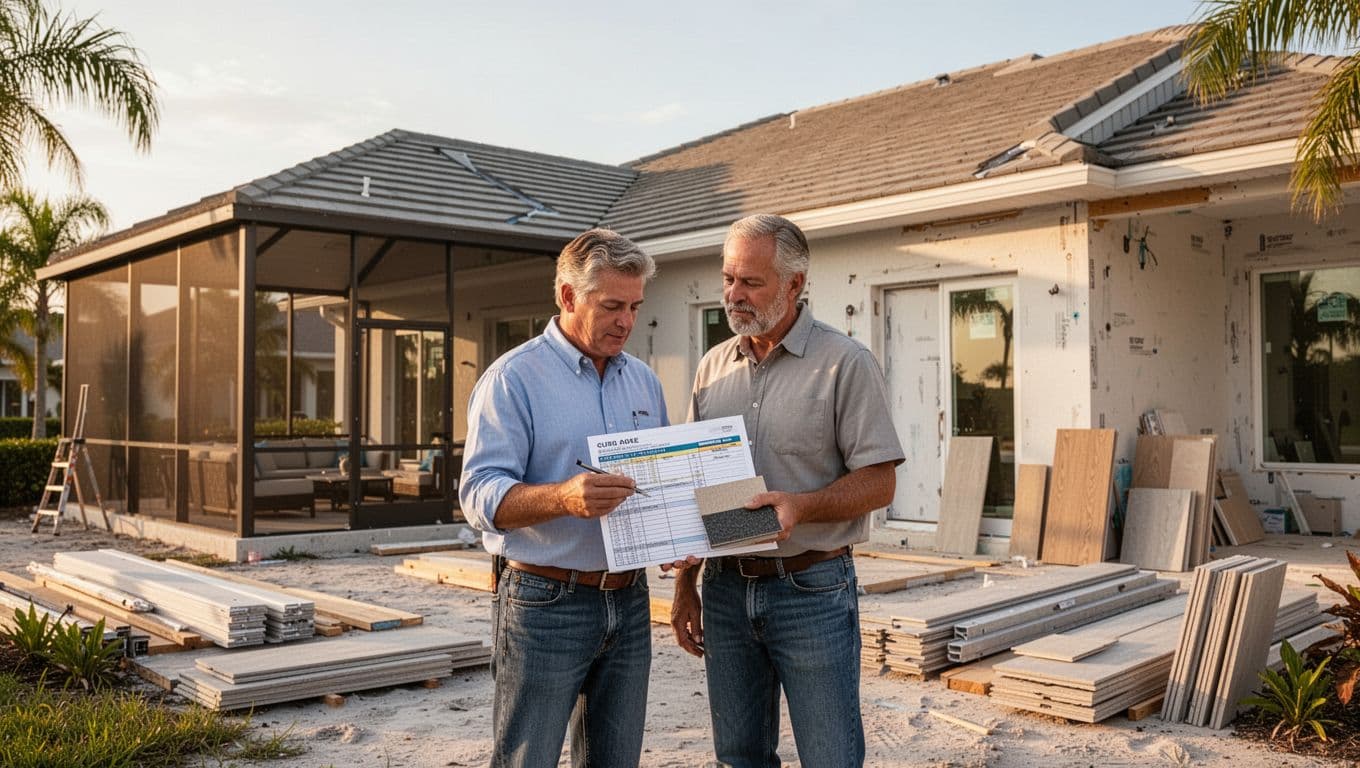
Take the answers out of the meeting and put them in the contract, exhibits, or written change-order process. Verbal promises are difficult to compare later.
- Who signs the main contract with me, and who is responsible for coordinating the architect, engineer, builder, and specialty contractors?
- Is the architect or engineer identified by name, and is each professional properly licensed for the work being performed?
- Who prepares the drawings, responds to plan-review comments, and pays for revisions caused by incomplete information?
- Which items are included in the base scope, and which appear as allowances, exclusions, or owner purchases?
- Does the builder fee apply to change orders, permits, supervision, temporary utilities, delivery charges, and subcontractor markups?
- How are credits calculated if I remove an item or select something below its allowance?
- Who handles surveys, engineering, permitting, inspections, and corrections requested during review?
- What happens if the plans conflict with site conditions or if construction reveals hidden damage?
- What are the target start and completion dates, and which events can extend the schedule?
- How often will I receive budget and schedule updates?
- What proof of current licensing and applicable insurance will the company provide?
- Who handles final inspections, punch-list work, warranties, lien releases, and project closeout?
Florida's licensing system allows homeowners to verify contractor credentials. Keep a complete copy of every agreement, exhibit, estimate, change order, invoice, and approval. A Florida new construction contract guide can help you identify topics that deserve a written answer.
Conclusion
The choice between design-build and separate architect-builder contracts comes down to responsibility, control, and project fit. Design-build places more coordination inside one contract, while separate contracts give the homeowner more direct involvement in the relationship between design and construction.
For a complex new home or remodel, choose the structure that matches the time you can give the project and the level of design independence you want. Then confirm the scope, licensing, pricing method, schedule, change process, and responsibility for errors before signing.
The right design build Port Charlotte arrangement is the one that leaves fewer unanswered questions about who does what, who pays for changes, and who responds when the plans meet the property.