Do You Need a Fort Myers Water Softener Loop?
Explore Our Services
Contact Us Today!
(239) 322-9295
A water softener isn't automatically necessary in every new home, but a Fort Myers water softener loop can make future installation easier and less expensive. The right decision depends on your water source, plumbing plan, available utility space, and how much flexibility you want after closing.
Lee County Utilities water is generally only slightly hard, while private wells can vary widely. Before paying for treatment equipment, review the builder's specifications, confirm the plumbing route, and test the actual water serving your lot.
Do You Need a Water Softener in a Fort Myers New Home?
The short answer is usually no for municipal water based on hardness alone. However, installing a softener-ready loop during construction may still be a practical upgrade.
What municipal-water hardness data shows
Current Fort Myers water data places municipal hardness at approximately 100 to 101 parts per million , or about 5.8 to 5.9 grains per gallon . That level is generally classified as slightly hard.
Lee County Utilities identifies its system as surface water. Its water-quality information also states that hardness comes from dissolved calcium and magnesium and isn't considered a health concern.
This level may cause some mineral spotting on glass, faucets, and shower doors. You might also notice modest scale buildup inside fixtures or water heaters. Still, it doesn't automatically justify a whole-home softener.
Some published figures vary by ZIP code and service zone. For example, data for 33901, 33907, and 33913 reports similar results near 100 parts per million. A separate USGS environmental estimate sometimes appears much higher, around 333 parts per million, but that figure shouldn't be treated as the hardness of delivered tap water.
Why a private well changes the decision
A private well doesn't follow the municipal average. Water chemistry can differ from one property to the next, even within the same area.
Well owners should test for hardness, iron, sulfur odor, sediment, and bacteria-related treatment needs. A softener may help with calcium and magnesium, but it won't solve every well-water problem. Iron, hydrogen sulfide, sediment, or bacterial concerns may require separate equipment.
| Water source | What to check | Is a softener automatic? |
|---|---|---|
| Lee County Utilities | Hardness, spotting, scale, household preferences | No |
| Private well | Hardness, iron, sulfur, sediment, bacteria | No, test first |
| Unknown or future connection | Confirm source with builder or utility | No, verify before buying |
The practical answer is simple: test before you purchase equipment , especially if the home will use a well or a private water system.
What Is a Fort Myers Water Softener Loop?
A water softener loop is a planned plumbing connection that lets treatment equipment connect to the home's main water supply. Builders may also call it a softener rough-in, bypass loop, or water-treatment connection.
The loop usually separates the incoming cold-water line so a future softener can treat the home's water while allowing an untreated bypass when needed.
Cold-water bypass and future equipment connections
A properly planned loop should identify where water enters the home and where the treatment equipment will connect. It should also allow the system to be bypassed for maintenance or removal.
The loop doesn't mean a softener is already installed. It only prepares the home for one. That distinction matters because a builder may include capped plumbing without providing the drain route, electrical access, or equipment space needed for a complete installation.
Ask for the loop location on the plumbing plan. Confirm whether it treats the whole home or only selected fixtures. A point-of-use reverse-osmosis system at the kitchen sink is different from a whole-home softener.
Drainage, air gaps, and electrical access
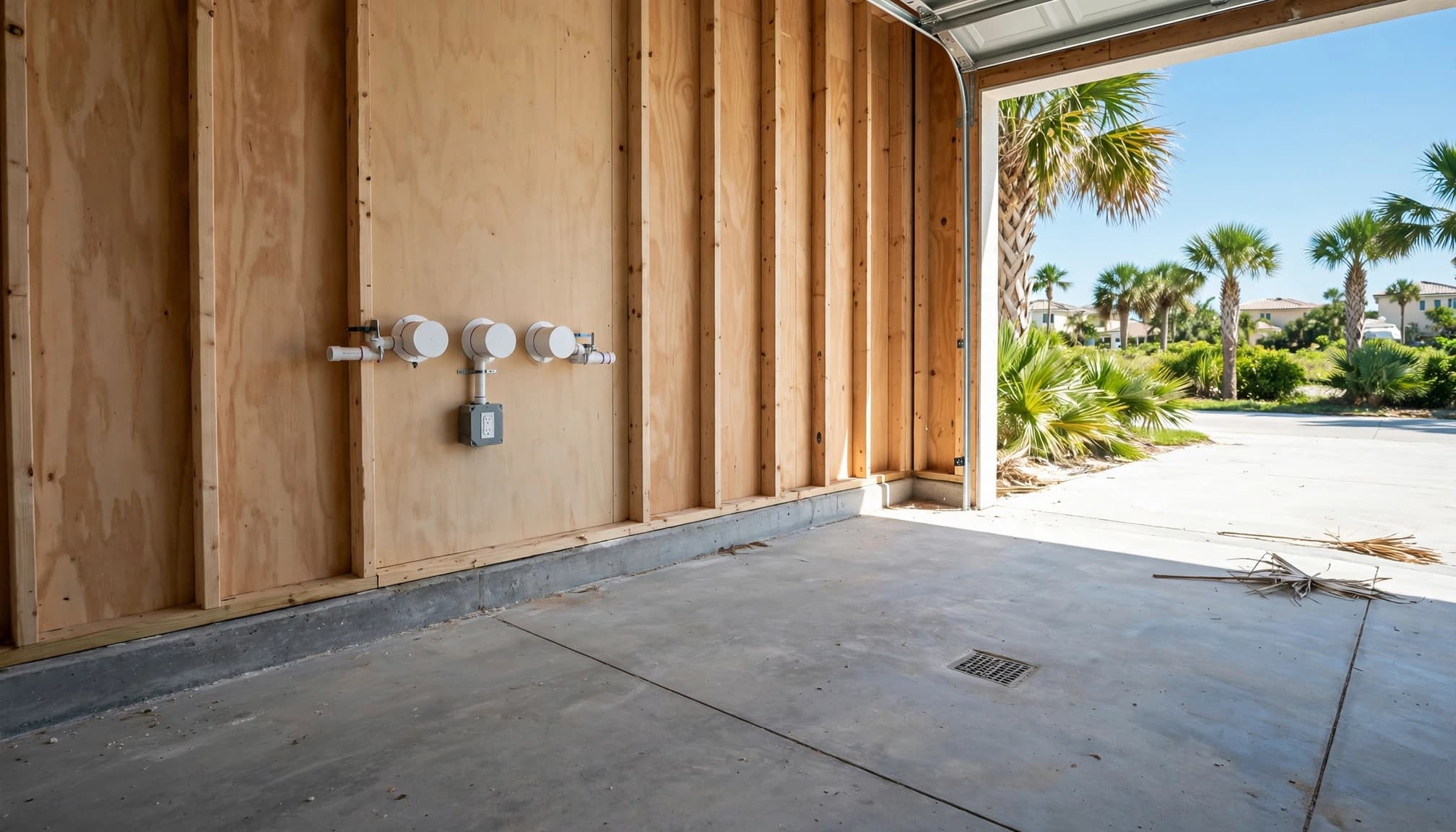
Many softeners use a brine tank and need a controlled discharge during regeneration. The installation therefore needs an approved drain route, not merely a nearby pipe.
The 2023 Florida Plumbing Code, Chapter 6, requires water treatment devices to prevent contamination of the potable-water supply. Overflow, relief-valve, and waste-discharge pipes must terminate through an air gap or another approved protection method where applicable.
Electrical work must also follow the Florida Building Code requirements. Your builder or licensed plumber should confirm the correct outlet location and electrical setup for the selected equipment. Avoid choosing a specific receptacle or circuit before the equipment manufacturer and electrician review the installation.
Where Should the System Go?
Most new homes place the future softener in a garage, utility room, mechanical area, or another serviceable location near the main water entry. The best spot depends on the floor plan and the route to an approved drain.
Garage or utility-room placement
A garage often provides easier access for salt delivery, maintenance, and replacement. It may also keep the equipment away from finished flooring and cabinetry.
However, garage placement requires more than an empty wall. Review the finished dimensions of the equipment, the garage door track, vehicles, storage cabinets, attic access, and walking paths. The system shouldn't block the electrical panel, water heater, HVAC equipment, or required access areas.
A utility room can look cleaner, but it may have less space for salt bags, service work, and drainage connections. It also places the equipment closer to finished walls and household storage.
Service space, rain, and flood concerns
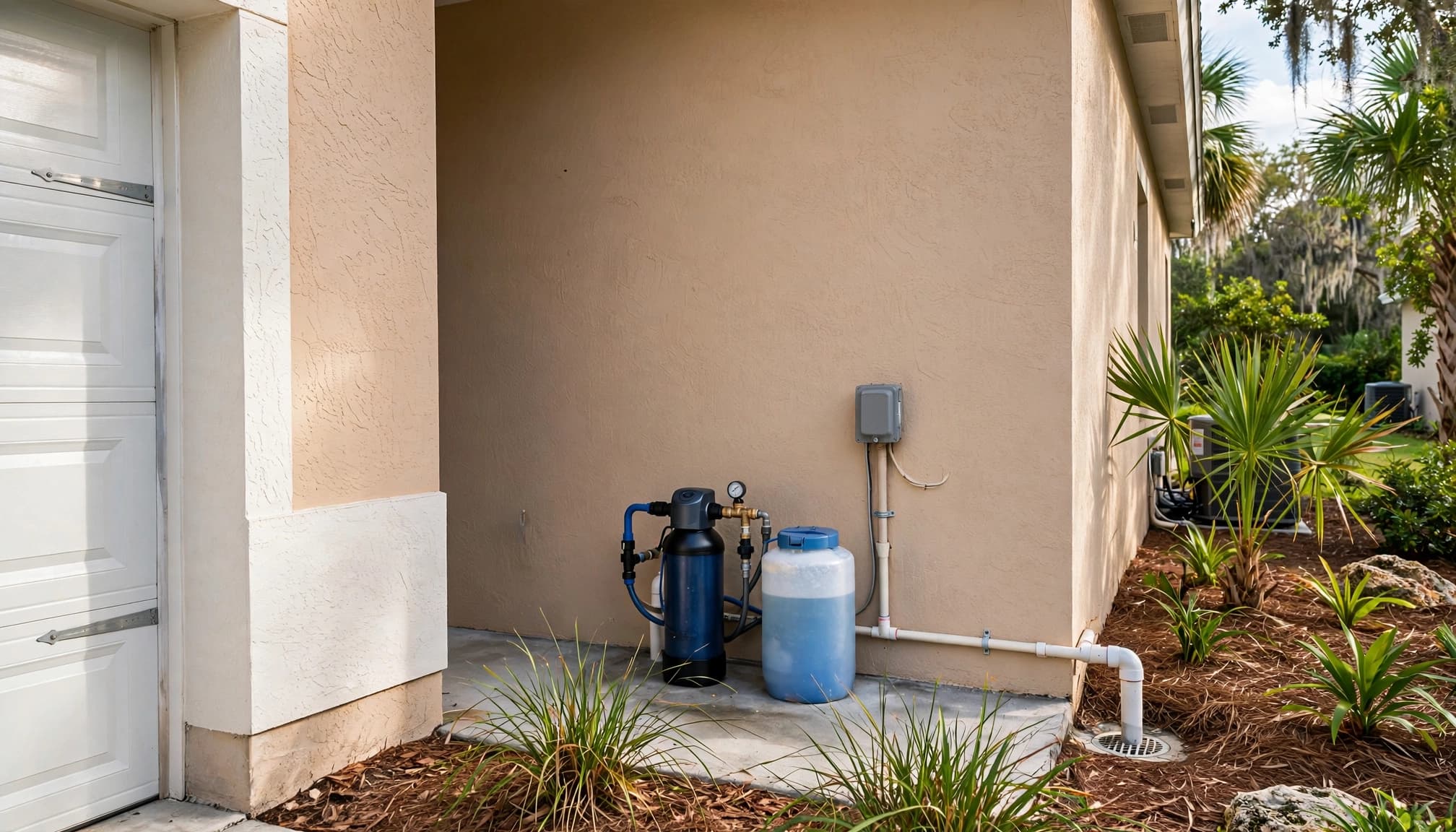
Southwest Florida garages can experience wind-driven rain, water intrusion, or drainage problems. Keep the treatment system away from areas where stormwater can collect. Don't assume a garage corner is safe simply because it stays dry during ordinary weather.
Ask the builder how the garage floor, driveway transition, grading, and drainage affect the proposed location. A floor drain or trench drain may require approval and a specific discharge path. The softener's drain line shouldn't discharge wherever it is convenient.
Leave enough room to open the brine tank, replace components, inspect valves, and carry salt into position. Protect nearby cardboard, fabric, electronics, batteries, and tools from moisture.
Should You Pay for the Loop During Construction?
A softener-ready loop is often easier to add before walls close, concrete work finishes, and mechanical systems occupy the service area. That doesn't mean every upgrade is worthwhile, but construction timing deserves attention.
A loop versus a finished-home retrofit
Adding a loop during construction can avoid cutting drywall, opening cabinets, breaking finished flooring, or routing new piping around existing systems. It may also make it easier to coordinate the drain and electrical work while the plumbing is visible.
A retrofit may still be reasonable when the home has no loop. The cost and difficulty depend on the distance from the main supply, slab or wall construction, drain access, electrical location, and finished surfaces.
Before approving the work, ask whether the quoted scope includes:
- Supply and return connections
- A shutoff or bypass arrangement
- Drain tubing and an approved air gap
- Electrical access
- Wall patching or finish repairs if needed
- Equipment pad or protection from water exposure
For broader planning, review this guide to Southwest Florida plumbing rough-in costs and ask which items belong in your contract.
What to put in the builder's specifications
Don't rely on a verbal promise that the home will be "softener ready." Ask for the location and included components in writing.
The construction documents should identify the water-treatment connection, drain route, electrical provision, and intended equipment area. They should also state whether the work includes only capped plumbing or a complete ready-to-install setup.
Review the plan before framing, insulation, and drywall hide the route. It also helps to compare the full scope of Fort Myers new home construction, including utility coordination and floor-plan choices, before approving changes.
The builder should confirm whether the home is inside the City of Fort Myers or in unincorporated Lee County. Permit and inspection procedures can differ by jurisdiction. Ask the licensed plumber to verify the requirements for your specific property.
Can a Loop Help With Resale Value?
A loop won't guarantee a higher sale price, and buyers don't all want a water softener. Municipal water in Fort Myers is only slightly hard, so many owners may consider a treatment system optional.
Still, a properly installed loop can make the home more flexible. A future owner may want a softener, filtration system, or another treatment device without opening finished walls. That convenience can help the home compare well against properties with less accessible plumbing.
The value is usually in avoiding future disruption , not in promising a resale premium. A poorly placed loop can have the opposite effect if it creates visible pipes, blocks storage, lacks drainage, or sits where equipment cannot be serviced.
Document the location with the final home plans and closing records. If the loop is part of a custom build, include its scope in the agreement. This Florida new construction contract requirements guide can help you identify where allowances, specifications, and included work should appear.
Key Takeaways for Fort Myers Home Buyers
- Municipal Fort Myers water is generally around 100 to 101 parts per million in hardness, so a softener isn't required for every home.
- Private wells need individual testing because hardness, iron, sulfur, sediment, and bacteria levels can vary.
- A loop is only one part of a softener-ready installation. Drainage, an air gap, electrical access, and service space matter too.
- Garage placement works well when the location stays dry and doesn't interfere with vehicles, panels, HVAC equipment, or storage.
- Construction is usually the easiest time to coordinate plumbing access, but a retrofit may still be practical.
- Ask the builder or licensed plumber to document the exact scope and confirm local requirements.
Frequently Asked Questions
Does Fort Myers require a water softener loop?
There is no general city requirement confirmed for every new home. The need depends on the water source, homeowner preferences, builder design, and selected equipment.
Florida plumbing rules focus on safe installation, contamination prevention, drainage, and backflow protection. They don't mean every property must include a softener loop.
Is Fort Myers water hard enough to need a softener?
Current municipal figures around 100 to 101 parts per million are generally considered slightly hard. That may create spotting or some scale, but it isn't a health concern according to Lee County Utilities information.
Your preference, plumbing fixtures, water heater, and tolerance for mineral deposits may still justify treatment. Test the water serving your home before selecting equipment.
Can a softener go outside?
It may be possible in some designs, but the location must protect the equipment from weather, flooding, accidental damage, and unauthorized access. It also needs suitable plumbing, drainage, and electrical service.
Ask the builder or plumber whether an exterior location complies with the equipment instructions and local requirements. A garage or utility area may provide better protection and easier maintenance.
Should the builder install the softener before closing?
That depends on your water test, equipment choice, and contract. Installing too early can leave you with equipment that doesn't match your actual water conditions or household needs.
Many buyers choose to install only the rough-in during construction. They can then test the completed home's water and select the proper treatment system later.
Conclusion
Most Fort Myers new homes don't need a water softener based on municipal hardness alone. A Fort Myers water softener loop can still be a sensible construction option because it preserves future flexibility and avoids difficult finished-wall plumbing work.
Base the decision on your actual water source, then confirm the loop, drain path, electrical access, placement, and inspection requirements with the builder or a licensed plumber. A small amount of planning before framing can keep a future treatment system practical, safe, and out of the way.