Gunite Pool Test Reports: Review Before Shell Finishes
Explore Our Services
Contact Us Today!
(239) 322-9295
A reassuring strength number can still leave important questions unanswered about your pool shell. Before tile, waterproofing, or interior finishes cover the concrete, review your gunite pool test reports against the approved project requirements .
The records should connect each result to your property, placement date, mix, sample location, and testing age. They also need to fit the inspection history and actual shell condition, because a laboratory report cannot certify the entire structure.
Start by confirming what the report measures and which work it represents.
What Gunite Pool Test Reports Can Establish
Concrete strength testing documents how particular samples performed under a stated test method. Compressive strength, a common reported property, describes how much pressure a specimen withstands before it breaks.
That information supports quality review, but its reach depends on sampling, specimen preparation, curing, and testing. A result without those details is difficult to interpret.
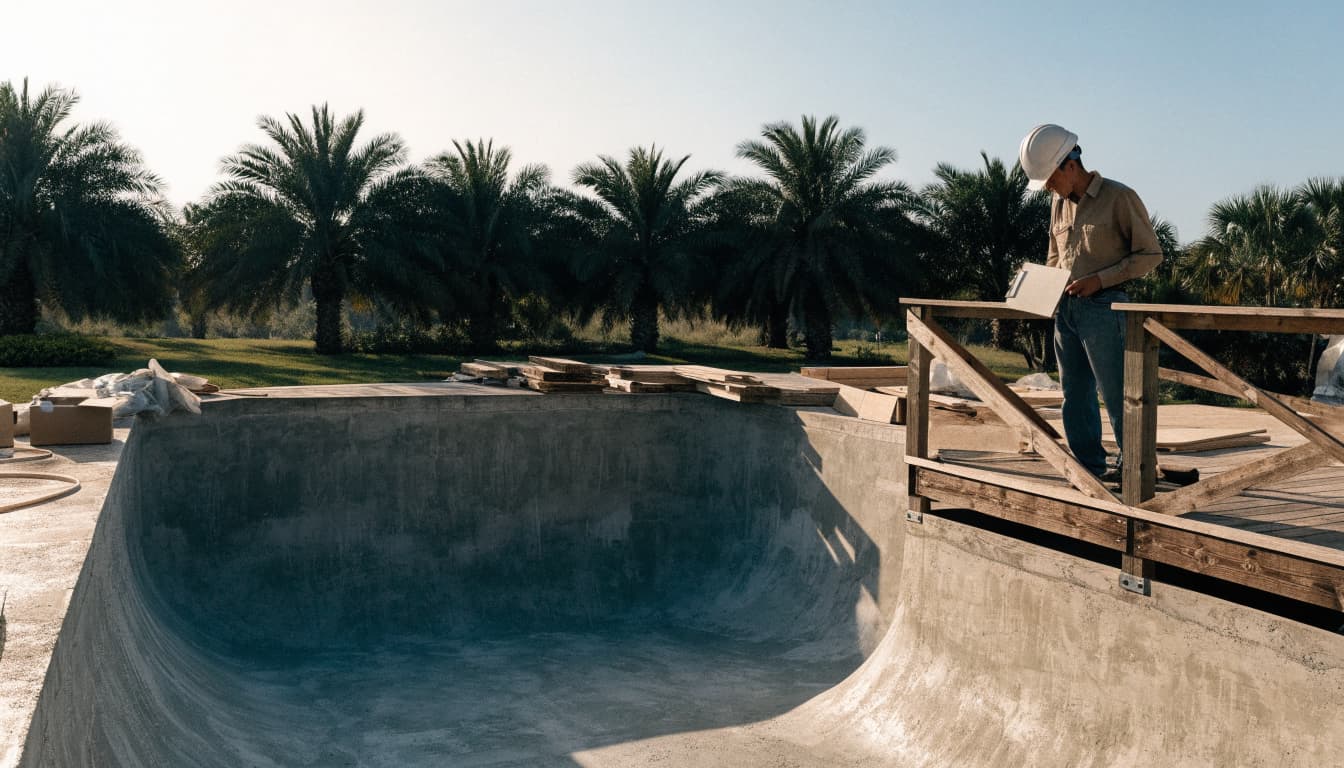
A satisfactory sample result doesn't establish the shell's thickness, reinforcing steel placement, or condition everywhere. Those questions require other construction records and, when necessary, professional evaluation.
During new inground gunite pool construction, testing review should coordinate with inspections, curing, and finish preparation. Each addresses a different part of the work.
Also, confirm the application method. Gunite traditionally means dry-mix shotcrete, with water added at the nozzle. Wet-mix shotcrete includes water during batching. Contractors sometimes use "gunite" for either process, so the proposal's label alone doesn't identify how the shell was built.
Match Every Report to Your Pool Shell
Read the identifying information before studying the strength results. A report for another address, placement, or mix can't answer questions about your shell.
Compare the laboratory report with placement records, delivery documentation where applicable, and the contractor's construction log. Keep current approved plans nearby, including any accepted revisions.
These details establish whether the report belongs in your project file.
| Report detail | What to verify |
|---|---|
| Project identification | The address, owner or project name, and permit reference where provided match your pool. |
| Placement date | The date matches the concrete application represented by the samples. |
| Mix identification | The mix designation connects to the specified material and placement records. |
| Sample location | The record explains where sampling occurred and what placement it represents. |
| Specimen identification | Sample numbers connect collection records to the reported results. |
| Testing age | The specimen age and test date match the evaluation required by the project. |
Traceability matters before strength. If the links between these records are missing, ask for clarification rather than assuming a favorable result applies.
For a pool built over multiple placements, confirm which reports cover each placement. A shell and raised spa may involve separate work records. The contractor should explain that coverage without treating one report as proof of every feature.
Check How the Samples Were Collected and Tested
The sample's origin and handling affect what its result means. Read the method description, specimen information, and any laboratory comments together.
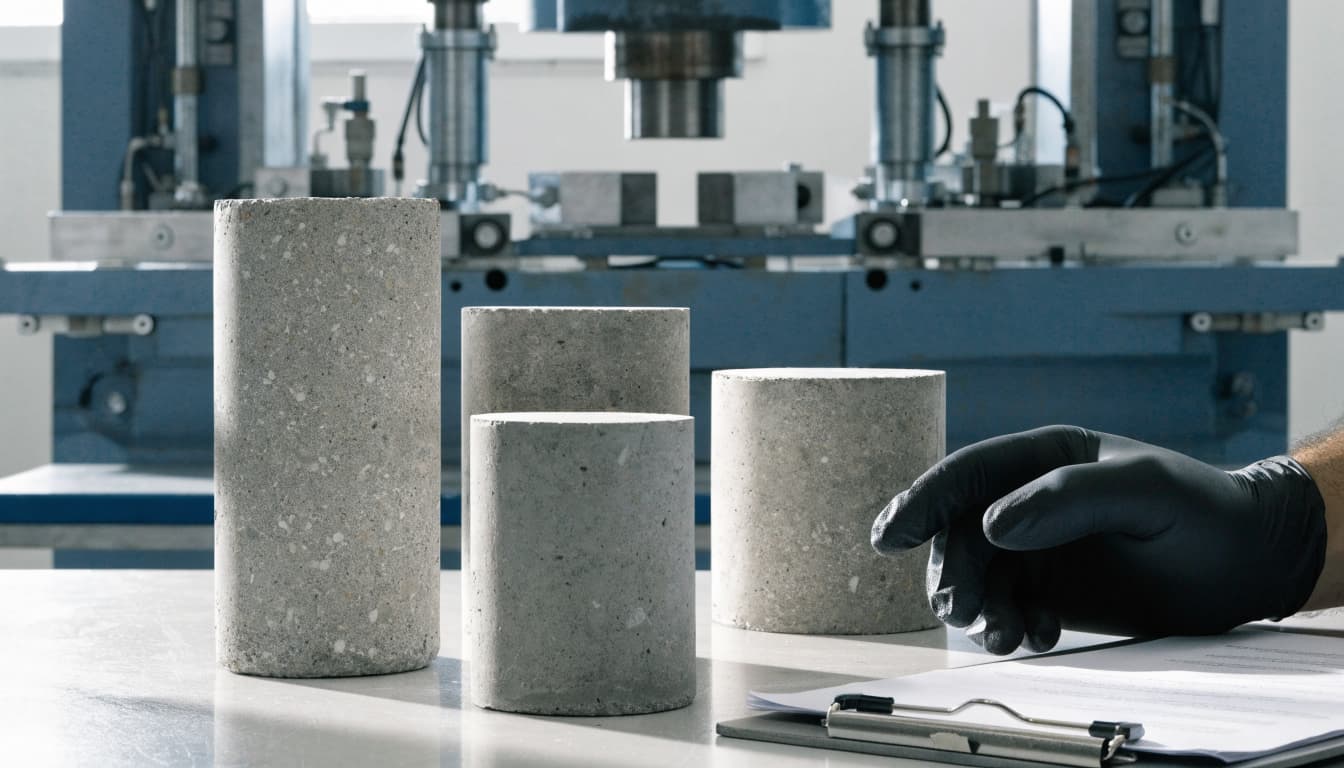
Identify the specimen and sampling location
Testing may involve material from a test panel, a core removed from hardened concrete, cylinders, or another accepted procedure. These methods aren't interchangeable without the project's acceptance framework.
A test panel is a separate sample area prepared for evaluation. A core is a drilled piece of hardened concrete. Confirm whether the report describes a panel, the actual shell, or another sampling source.
Ask how the sample relates to the placement under review. If the report identifies only a general job-site location, request the sampling record or placement reference that explains its intended coverage.
Verify age, curing, and laboratory notes
Testing age means how old the specimen was when the laboratory tested it. The report should make that age clear, along with collection and testing dates.
Curing means controlling moisture and temperature while concrete develops its properties. Specimens may experience different curing conditions from the pool shell, so check how the laboratory identifies their storage and handling.
Read comments about damaged samples, unusual breaks, preparation problems, or deviations from the stated procedure. Ask the testing agency what those comments mean for interpretation.
A laboratory specimen's result doesn't establish that the exposed pool shell received adequate moisture curing.
Compare Results With the Project's Requirements
The governing documents give the reported numbers their meaning. Use the approved structural notes, project specifications, permit conditions, and applicable code requirements rather than a rule borrowed from another pool.
Find the specified strength and evaluation conditions
Look for the concrete strength requirement, the age at which it applies, and the specified evaluation method. These details need to agree with the report before anyone draws an acceptance conclusion.
Reports may express strength in psi, meaning pounds per square inch. Confirm the units, particularly when comparing documents from different sources.
Also, distinguish individual specimen results from any reported average. Project criteria may address them differently. Don't create your own average from unrelated samples or combine results from separate placements.
If the documents disagree, have the responsible contractor obtain clarification from the engineer or other appropriate project professional.
Separate early information from acceptance
An early-age result can provide information about strength development, but it doesn't automatically satisfy a requirement tied to another testing age. Likewise, a later result needs interpretation within the applicable criteria.
There isn't one universal residential pool strength number, sample count, or testing schedule that homeowners should apply to every report.
A result that looks lower than expected calls for review. The appropriate response depends on the sampling method, testing age, specimen condition, and project requirements.
Ask who evaluates acceptance and how that decision will be documented. A laboratory's reported measurement and an engineer's assessment of its structural implications are different records.
Resolve Missing or Questionable Results Before Covering Work
A scheduled finish crew shouldn't become the reason to overlook incomplete documentation. Establish what remains unresolved and whether affected work needs to wait.
Request the missing information directly
Start with the responsible contractor, who can coordinate with the testing agency and engineer. Describe the issue precisely: an unidentified mix, missing specimen result, unclear location, inconsistent date, or unexplained laboratory comment.
Request the complete report, including attachments and revised pages. A screenshot of the strength table may omit information needed to understand it.
If testing was required but no report is available, ask whether samples were collected, whether results are pending, and what the project requires next. Don't assume the absence of a report either proves a defect or eliminates the testing obligation.
Obtain a documented resolution
The testing agency can clarify its records and procedures. The engineer can evaluate structural questions within the project's requirements. The contractor should coordinate any directed follow-up.
That follow-up may involve corrected documentation, further evaluation, additional testing, or repair instructions. It isn't automatically the same response for every questionable result.
Before affected finish work proceeds, obtain a written explanation of the resolution and any remaining conditions. Identify who provided that direction and what work it covers.
Keep revised reports alongside earlier versions so the reason for the change remains clear.
Review Curing, Shell Condition, and Inspection Records
Report review is one part of the pre-finish checkpoint. The shell also needs appropriate curing, suitable surface preparation, and resolution of visible concerns.
Confirm the curing and finish-preparation plan
Southwest Florida heat, sun, and wind can dry exposed concrete quickly. Rain doesn't replace a controlled curing plan, and standing water can create separate site problems.
Ask the contractor to confirm the curing method and schedule required for the mix, project, and selected finish system. A strength result alone doesn't determine readiness for plaster, pebble finishes, tile, or waterproofing.
Before covering the shell, have the contractor address cracks, loose material, hollow-sounding areas, and concerns around penetrations or placement joints. A placement joint is an interface between separate concrete applications. Its treatment depends on the design and actual conditions.
Finish materials cannot correct a structural shortfall.
Check inspections without confusing them with testing
Pool-steel and bonding inspections address work that must remain visible at the required stage before concrete covers it. Concrete strength tests answer different questions.
Review the records for completed inspections and any unresolved corrections. The pool steel and bonding inspection requirements also explain why timing matters before construction conceals these components.
Confirm the requirements for your address. Properties within the City of Fort Myers follow the city's process, while unincorporated Lee County properties follow county procedures.
Neither a test report nor an earlier inspection replaces later required inspections or final approval.
Key Takeaways Before Pool Finishes
The pre-finish review should leave you with clear records and a clear next step.
- Confirm that every report identifies the correct project, placement date, mix, sampling location, specimens, and testing age.
- Compare results with the approved project criteria rather than applying a universal strength threshold or testing schedule.
- Resolve missing information and questionable results with the contractor, testing agency, or engineer before affected work proceeds.
- Keep reports, inspection records, curing information, and written resolutions together, because no single document establishes the entire shell's condition.
Save complete copies, not just the page showing the strength numbers.
Frequently Asked Questions
Does a favorable report mean the whole shell is sound?
A favorable result supports evaluation of the samples and placement they represent. It doesn't verify every wall, floor, joint, reinforcing detail, or concealed condition. Review it alongside construction and inspection records.
Should finishes wait for every test result?
The required timing depends on the project documents and responsible professional's direction. Ask which results must be available before the planned work, and resolve any missing required information before that work proceeds.
What should I do if a report has the wrong date or address?
Ask the contractor and testing agency to investigate. Obtain corrected documentation or a clear written explanation connecting the report to your placement. Avoid relying on a verbal assurance that the mismatch doesn't matter.
Finish With a Documented Decision
Gunite pool test reports are useful when you can connect their results to the right placement and project requirements. Their value depends on complete, traceable information and qualified interpretation.
Before finishes conceal the shell, resolve uncertain results and confirm curing, condition, and inspection status. Keep the written decisions with your pool records so the next construction stage begins with a clear understanding of what was reviewed.