How to Plan Exterior Hose Bibs in Fort Myers
Explore Our Services
Contact Us Today!
(239) 322-9295
A search for exterior hose bibs Fort Myers homeowners can rely on often starts with fixture style. The better starting point is the way water will move around your property, including the driveway, lanai, pool deck, gardens, and storm-prone areas.
Fort Myers homes face heat, humidity, heavy rain, salt air, and occasional cold snaps. Plan hose bib locations before plumbing is installed, then confirm the design with your builder, a licensed plumber, and the current requirements of the Fort Myers building department.
Start With How You Will Use Water Outside
A hose bib is useful only when it sits near the work you need to do. Mapping outdoor activities first helps prevent long hoses, blocked access, and expensive changes after the walls are closed.
Cover the garage, driveway, and entry
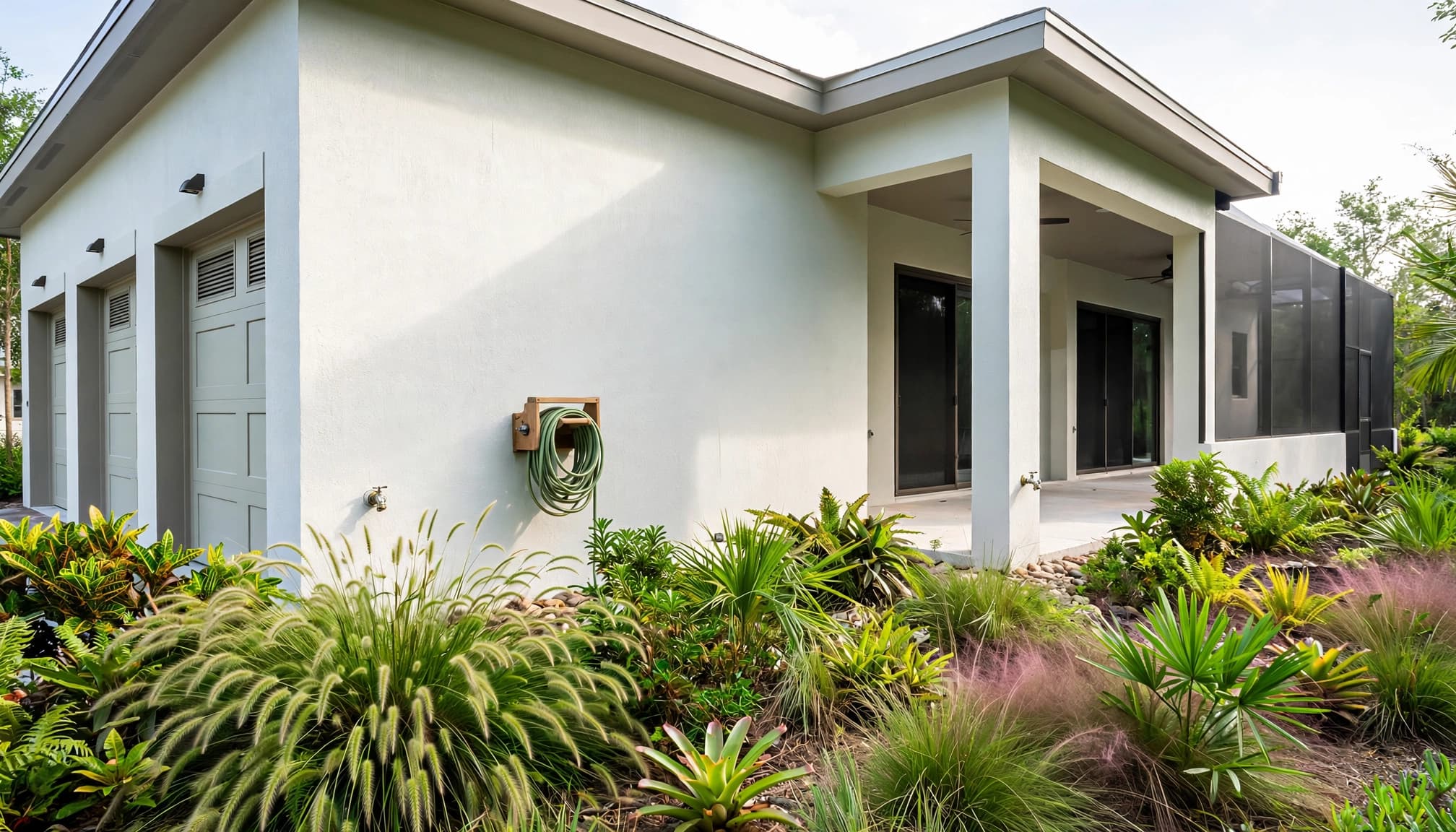
Most new homes need a hose bib near the garage or driveway. This location helps with washing vehicles, rinsing sandy feet, cleaning trash bins, and maintaining the front walkway.
Place it where a hose can reach the driveway without crossing a main pedestrian path. Avoid tucking it behind a gate, air-conditioning equipment, dense landscaping, or a future screen enclosure. Also consider whether a vehicle parked in the garage will block the handle.
A second front-side fixture may help on a wide lot or a home with a long side entry. The goal is practical reach, not a specific number of hose bibs.
Plan for the lanai, pool, and garden
The rear of the home often needs more water access than the front. A hose bib near the lanai can support patio cleaning, outdoor kitchens, pet care, potted plants, and rinsing furniture.
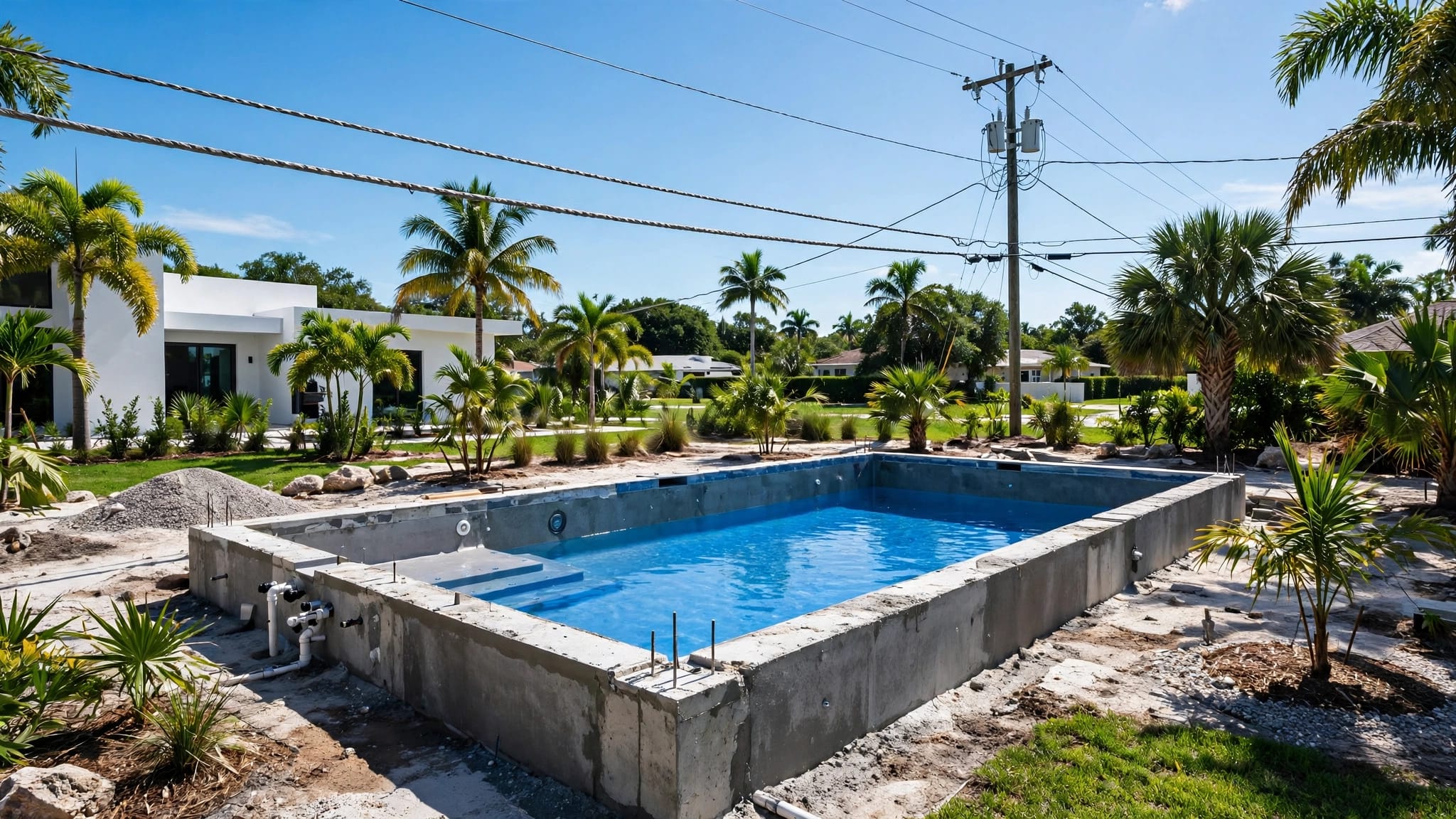
Pool owners may need a convenient water source near the deck, but the fixture should not interfere with the pool equipment pad, screen structure, gates, or deck drainage. Coordinate the location with the pool designer before concrete and pavers are installed. Cutting Edge's guidance on new pool construction in Fort Myers can help homeowners organize these outdoor-water decisions early.
For covered lanais, decide whether the bib belongs inside the screened area, just outside it, or at both locations. A fixture outside the enclosure is often easier to use for landscaping and washing, while an interior fixture may be more convenient for the pool deck.
Check the Fort Myers Lot Before Choosing Locations
The lot itself should shape the plumbing plan. A waterfront property, a low-lying inland lot, and a home in the River District may have different finished grades, drainage paths, and flood considerations.
Review flood zones and finished grades
Lee County provides flood-zone information by address and map location. Check the property before finalizing exterior plumbing, especially if the lot is near the Caloosahatchee River, the coast, or a known drainage area.
A flood designation does not automatically determine where every hose bib must go. However, it can affect finished-floor elevations, utility placement, equipment locations, drainage, and the way exposed piping is protected.
Ask the builder and plumber how the proposed fixture locations relate to the finished grade. The bib should remain accessible after soil, pavers, mulch, landscaping, and any future pool deck are installed. For broader storm planning, review the home's Southwest Florida hurricane building codes with the project team.
Keep water away from vulnerable areas
Heavy rain can expose poor exterior planning. Avoid placing a hose bib where leaks, disconnected hoses, or runoff can collect against the wall, enter a doorway, or drain toward electrical equipment.
The surrounding surface should direct water away from the structure. A hose reel should also leave enough clearance for inspection and repairs. Do not bury the fixture behind decorative stone or install it so close to a corner that a wrench cannot reach the connection.
If a lot has swales, retaining features, or a raised foundation, mark those areas on the site plan. A hose may cross a drainage path, but the bib itself should not obstruct the planned flow of water.
Coordinate Hose Bibs With the Plumbing Rough-In
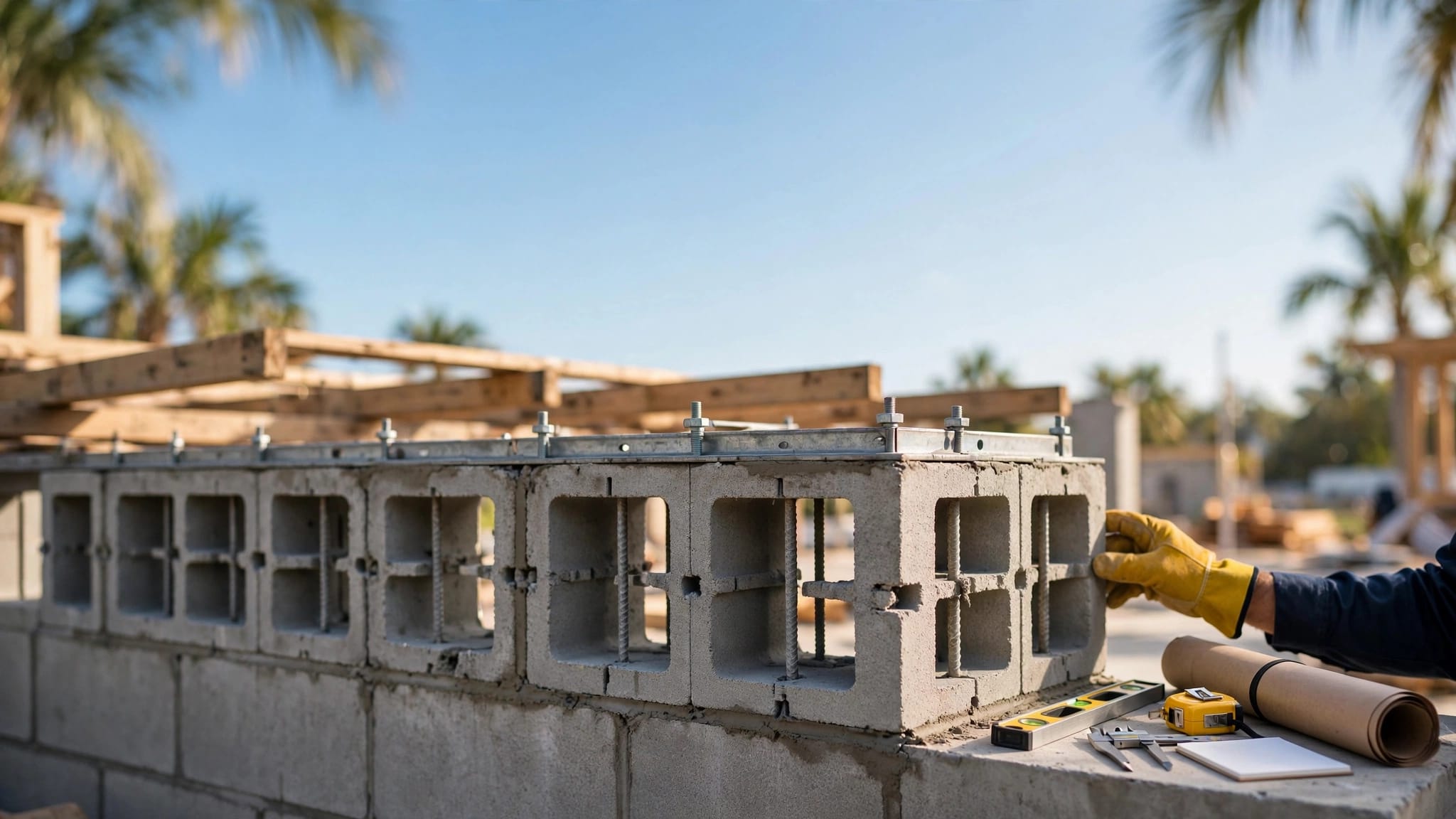
The rough-in stage is the least disruptive time to add exterior water lines. Once insulation, drywall, stucco, tile, and landscaping are complete, even a small relocation can become expensive.
Plan shutoffs and drain-down access
Ask whether each exterior hose bib will have an accessible interior shutoff. The best location depends on the wall layout, garage access, mechanical room, and the plumber's approved installation method.
An interior shutoff can help with maintenance and with preparing exposed piping for an unusual cold snap. It should not be hidden behind permanent cabinetry or placed where stored items will block it.
Discuss how the line can be drained or protected if the home is vacant during a rare freeze. A fixture marketed as frost-resistant still depends on correct installation, slope, exposure, and drainage. Do not assume the product alone solves every cold-weather concern.
Before framing closes, photograph the pipe routes and record the shutoff locations. The same planning applies to hose bibs, outdoor sinks, pool fill connections, and future outdoor kitchens. See these Southwest Florida plumbing rough-in costs before approving late changes.
Separate house plumbing from irrigation
A hose bib supplies convenient, manually controlled water. Irrigation serves planting zones through valves, controllers, and scheduled cycles. They should be planned as related systems, not treated as interchangeable.
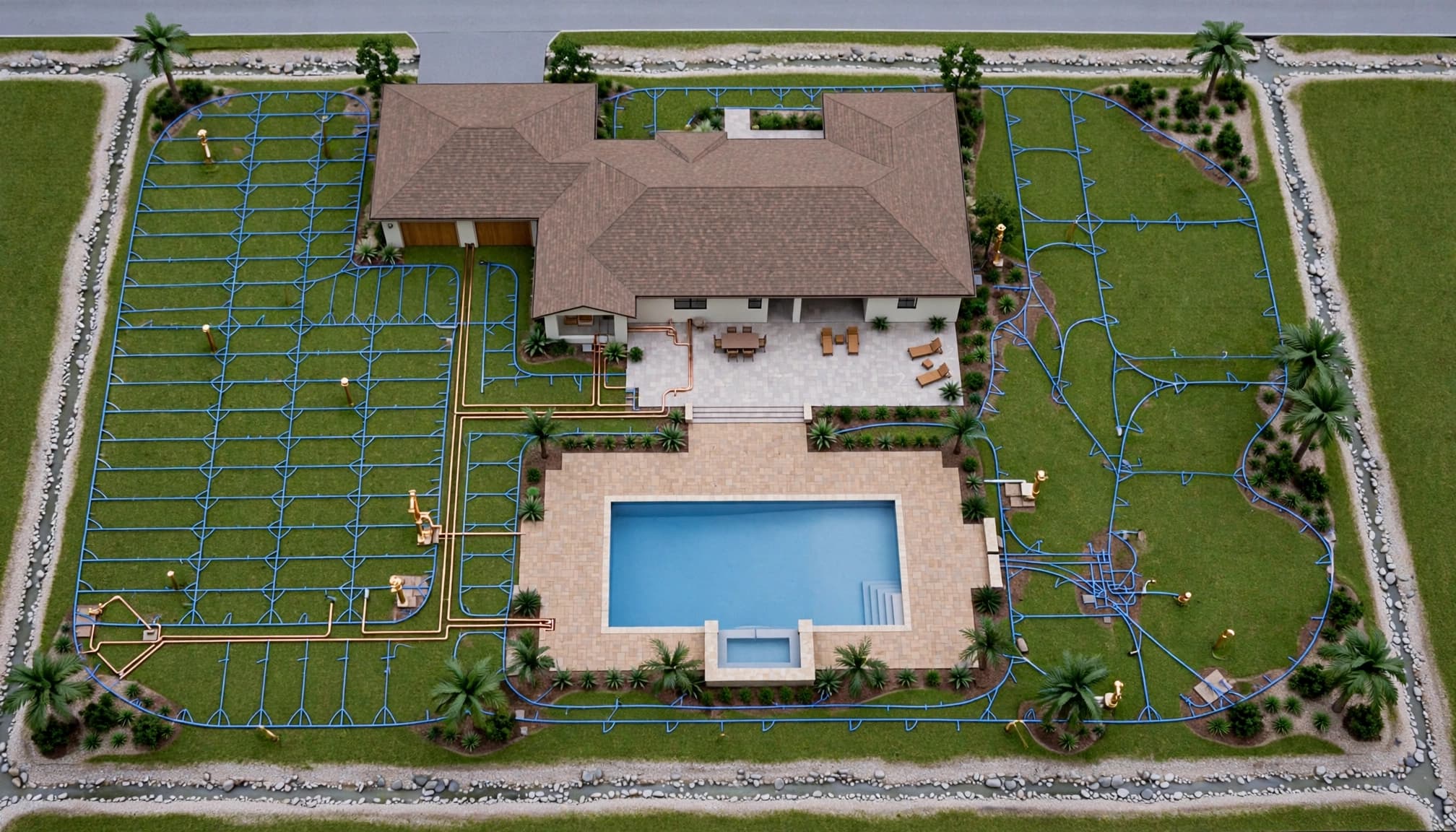
The irrigation designer should know where hose bibs, pool equipment, outdoor showers, and future landscape beds will go. Keep valve boxes and hose connections accessible without placing them in the same cramped corner.
A dedicated irrigation layout can also reduce the temptation to run hoses across walkways. For current local budgeting and planning details, review Fort Myers new home irrigation pricing.
Plan Vacuum-Breaker and Backflow Protection
Hose connections can create a cross-connection risk if a hose is left submerged in a bucket, pool, chemical container, or muddy area. Protection needs to be addressed during design, not after inspection.
Protect each hose-connected opening
A cited Florida plumbing-code excerpt describes vacuum-breaker protection for sillcocks, hose bibbs, wall hydrants, and other hose-connected openings. Depending on the approved assembly, protection may involve an atmospheric-type or pressure-type vacuum breaker, or a permanently attached hose-connection vacuum breaker.
That excerpt is not a substitute for checking the current code. Product selection and installation must match the plumber's design, the permit documents, and the fixture's listing.
Ask whether the selected hose bib includes the required protection or needs a separate approved component. Also ask how the device will be serviced if it is exposed to salt air, mineral buildup, or storm debris.
Understand service-connection requirements
Fixture-level protection is different from protection at the home's water service connection. Lee County Utilities' Cross-Connection Control Policy, revised in April 2025, addresses premises containment and approved backflow protection near the service connection. Its residential section references an RP3 arrangement, but that does not automatically mean every hose bib requires an RP3 device.
Your plumber should explain which protection applies to the property, the service, and each exterior fixture. Confirm the current requirements with Lee County Utilities, the Fort Myers building department, and the permit reviewer before installation.
A hose bib vacuum breaker and a whole-property backflow assembly solve different problems. Treating them as the same device can create confusion during permitting and inspection.
Choose Materials for Southwest Florida Exposure
Fort Myers' heat and humidity place constant stress on exterior hardware. Near the coast, salt air adds another concern, while intense rain can test seals, penetrations, and wall transitions.
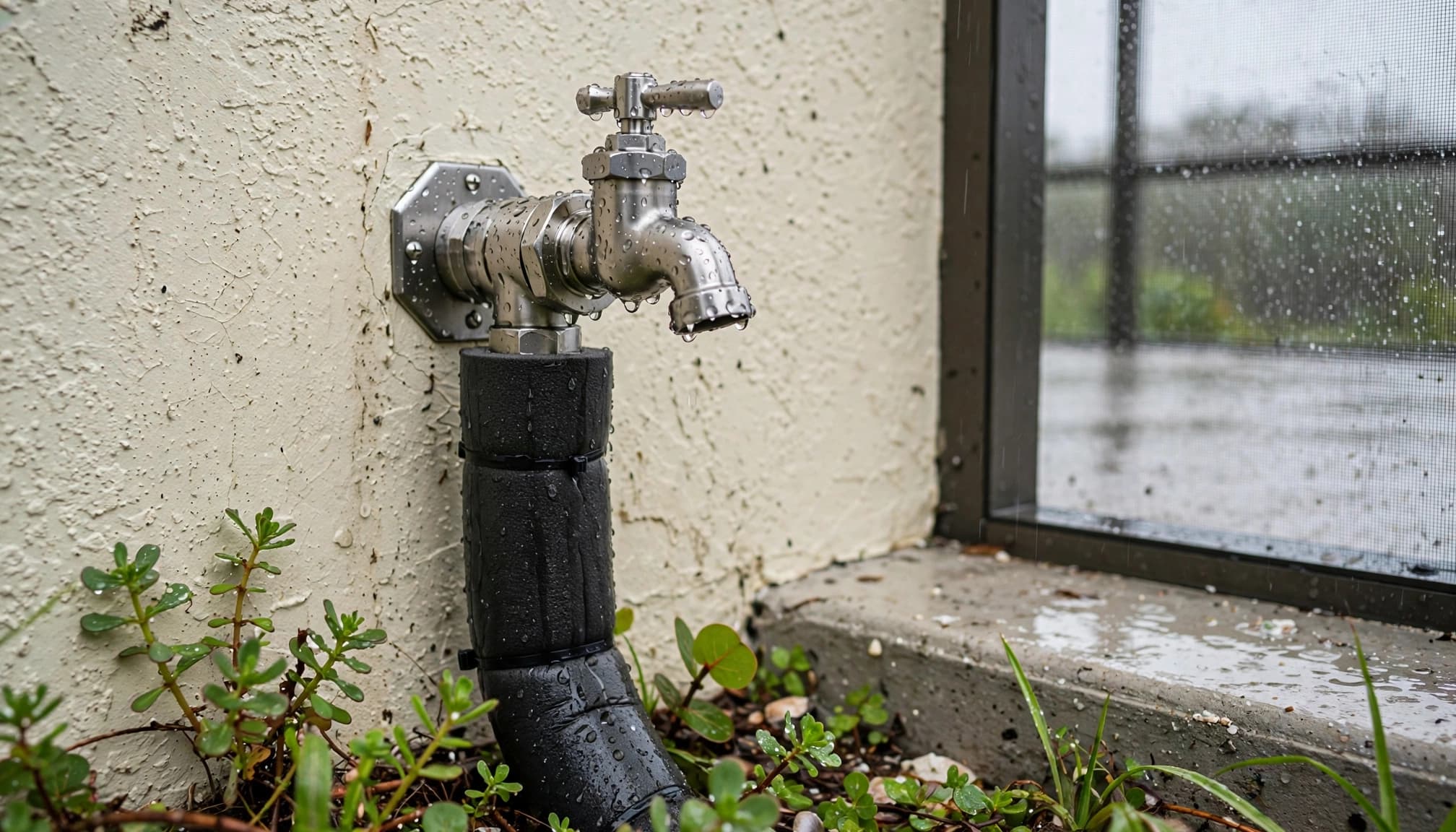
Choose listed components and compatible fittings that suit the home's exposure. Your plumber may recommend corrosion-resistant brass, stainless steel, or another approved material based on the fixture and piping system. Avoid mixing metals casually, because the connection details matter as much as the visible valve.
The wall penetration also deserves attention. A clean stucco finish cannot compensate for missing or poorly installed components behind it. The pipe sleeve, flashing, sealant, escutcheon, and exterior trim must work together to keep water from entering the wall assembly.
Use compatible fasteners and sealants around the fixture. Ends, joints, and transitions should be sealed according to the selected system. The exact detail should come from the approved plans and manufacturer's instructions.
Verify the Plan Before Permitting and Framing
A short coordination meeting can prevent a fixture from ending up behind a pool cage, under a future cabinet, or inside a planting bed.
Ask the project team these questions
Before plumbing rough-in, confirm:
- Which hose bibs serve the garage, driveway, lanai, pool area, side yard, and garden?
- Can each fixture be reached after landscaping, fencing, pavers, and screen work are complete?
- Where are the interior shutoffs, and can they be accessed without demolition?
- What vacuum-breaker protection does each hose-connected opening require?
- Is service-connection backflow protection separate from fixture-level protection?
- Which materials and sealants suit the home's distance from the coast?
- How does the hose-bib plan coordinate with irrigation, pool plumbing, drainage, and outdoor kitchens?
- Which locations need protection or a different installation approach because of flood exposure?
Document the locations
Mark hose bibs on the architectural, plumbing, landscape, irrigation, and pool plans. Use the same reference points on each drawing. A fixture shown on the plumbing plan but missing from the landscape plan can easily become inaccessible after construction.
Take photos before insulation and drywall cover the pipes. Keep the fixture schedule, product information, shutoff map, and inspection records with the home's maintenance documents.
A below-normal hurricane outlook does not remove the need for storm planning. NOAA's 2026 Atlantic season runs from June 1 through November 30, and preparation still matters every year. Secure hose reels before storms, disconnect hoses when severe weather approaches, and ask the builder how exterior plumbing should be handled during a storm.
Key Takeaways for Exterior Hose Bibs in Fort Myers
- Place fixtures around actual tasks, especially near the garage, driveway, lanai, pool deck, and garden areas.
- Check flood exposure, finished grades, drainage, and future landscaping before choosing wall locations.
- Decide on shutoffs, drain-down access, and cold-snap protection during the rough-in stage.
- Keep house plumbing, irrigation, pool plumbing, and outdoor kitchen connections coordinated but clearly identified.
- Confirm vacuum-breaker protection for each hose connection.
- Treat service-connection backflow protection as a separate design question.
- Choose materials, fasteners, sealants, and wall penetrations for heat, humidity, rain, and salt exposure.
- Verify the final plan with a licensed plumbing professional and the appropriate local reviewers.
FAQ About New-Home Hose Bib Planning
How many exterior hose bibs should a Fort Myers home have?
There is no useful universal number. Start with outdoor tasks and hose reach, then consider the home's size, lot shape, pool, lanai, irrigation zones, driveway, and garden areas. A licensed plumber can review the proposed locations before rough-in.
Should a hose bib be installed inside the screened lanai?
It can be useful for cleaning the lanai, watering container plants, and maintaining outdoor furniture. A second fixture outside the enclosure may still be practical for landscaping, vehicle cleaning, and areas the interior hose cannot reach.
Are frost-free hose bibs required in Fort Myers?
Do not assume a specific fixture is required or suitable for every home. Occasional cold snaps make exposure and drain-down planning important, but the plumber should select the fixture and installation method for the wall construction and local conditions.
Can an irrigation connection replace a hose bib?
Usually, the systems serve different purposes. Irrigation controls scheduled watering, while a hose bib provides a convenient manual connection. Keep both systems accessible and coordinate their locations before the yard is installed.
Make Hose Bibs Part of the Home Plan
Exterior hose bibs Fort Myers homeowners use every week should be planned with the same care as outlets, drains, pool equipment, and lanai doors. The most reliable layout matches daily tasks with finished grades, drainage, shutoffs, backflow protection, and durable exterior materials.
Bring the fixture locations into the plans before plumbing begins. That small decision can prevent blocked access, wall repairs, and costly changes after the new home is finished.