How Tree Roots Damage Pool Decks in Cape Coral
Explore Our Services
Contact Us Today!
(239) 322-9295
Tree roots can damage a pool deck when they grow against the ground or materials beneath it, lifting sections of the surface or putting pressure on nearby coping. In Cape Coral, drainage and soil support also matter because they can affect how the deck moves.
The important distinction is where the damage occurs . A cracked deck doesn't automatically mean the gunite pool shell or a buried pipe is damaged. Start by looking at the pattern of movement before choosing a repair.
How Tree Roots Can Affect a Gunite Pool Deck
A gunite pool includes a reinforced concrete shell, but the surrounding deck is a separate part of the backyard. It may be concrete, pavers, or another surface, with coping forming the finished edge around the pool.
Pressure Beneath the Deck
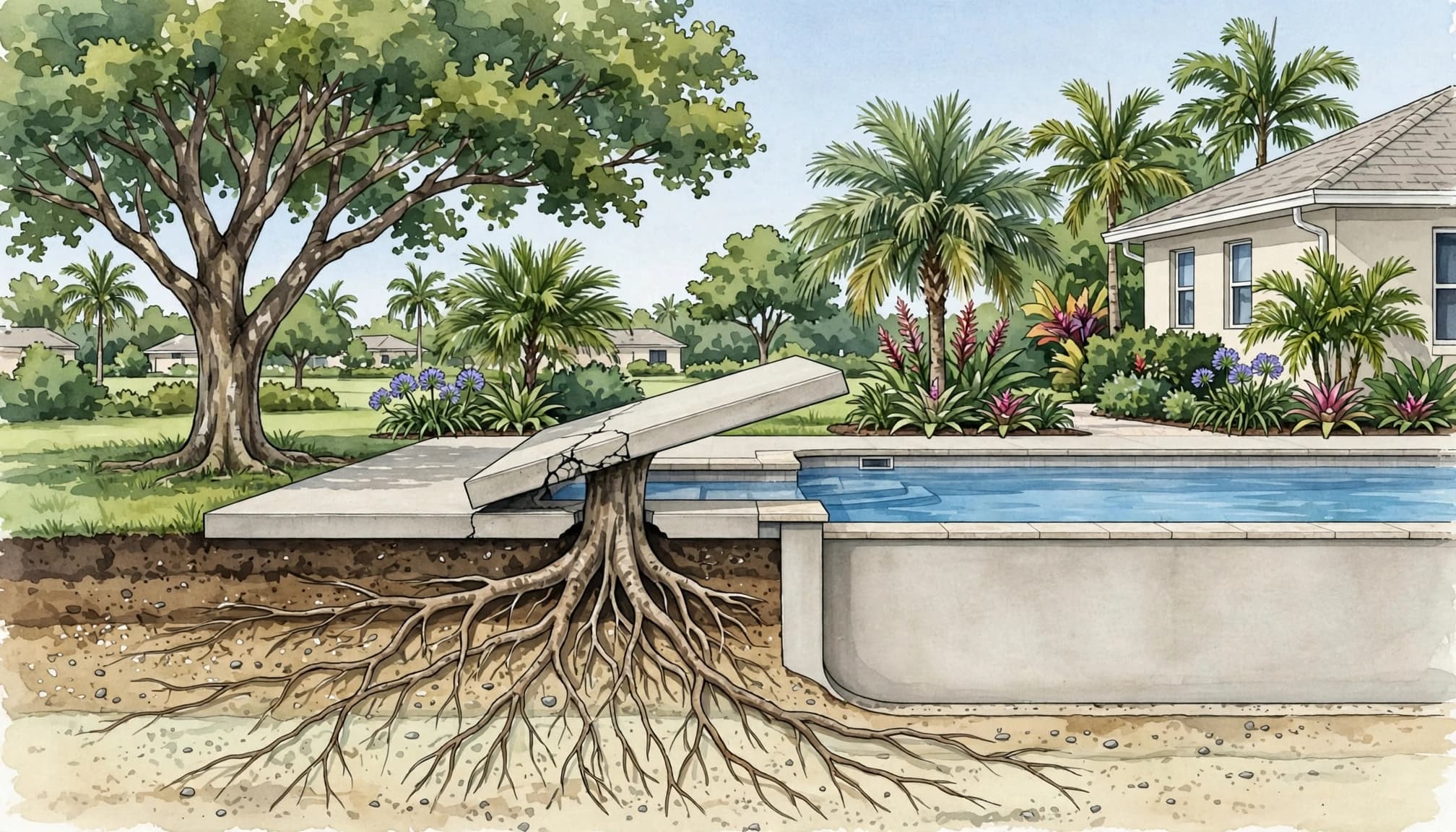
When roots occupy space beneath a deck, their growth can put pressure on the soil and the surface above. A concrete section may lift or crack, while pavers may become uneven. The resulting height difference can create a trip hazard near the water.
Roots are only one possible cause of that movement. Poor soil support, drainage problems, and settlement can produce similar symptoms. Seeing a tree nearby is a reason to investigate, not proof that it caused the damage.
Movement Around the Coping
Coping finishes the top edge of the pool and meets the surrounding deck. If the deck shifts toward that edge, the coping or the joint beside it may experience added pressure. Loose pieces, separated joints, and recurring sealant failure deserve attention.
The deck and pool structure can move differently. A properly designed flexible joint gives those adjoining areas room for movement without treating them as one continuous slab. Our guide to gunite pool layouts and outdoor living looks at how coping, deck materials, and drainage fit together.
Warning Signs Around the Pool Edge
Tree root pool deck damage can start as a small change that's easy to overlook. Pay attention to the relationship between the tree, the deck surface, and the pool edge rather than focusing on one crack alone.
Cracks, Raised Surfaces, and Loose Coping
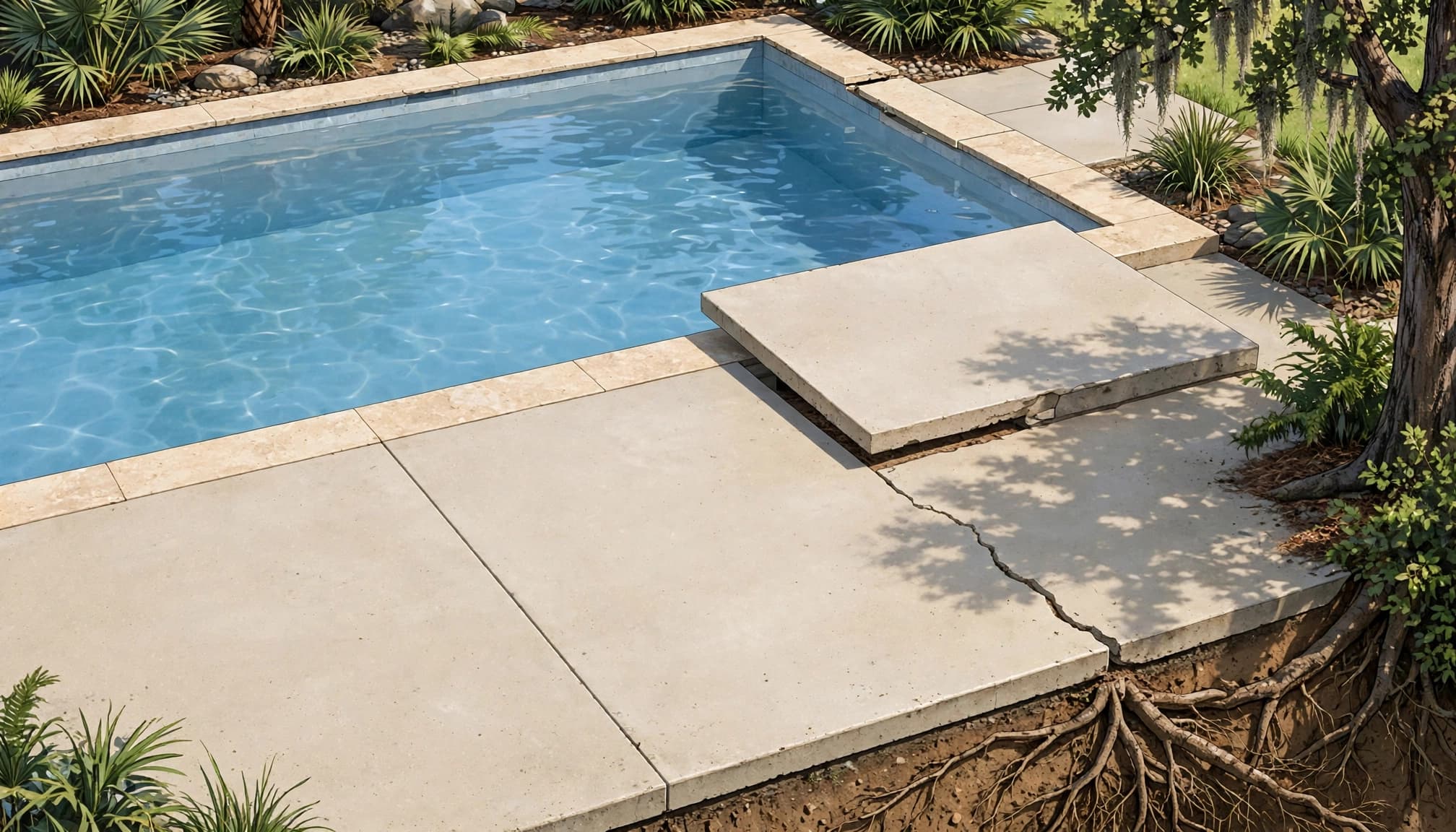
Look for cracks that widen, reopen after repair, or leave one side higher than the other. Uneven pavers and raised concrete edges can also make a pool area less safe for bare feet.
At the pool perimeter, watch for loose coping, a gap that changes, or joint sealant that repeatedly pulls away. A hairline crack alone doesn't establish a structural problem, but a changing pattern deserves an on-site review.
Water and Soil Changes
After rain, notice whether water collects at the coping or remains in low spots on the deck. Failed joints can let water reach the area below the surface, where soil support may already be weak.
Damp ground, erosion, or a visible void near the deck can point to a drainage problem or a leak. These signs don't identify the cause by themselves. They do give a pool professional useful places to inspect.
How to Tell Whether Roots Are Contributing
The best assessment connects the visible damage to conditions below the deck. A raised section near a tree may involve roots, but it could also reflect settlement or poor drainage.
Record What You Can See
Photograph cracks, lifted edges, and coping gaps from the same positions over time. Include a wider view that shows the affected area in relation to nearby trees and the pool. Notes about recurring puddles, previous repairs, and changes in pool water level can also help.
If a crack has reopened after patching, share that history. A repair that repeatedly fails may indicate movement that a surface treatment alone won't address. Keep people away from a raised edge if it creates a trip hazard.
Have the Area Evaluated Before Covering It
A pool contractor can assess the deck, coping, joints, and drainage together. Depending on what the inspection reveals, an arborist or another qualified professional may also need to evaluate the tree and its relationship to the damaged area.
Visible roots near a crack are useful evidence, but the full condition may remain hidden beneath the deck. Avoid covering the damage before an assessment , since a new coating can conceal clues about movement without correcting its cause.
Deck Damage, Shell Damage, and Plumbing Leaks
A pool deck can move without proving that the gunite shell has failed. Keeping those parts of the pool separate in the diagnosis helps you avoid paying for work that doesn't address the actual problem.
When to Look Beyond the Deck
A crack in the deck surface is different from a crack in the pool's interior finish or structural shell. Loose coping may relate to movement at the edge, while a finish crack may have a different cause.
Ask for a pool professional's assessment if cracks continue into the coping or appear inside the pool, especially when they widen or return after repair. Recurring separation, exposed reinforcing steel, or signs of shell movement may also call for a structural engineer.
When Plumbing Testing May Be Needed
Water loss, persistently wet soil, and erosion can warrant a plumbing assessment. Evaporation and splashing affect water level too, so a lower water level alone doesn't prove a leak.
Pool lines can run below decks and landscaping. A wet patch therefore doesn't identify which component is leaking, or whether the leak is in the shell at all. Leak detection or plumbing testing can help narrow the repair area. For a new build, our article on Cape Coral pool plumbing layout explains why pipe routes deserve attention before the shell is built.
Prevent Problems Around Existing Trees
Mature trees can provide welcome shade in a Cape Coral backyard. Keeping them near a pool requires a plan that accounts for the space they occupy and the condition of the deck around them.
Consider the Tree Before Changing the Deck
Before replacing or expanding a deck, include existing trees in the project discussion. Their location can affect the deck layout and the amount of room available for drainage and other backyard features.
An arborist can assess a tree when roots appear to be involved in deck movement. That review matters for tree health and stability, especially if a proposed repair affects the area around the tree. Don't treat the exposed portion of a problem as the entire tree assessment.
Keep Water Management in the Plan
After a heavy storm, standing water against the pool edge may expose weak joints to repeated moisture. Irrigation that keeps the same area wet can add to the problem.
Keep drains clear and address recurring low spots rather than relying on sealant alone. A contractor can assess whether the deck grade, nearby landscaping, or a drainage feature needs attention. The right solution depends on where water collects and where it can safely go.
Plan Drainage and Joints for a New Pool
A new pool or major renovation gives you a chance to coordinate the deck with the rest of the yard. Trees, screen-enclosure areas, equipment access, and drainage all compete for space around the pool.
Give the Deck and Pool Their Own Movement Space
The joint between the deck and pool structure should suit the selected materials and the way the surfaces meet. A flexible joint helps accommodate movement between adjoining areas. It doesn't repair an unstable deck or restore a damaged shell.
Coping, concrete, and pavers also have different installation needs. Include their transitions in the design instead of deciding how they meet after the deck is finished.
Account for Cape Coral Rainfall
Plan deck elevations and drainage before construction reaches the finishing stage. Water shouldn't routinely collect beside the coping, house, or pool equipment.
Existing plumbing and electrical conduit can limit where drainage improvements fit. That makes coordination important before a deck replacement or a larger backyard project. A clear layout also helps keep access available for future pool maintenance.
Repair Options for a Damaged Pool Deck
The appropriate repair depends on whether the deck is stable, how much has moved, and whether the underlying cause has been identified. A fresh surface may improve the appearance, but it won't stabilize a deck that continues to shift.
Repair or Resurface a Stable Area
A limited crack in a level, sound deck may be a candidate for localized repair. Worn joint sealant or loose coping may also need attention as part of the project.
Resurfacing can be an option when the existing concrete remains stable but the finish looks worn. The contractor should evaluate the underlying deck first and select a surface intended for poolside conditions, including wet feet and outdoor exposure.
Replace an Unstable Section
A deck with extensive lifting, settlement, recurring cracks, or weak support may need a more substantial repair or replacement. Paver areas may allow a different scope than a concrete slab, depending on the condition beneath them.
The plan should address drainage and any contributing tree-related issue alongside the deck work. If inspection identifies a plumbing leak or shell problem, those need their own repair scope. Our pool renovation services in Southwest Florida can help bring those related decisions into one project plan.
What to Include in a Repair Proposal
A useful proposal describes more than the finished appearance. It should identify the affected deck areas, the condition of the coping and joints, and any drainage or soil-support concerns found during the assessment.
The scope should also distinguish between deck work and any separate pool or plumbing repairs. That distinction makes proposals easier to compare and helps you understand what each project will address.
Ask for the proposed finish and joint treatment to be included in writing. If the contractor sees signs that call for an arborist, leak specialist, or structural engineer, those findings should inform the plan before cosmetic work begins.
A tree near a damaged deck doesn't automatically need to disappear. The decision depends on the tree's condition, the location of the damage, and the options available for the yard. A coordinated assessment gives you a better basis for deciding what to keep and what to repair.
Protect the Pool Edge Before Refinishing
Tree roots can contribute to a lifted deck or movement near the coping, but similar signs can come from drainage and soil problems. Identifying the cause is the first step toward a repair that fits the damage.
Keep the deck, shell, and plumbing distinct during the assessment. Once you know which areas are affected, you can plan repairs and choose a finish with more confidence.