Why a Kitchen Sink Cabinet Gets Damp After Remodeling
Explore Our Services
Contact Us Today!
(239) 322-9295
A damp kitchen sink cabinet after a remodel can point to a plumbing leak, water slipping past a sink or faucet seal, or condensation on a cold pipe. The location of the moisture and when it appears offer the best clues.
In Naples, humid air can make condensation possible, but it shouldn't be assumed to be the cause. Find the water source before drying or repairing the cabinet, so moisture doesn't return.
Key Takeaways
- A new sink or cabinet can change the alignment of drainpipes and supply lines, even when the sink stays in the same location.
- Water that appears during draining, faucet use, or a dishwasher cycle may help identify the affected connection.
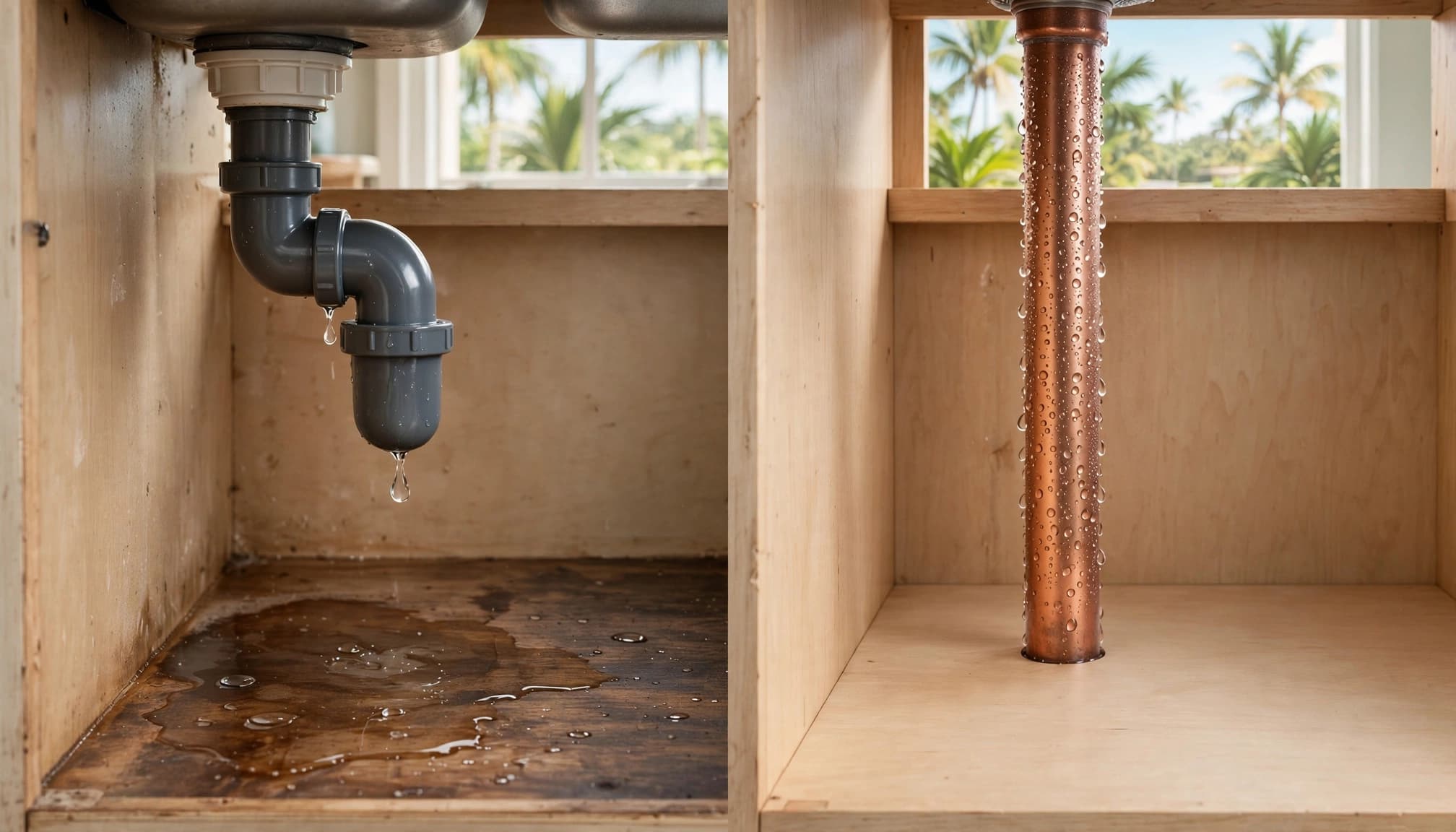
- Condensation tends to form on a cold surface, while a leak often starts at a joint, valve, hose, or fixture.
- Contact your remodeler about moisture around recently installed work. Call a plumber promptly for an active leak or a water shutoff issue.
Plumbing Connections Can Shift During a Remodel
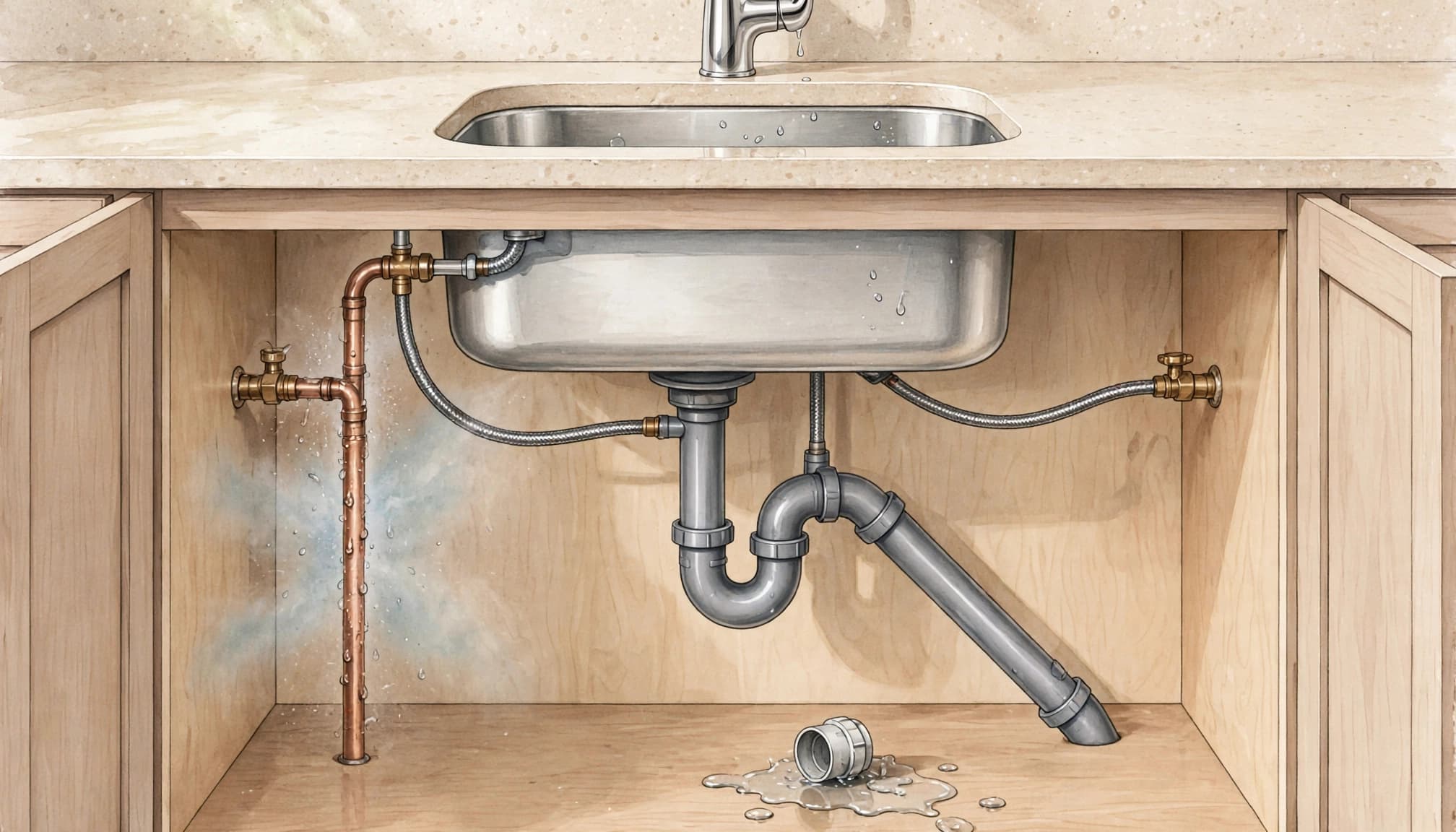
A sink cabinet contains several connections in a small space. Replacing the sink, faucet, countertop, or cabinet may require those connections to be disconnected and reassembled. Even a new sink with a deeper bowl can leave less room for the existing drain arrangement.
Drain Joints and the P-Trap
The P-trap is the curved section of drainpipe beneath the sink. Its slip joints can leak if a connection is loose, a washer is out of position, or the pipes don't line up properly.
A drain leak may appear only when water flows through the pipe. Look beneath the sink while it drains and watch for a bead forming at a joint. Water can follow the pipe before it falls, so the wet spot on the cabinet floor may not be directly below the source.
Supply Lines and Shutoff Valves
The hot and cold supply lines connect the faucet to shutoff valves below the sink. Moisture can develop around a valve, a hose connection, or a damaged line.
Supply plumbing remains pressurized when the faucet is off, so a leak there may continue between uses. If you see water at a connection, avoid tightening it yourself. Overtightening can damage a fitting or make an existing problem worse.
A replacement sink's depth and drain location matter alongside its overall dimensions. Our guidance on kitchen sink fit and installation covers details that affect how a sink works with an existing cabinet and countertop.
Faucet, Sink, and Dishwasher Leaks Can Wet the Cabinet
Not every wet cabinet floor points to the P-trap. Water may start above the counter or at an appliance connection and travel into the cabinet.
Faucet Base and Sink Seals
Water splashed around a faucet can pass through a gap at its base and run down the underside of the countertop. A pull-down faucet hose or its connection can also leak when the sprayer is used.
Likewise, a gap around the sink rim or the joint between an undermount sink and countertop can allow surface water into the cabinet. Look for a trail on the underside of the counter after normal sink use.
Avoid applying a fresh bead of sealant before finding the source. Sealant can't repair a leaking supply line, and covering a wet joint can hide the problem.
Dishwasher and Disposal Connections
If the remodel included a dishwasher or garbage disposal, inspect the visible hoses and drain connections in the sink cabinet. A loose connection may release water only during a dishwasher drain cycle or when the disposal side of the sink drains.
Tell the remodeler or plumber which fixture was running when you noticed moisture. That detail can help them identify the affected connection without disturbing unrelated work.
Naples Humidity Can Lead to Condensation
Condensation forms when moist air contacts a surface below the air's dew point. In a Naples kitchen, a cold water pipe can collect droplets when indoor air is humid enough. Cabinet doors can also limit air movement around the plumbing.
Recognizing a Sweating Pipe
Condensation may appear as fine droplets along an exposed cold pipe rather than at one joint. It can happen without anyone using the sink, although running cold water may cool the pipe and make droplets more noticeable.
A few droplets don't prove there isn't also a leak. Dry the pipe and nearby fittings, then watch where moisture returns. If water repeatedly forms at a valve or connection, have that area inspected.
Reducing Moisture Around Cold Plumbing
Air conditioning and a dehumidifier can help control indoor humidity. Keep the cabinet accessible and avoid packing cleaning supplies tightly around the pipes, so you can see the plumbing and air can circulate.
A plumber can assess whether insulation is suitable for an exposed cold line. Insulation should fit the pipe and protect against humid air reaching its cold surface. Repair any leak first , and keep shutoff valves accessible.
How to Tell a Leak From Condensation
The moisture pattern can guide your next step, although more than one problem can occur at once.
| What you notice | What it may indicate |
|---|---|
| A droplet grows at a drain joint while the sink empties | A drain connection may be leaking. |
| Water appears at a supply valve while the faucet is off | A pressurized supply connection may be leaking. |
| Fine droplets form along a cold pipe | Condensation may be present. |
| The counter or cabinet underside gets wet after splashing | Water may be passing a faucet or sink seal. |
| Moisture appears during a dishwasher cycle | A dishwasher hose or connection may need attention. |
These clues narrow the search; they don't replace an inspection. In particular, water can travel along a pipe or countertop before it becomes visible.
Practical Checks You Can Do Safely
Start by removing stored items and wiping up visible water. Use a flashlight to look at the cabinet floor, back wall, pipe joints, and underside of the sink. If water is near an outlet, disposal, or electrical connection, stay clear and contact a professional.
If the area is safe and there is no active pooling, use these steps to narrow down the source:
- Dry the visible pipes and cabinet surfaces. Place dry paper towels beneath separate connections, keeping them away from electrical components.
- Leave the faucet off for a short period. New moisture at a supply valve or hose connection can point to a leak that doesn't depend on sink use.
- Run a small amount of water and watch the drain joints. Stop if water begins to collect. If the area remains dry, let some water drain from the basin and observe again.
- Look beneath the faucet and counter after normal use. Run the dishwasher separately if its cycle seems connected to the moisture.
Take photos of the first wet area and note what you were doing when it appeared. Don't take apart fittings or force a stuck shutoff valve. If water is actively leaking and you can safely reach and operate the appropriate valve, turn it off. Otherwise, use the home's main shutoff if accessible and call a plumber.
Dry the Cabinet After the Source Is Addressed
Once the leak or other moisture source has been corrected, leave the cabinet open and remove wet items. Wipe up standing water and allow air to circulate. A fan or dehumidifier can help dry accessible surfaces, provided it can be used safely away from water.
Look for Damage to Cabinet Materials
Inspect the cabinet floor and exposed edges for swelling, softness, peeling finish, or discoloration. Particleboard and fiberboard can swell after repeated wetting, especially where an edge is unsealed.
A sound cabinet may need drying and a finish repair. A swollen or weakened cabinet floor may need replacement. The extent of the damage depends on the material and how far the water traveled.
Don't Cover a Persistently Damp Area
A waterproof mat can make future spills easier to spot, but placing one over a wet cabinet floor can conceal moisture. Wait until the area is dry and the source has been addressed.
If you see extensive mold-like growth, smell a persistent musty odor, or suspect moisture behind the cabinet, contact a qualified remediation professional. Hidden water may affect the wall or flooring as well as the cabinet.
When to Call the Remodeler or a Plumber
The right call depends on the urgency and whether the affected work was part of your renovation. In some cases, both the remodeler and a plumber need to be involved.
Contact Your Remodeler About Recent Work
If dampness appears around a newly installed sink, faucet, countertop, or cabinet, let your remodeler know promptly. Share photos, the location of the moisture, and whether it appears during a particular activity.
The remodeler can coordinate an assessment of the installation and any affected finishes. If your renovation involved moving kitchen plumbing, mention which fixtures changed location. That information helps identify connections that were altered during the project.
Call a Plumber for an Active Leak
Call a plumber promptly if water is pooling, a supply line or valve is leaking, or you can't safely stop the flow. A plumber can also investigate a recurring drain leak, a damaged hose, or moisture coming from inside the wall.
Don't keep using the sink or dishwasher when doing so causes water to collect. Even a small recurring leak can damage the cabinet floor and spread beyond the area you can see.
Protect the Cabinet After Repairs
Once the cabinet is dry, keep plumbing connections visible and shutoff valves easy to reach. A removable cabinet mat can catch minor spills, but lift it occasionally to look for moisture underneath.
Moisture-resistant finishes and sealed exposed edges offer additional protection near the sink. Our guide to kitchen cabinet layout and materials discusses choosing finishes suited to Southwest Florida conditions.
After any repair, watch the area during ordinary sink and dishwasher use. If dampness returns, share the new pattern with the person handling the repair rather than covering the spot again.
Address the Moisture Before It Spreads
A damp cabinet after a remodel deserves a closer look. The position and timing of the water can help distinguish a plumbing or seal problem from possible condensation.
Start with safe observation, then involve your remodeler or a plumber when the evidence points to installed work or an active leak. Finding the source first gives your cabinet the best chance to dry and stay dry.