Naples Pool Deck Materials: Travertine, Pavers or Concrete
Explore Our Services
Contact Us Today!
(239) 322-9295
A pool deck that looks beautiful in a showroom can feel different after a Naples afternoon thunderstorm. Choosing Naples pool deck materials means weighing barefoot comfort, wet traction, drainage, and upkeep alongside appearance.
Travertine, concrete pavers, and poured concrete can all work around a gunite pool, but the complete installation matters. Your results depend on the selected material, surface finish, preparation, and maintenance. Start by separating each option's design advantages from the construction details that determine performance.
Comparing Naples Pool Deck Materials
Travertine is natural stone, while concrete pavers are manufactured units. Poured concrete creates a continuous slab with planned joints. Although travertine also comes in paver form, "pavers" here means concrete pavers.
These differences help narrow your choices.
| Material | Main design appeal | Details to evaluate |
|---|---|---|
| Travertine | Natural variation and a stone finish | Surface treatment, pores, cleaning compatibility, and installation method |
| Concrete pavers | Repeatable patterns and replaceable units | Base preparation, joint material, edge restraint, and surface texture |
| Poured concrete | A continuous surface with several finish options | Slab support, drainage, joints, and coating compatibility |
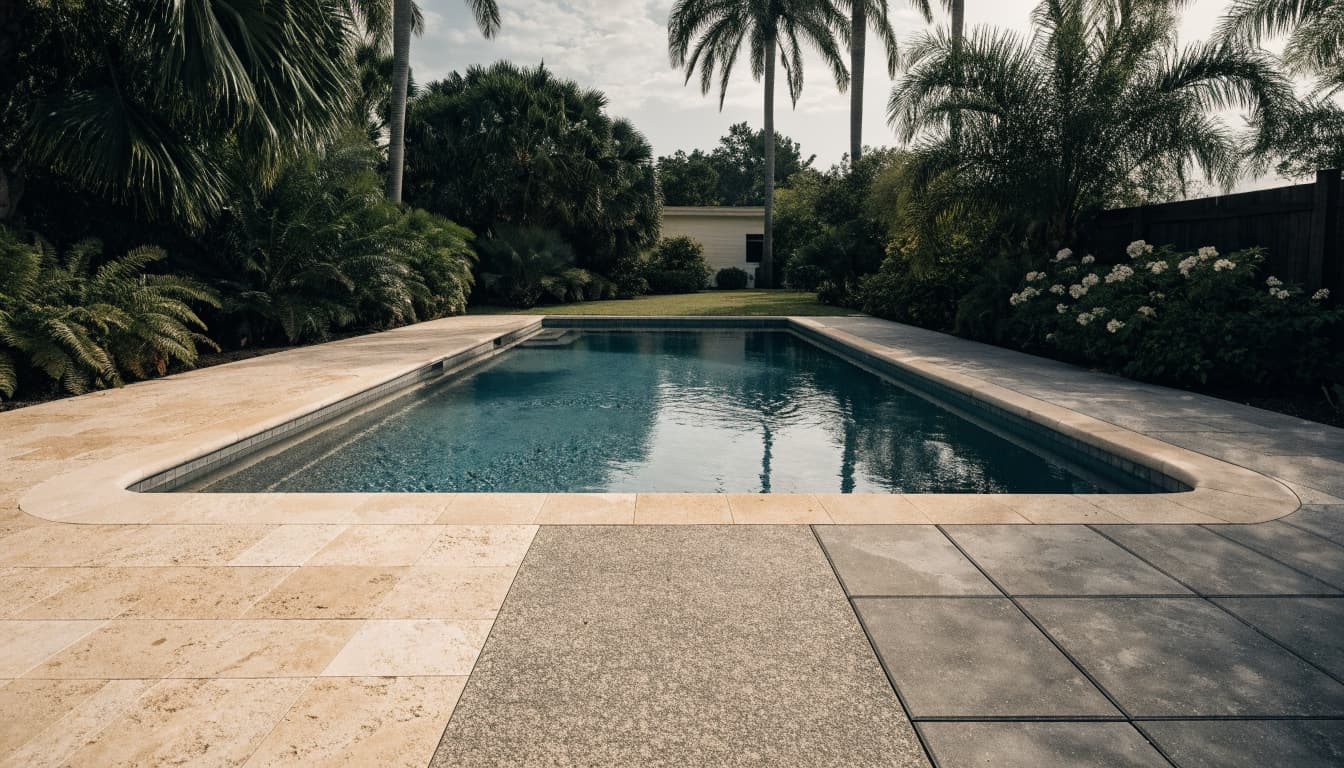
The strongest choice matches your priorities and your property. For example, a stone-focused design raises different questions than a renovation that needs drainage corrections. Compare complete systems rather than selecting a material by name alone.
Travertine: Natural Stone With Product-Specific Needs
Choose the finish for outdoor pool use
Travertine has natural color variation and pores that contribute to its appearance. However, different selections can vary in surface texture, filling, thickness, and edge treatment.
Ask for the exact product proposed for your deck and coping. Confirm that its manufacturer or supplier recommends it for exterior pool-deck use and your installation method.
Also, inspect several pieces together rather than relying on one small sample. Natural variation becomes more noticeable across a large deck. View the selection wet and dry, then examine transitions around steps and the pool edge.
Understand stone care before committing
Travertine is a calcium-based stone, so acidic cleaners can damage its surface. Choose cleaning products intended for the selected stone, and ask whether sealing is recommended.
A sealer isn't a substitute for suitable drainage or routine cleaning. Its compatibility with the stone, wet traction, pool chemicals, and any existing treatment still needs review.
Discuss how the installer will handle filled areas, surface cavities, and damaged pieces. If your renovation includes matching new coping to existing stone, review a larger sample arrangement before ordering. Small differences in color and finish can affect the overall appearance.
Concrete Pavers: Flexible Patterns and Localized Repairs
Plan the layout beyond the pool edge
Concrete pavers offer different sizes, colors, and patterns. That flexibility can help connect a pool deck with walkways, seating areas, and an outdoor kitchen.
However, check the proposed layout around curved coping, screen enclosure posts, and narrow transitions. Numerous small cuts can make an otherwise attractive pattern look crowded.
For a coordinated outdoor space, backyard and lanai design can address those connections before installation begins. Plan furniture placement too. Dining chairs, loungers, and equipment access need usable space, not just an appealing paving pattern.
Evaluate the base and joint system
Individual pavers can be lifted, reset, or replaced when necessary. That repair option is useful, but it doesn't eliminate the need to correct underlying settlement or drainage problems.
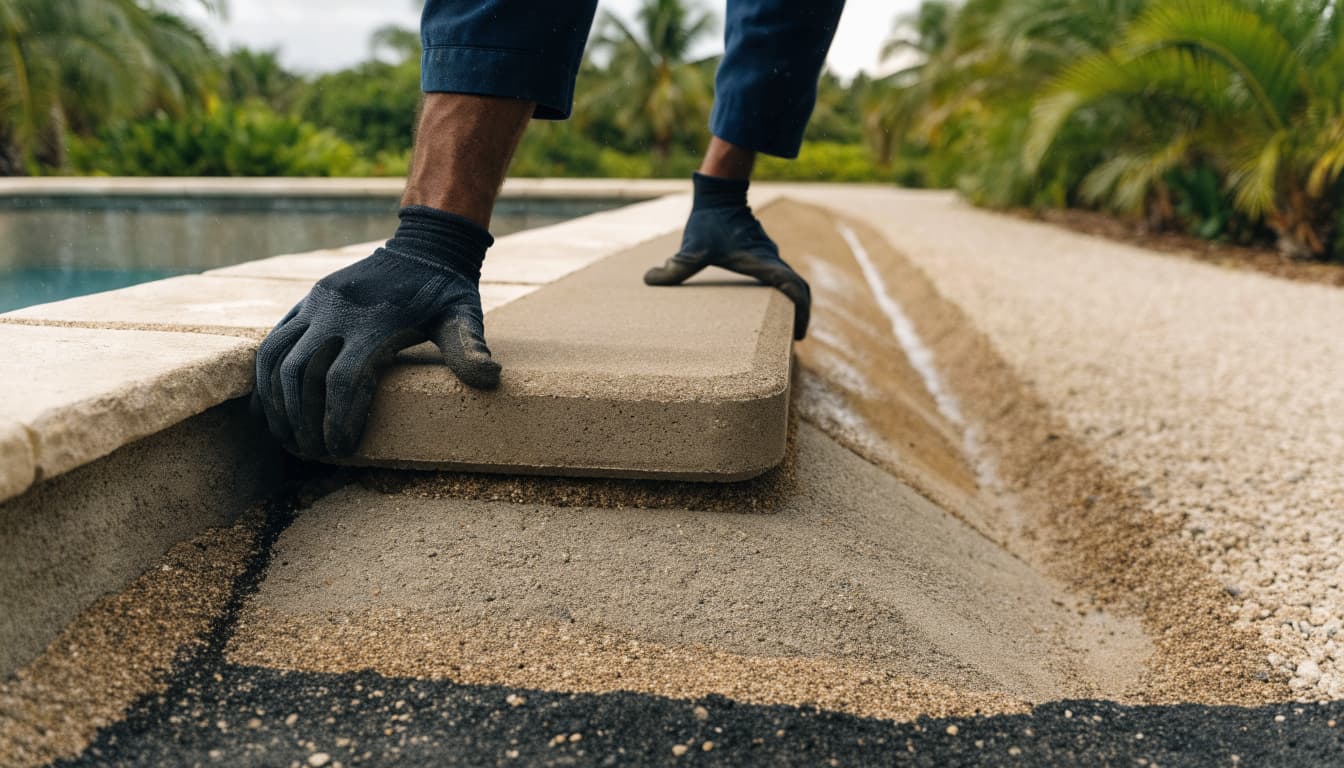
Ask how the contractor will prepare and compact the base, secure the edges, and select joint material. The plan should match the product and site conditions.
Joint maintenance also belongs in your ownership budget. Sand loss, weeds, staining, and uneven areas may need attention over time. Keep spare units from the original order when practical, because later replacements may differ in color.
Poured Concrete: Several Finishes, One Structural Foundation
Compare the exact finish system
A new concrete deck can receive a broom texture, a decorative treatment, or a compatible coating after the required curing and preparation. Those choices affect appearance, cleaning, and barefoot use.
A stamped pattern and a light-colored acrylic texture are different systems. Ask what the proposal includes rather than accepting "decorative concrete" as a complete specification.
Review texture depth and sealer selection around wet areas. Deep patterns can collect debris, while a glossy appearance alone tells you little about wet traction. Request a representative finished sample, including any coating or sealer.
Separate resurfacing from replacement
Resurfacing adds a relatively thin finish to an existing slab. It may suit stable concrete with limited cosmetic damage, but it can't correct major settlement or every grading defect.
An assessment should distinguish repairable cracks from ongoing movement, weak concrete, and drainage failures. Guidance on pool deck repair and resurfacing explains why the underlying condition matters before choosing a coating.
Replacement creates an opportunity to examine support, adjust grades, and install planned control and isolation joints. However, it also adds demolition, debris, disruption, and expense. The slab's condition should drive that decision.
Heat, Humidity, and Chemicals Change the Comparison
Test comfort and traction with the finished surface
Naples sunshine makes color, shade, and surface treatment important. Dark finishes absorb more solar energy, but no material name guarantees a comfortable barefoot temperature.
Compare samples outdoors under similar conditions. Include the proposed sealer or coating, because the finished system is what you'll walk on. A shaded showroom sample won't reveal how the deck behaves beside your pool.
Texture also requires balance. An aggressive surface may feel uncomfortable and collect dirt, while a smooth-looking finish needs careful review for wet use. Request product-specific traction information rather than accepting a blanket "non-slip" claim.
Plan for moisture and chemical exposure
Humidity and frequent rain affect drying and installation conditions. Ask how the contractor will follow product requirements for moisture, weather, curing, and application.
Meanwhile, saltwater systems and coastal exposure can leave deposits. Chlorine and cleaning products may affect sealers or finishes, so request a written cleaning plan.
Remove leaves and address algae or mildew before buildup becomes extensive. Also, check beneath planters and furniture pads where moisture can remain trapped.
Maintenance requirements should match the exact product. A care routine suitable for one stone, paver, or coating may damage another.
Drainage and Pool-Edge Details Deserve Early Planning
Follow the water across the entire deck
Heavy Southwest Florida rain exposes low spots and poor drainage quickly. The design should route runoff toward its intended collection or discharge path without creating problems at the house or pool equipment.
Ask the contractor to explain finished elevations, drain locations, and transitions at doors and walkways. Paver joints don't automatically make an installation permeable; that requires an appropriately designed system.
Existing decks need the same review. Covering a low area with a thin coating won't necessarily remove ponding. Raising a surface can also interfere with thresholds, drains, or enclosure details.
Coordinate coping, joints, and surrounding structures
A gunite pool shell and its surrounding deck can move differently. The pool-edge detail should accommodate that movement rather than create an unintended rigid connection.
Ask how the installer will preserve or replace isolation joints and coordinate them with coping. Planned joints help manage movement, but they don't guarantee crack-free concrete.
For custom gunite pool construction, settle deck elevations and coping details during design. Screen enclosure posts, equipment access, utilities, and nearby structures also need coordination before the finished surface goes down. This planning is especially important when a new deck changes the footprint of an existing backyard.
Compare Installed Costs, Not Material Prices Alone
Cutting Edge Homes & Renovations' Southwest Florida pool cost guide gives a broad decking allowance of $5,000 to $20,000 or more within a new-pool project. That figure isn't a standalone deck quote or a material-specific price.
Your estimate should reflect deck area, access, demolition, base preparation, drainage, coping, finish, and cleanup. Complex cuts, grade changes, or enclosure coordination can also change the scope.
When comparing Naples pool deck materials, request proposals for the same layout and site conditions. Otherwise, a cheaper total may exclude work another contractor has included.
Before signing, get these points in writing:
- Identify the exact material, finish, installation system, and any sealer or coating.
- Describe preparation, drainage corrections, joint details, and protection of surrounding features.
- State maintenance requirements, warranty exclusions, and applicable permit or inspection responsibilities.
Also, ask what the contractor expects you to maintain and how repairs would work. Replacement units, joint care, refinishing, and resealing can affect long-term spending. A useful comparison considers both the initial installation and the care you are willing to provide.
Key Takeaways for Your Naples Pool Deck
Travertine suits homeowners who want natural stone variation and accept product-specific care. Concrete pavers offer patterned layouts and the ability to replace individual units. Poured concrete provides several finish options and an opportunity to establish new grades and joints when replacement is appropriate.
None guarantees cooler feet, better traction, or freedom from maintenance simply because of its material category. For Naples pool deck materials, finish and installation details deserve as much attention as appearance.
Inspect samples, confirm drainage, and compare written scopes before making the final selection.
Choose the Complete Deck System
Your pool deck needs to work after a hot afternoon and a heavy rain, not only on installation day. The right choice pairs your preferred appearance with suitable preparation, drainage, and a realistic maintenance plan.
Ask Cutting Edge Homes & Renovations to evaluate those details alongside your gunite pool design or existing deck condition. A clear, itemized proposal makes it easier to choose travertine, concrete pavers, or poured concrete with confidence.