

A few hundred dollars can protect a six-figure investment. That is why many Southwest Florida buyers schedule a pre-drywall inspection before the walls close up.
If you're building in Cape Coral, Naples, Fort Myers, Sarasota, Bradenton, or Port Charlotte, this check can catch problems while they are still easy to fix. The real question is simple, what does it cost in 2026, and is it worth it before insulation and drywall hide everything?
The answer starts with what the inspector can still see.
What a pre-drywall inspection actually covers
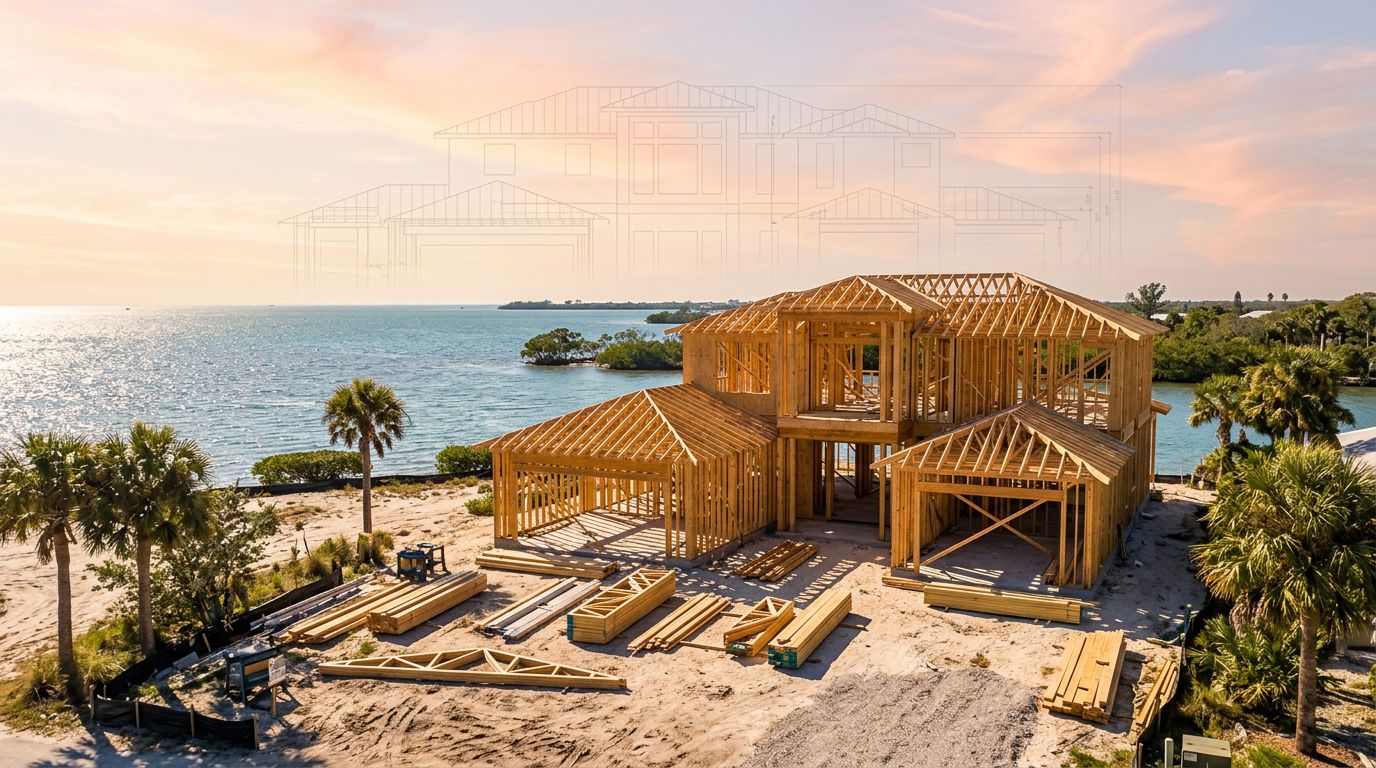
This inspection happens after framing, rough plumbing, electrical, HVAC, and other trade work are in place, but before insulation and drywall. That timing matters because the house is still open, so the inspector can see the bones of the build instead of guessing what's behind a finished wall.
A good inspector will usually check the framing, plumbing routes, wire runs, ductwork, flashing, and storm-related details. They also look for things that are easy to miss during a busy build, like missing nail plates, sloppy penetrations, or lines that were installed in the wrong place.
Common items include:
- Framing that is out of plumb, under-supported, or fastened poorly
- Plumbing runs that leak, sag, or leave little room for future access
- Electrical boxes, wire protection, and panel work that do not line up with the plan
- HVAC ducts that are crushed, disconnected, or not sealed well
- Moisture control details around windows, showers, and exterior walls
- Hurricane straps, bracing, and other Florida-specific structural connections
If your plan includes a complex lighting package or smart-home wiring, it helps to understand electrical rough-in costs SWFL 2026 , because those details often show up in the inspection. The same is true for any build with a pool bath, a bonus room, or extra low-voltage work.
The goal is not to judge finishes or style. It is to catch hidden issues while trades can still fix them without tearing apart completed rooms.
What Southwest Florida buyers usually pay in 2026
In 2026, most Southwest Florida buyers should budget about $300 to $650 for a standard pre-drywall inspection. A broad national benchmark from Angi's pre-drywall cost guide lands in the same neighborhood, which matches what many local buyers are seeing.
A quick size-based view helps set expectations:
| Home size | Typical 2026 range | What usually pushes it higher |
|---|---|---|
| 800 to 1,200 sq. ft. | $300 to $400 | Simple layout, fewer systems |
| 1,500 to 2,000 sq. ft. | $400 to $550 | Standard single-family rough-in |
| 2,500 sq. ft. and up | $550 to $700+ | More rooms, more trade work, more time |
In Naples, Fort Myers, Cape Coral, Sarasota, Bradenton, and Port Charlotte, the gap between cities is usually modest. Square footage, layout, and report depth matter more than the zip code. A waterfront custom home may cost more to inspect than a smaller inland build, but the reason is usually scope, not location alone.
If you are working with a cost-plus home building fees in Southwest Florida model, this kind of visibility fits the rest of the budget. You can see where the money goes, line by line, instead of guessing what got padded into a lump sum.
Most quotes also change when the report includes extra services. Photo-heavy reports, thermal scans, moisture readings, or a follow-up visit can add more to the bill. That does not mean the fee is high. It means the inspector is spending more time on the job.
Why the price changes from one home to another
Two homes with the same square footage can still have very different inspection fees. One might have a simple single-level layout and standard finishes. The other might have multiple bathrooms, a second floor, a buried duct layout, or a long list of owner selections.
That is where transparent pricing matters. If you're building with a cost-plus home builder, the inspection cost should fit into a clear budget, not get buried inside a vague allowance. A strong contract should also spell out how repair items and builder responses are handled once the report comes in. Florida new construction contract essentials for 2026 is a useful place to compare those basics before work moves too far.
The main cost drivers are easy to spot once you know what to look for:
- Bigger homes take longer, so the fee rises with square footage.
- Multi-story layouts add time because there are more spaces to review.
- Detailed reports cost more when they include photos, notes, or thermal images.
- Travel and access can matter on farther-out lots or homes with limited site access.
- More experienced inspectors often charge more because they spend more time on site and write fuller reports.
A cheaper quote is fine if the scope is clear. However, a low price can hide a rushed visit or a thin report. If the inspection is meant to protect the build, the report quality matters as much as the fee.
Common issues inspectors catch before drywall goes up
The best pre-drywall reports focus on hidden problems, not cosmetic issues. You want someone checking the structure, the rough-ins, and the places where mistakes can disappear once insulation and drywall go in.
Typical problems include:
- Framing that is not straight, square, or properly fastened
- Plumbing leaks, loose fittings, or runs that make later access hard
- Electrical boxes that sit too deep or too shallow, plus missing wire protection
- HVAC ducts that are crushed, disconnected, or poorly sealed
- Missing straps, weak bracing, or poor roof connection details
- Moisture concerns around windows, exterior openings, or wet rooms
Southwest Florida homes also deal with humidity, heavy rain, and wind exposure. That makes water control and storm connections especially important. A small mistake around flashing or a penetration can turn into a bigger problem after drywall hides the area.
Drywall doesn't create the problem, it hides it.
When an inspector catches something early, the fix often turns into a change order or a correction request. That is why it helps to understand how to minimize construction change orders. The sooner an issue surfaces, the easier it is to correct without stacking extra work on top of finished surfaces.
Is the inspection worth it before insulation and drywall?
Yes, because the repair window is still open. Once drywall goes up, a small miss can become patching, paint, trim work, and sometimes more demolition than anyone wants.
That is where the math starts to favor the inspection. If the visit costs a few hundred dollars and catches a plumbing, electrical, or framing issue, the savings can be much larger. Even one hidden problem can mean rework that costs far more than the inspection itself.
The value is even stronger when your builder uses a cost-plus structure. In that setup, the report feeds a clear budget conversation, and the repair line items stay visible. That fits well with builders who already use transparent pricing and itemized approvals.
For buyers in Cape Coral, Naples, Fort Myers, Sarasota, Bradenton, or Port Charlotte, the inspection is not a luxury add-on. It is a checkpoint that helps you see the build while there is still time to fix it.
Conclusion
For most Southwest Florida new homes in 2026, the pre-drywall inspection cost is modest compared with the problems it can prevent. A fair budget usually lands between $300 and $650 , with the final price shaped by home size, layout, report depth, and any add-ons.
The biggest value comes from timing. Before insulation and drywall go in, the inspector can still see the work that will later be buried inside the walls. That is the moment when mistakes are easiest to find and cheapest to fix.
If you're building on the Gulf coast, treat this step as part of the build, not an extra. A good report gives you cleaner paperwork, fewer surprises, and a stronger finish when the house is finally closed up.