Should You Replace Old Pool Plumbing During a Gunite Renovation?
Explore Our Services
Contact Us Today!
(239) 322-9295
Replacing pool plumbing during a gunite renovation can prevent disruptive repairs later, but age alone doesn't make a full replacement necessary. Pool plumbing replacement makes sense when inspection finds failing lines, a pressure test shows a leak, or the renovation changes the pool's layout.
The right scope may be no plumbing work, a repair to one circuit, or replacement of several lines. In Southwest Florida, the decision depends on the pipes' condition, how accessible they are, the renovation plan, and local requirements.
Start with the condition of the pool and its plumbing
A new interior finish doesn't repair a leaking pipe. Before choosing a scope, separate what you can see at the pool from what's hidden underground.
Shell and finish problems aren't the same as pipe problems
Gunite is the concrete structure beneath the interior finish. A crack in plaster or pebble doesn't automatically mean the shell or plumbing has failed. However, loose material, exposed reinforcing steel, or signs of movement call for evaluation before new finishes cover the area. The distinction matters because shell repairs and plumbing repairs are different work.
A renovation assessment should include visible concerns around drains, skimmers, returns, lights, and fittings, along with the shell and finish. Our Fort Myers gunite pool shell inspection explains why those conditions need to be assessed separately.
Plan the inspection before draining or demolition
Document visible issues and known leak locations before work begins. Also note whether the pool loses water only while equipment runs, or whether the problem continues when it's off. That pattern can help guide testing, though it doesn't identify a leak on its own.
Draining a gunite pool requires care in Southwest Florida. Groundwater can push beneath an empty shell, especially when the water table is high or after heavy rain, so draining should be part of a planned renovation.
Consider pipe age and material, not age alone
The age of the pool is a useful clue, but it isn't a verdict. A pool's plumbing may have been repaired or altered over time, so the original installation date may not tell you the condition of every line.
Identify what's installed and where
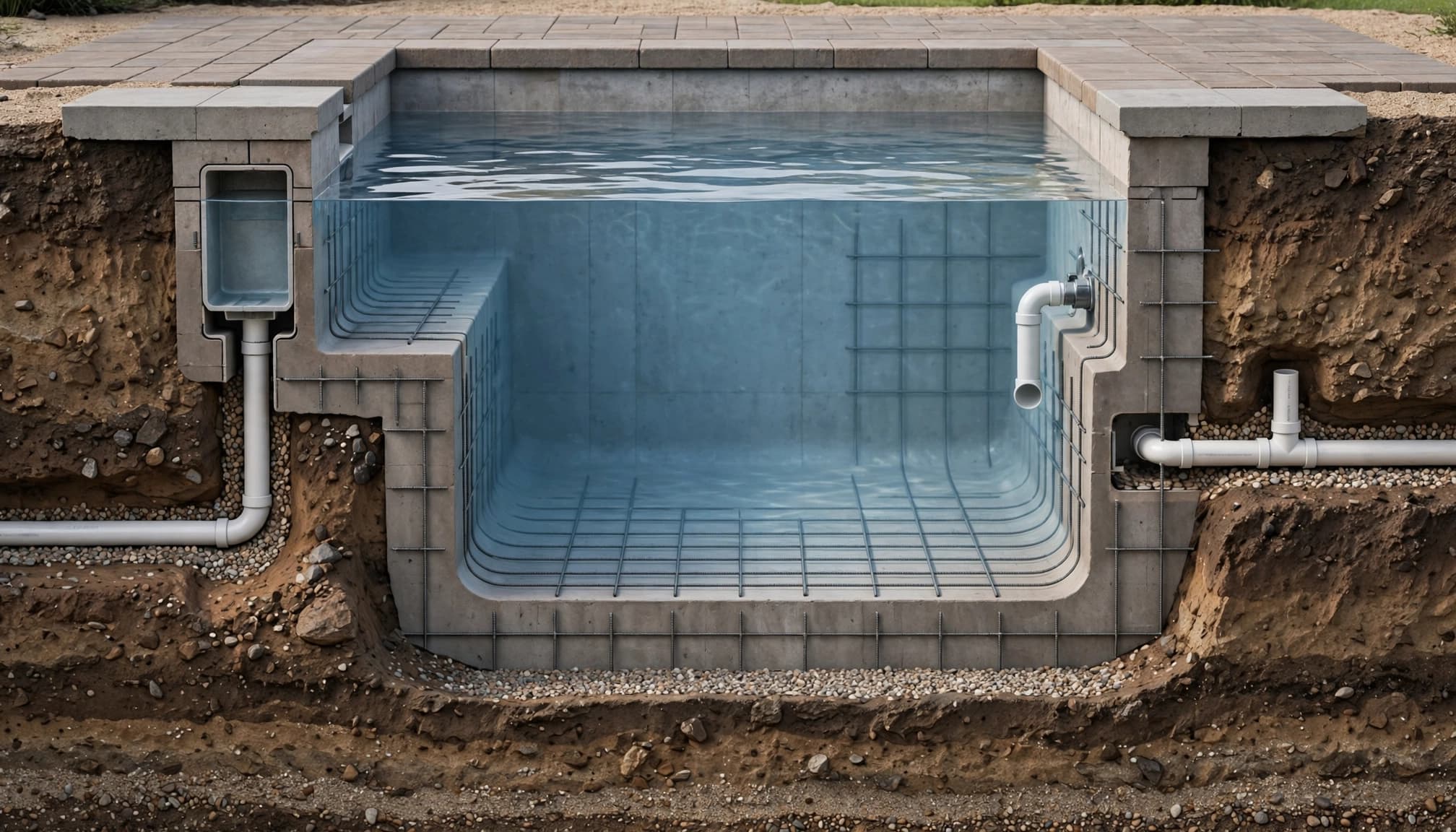
Ask which materials are present, which lines they serve, and whether connections or material transitions are visible. A pool can have separate suction, return, cleaner, spa, or water-feature lines. They may have different installation dates or histories.
Look for visible damage, brittle or deteriorated sections, poor connections, and areas where past repairs were made. A single patched section doesn't prove that every line has failed. Still, several repairs in different locations may be a reason to inspect the broader system more closely.
Weigh age alongside performance
An older line that holds pressure and has no known leak history may not require replacement simply because it's old. On the other hand, a newer line with a failed test or documented leak needs attention. Condition and test results carry more weight than age alone.
Include equipment needs in the assessment, too. A redesigned pool or added feature may change pipe routing, flow requirements, or the equipment connections. Gunite pool plumbing considerations during a conversion show why existing lines should be reviewed against the proposed design.
Use leak history and pressure tests to guide the scope
A history of unexplained water loss or repeated repairs matters. Pressure testing adds evidence, especially when it examines the individual lines rather than only the full network.
Test circuits separately when possible
Pool systems include distinct circuits, such as suction and return lines, and may have plumbing for a spa or water feature. Testing circuits individually can help narrow a pressure loss to a particular line. A test of the entire closed system may show a problem without revealing where it is.
Ask for the test outcome by circuit and a clear description of any failed line or repair. A failed result calls for investigation and correction. A passed test is useful evidence about the line's current condition, but it can't guarantee that a pipe will never need service.
Read the results alongside the repair record
A line that fails a test and has a history of patches may be a strong candidate for replacement, particularly when access is available. If only one circuit fails, that doesn't automatically mean all the other circuits need to go.
On the other hand, recurring leaks across several lines may point to a broader problem. Combine test results with the age and material of each line, visible conditions, and the cost of reaching the pipe later. That gives you a more grounded decision than a blanket rule.
Decide between selective repairs and full replacement
Replacing one line, replacing a group of lines, and replacing the entire system are different scopes. The choice should follow the evidence and the planned pool design.
Selective replacement can address a known problem
If one isolated line fails while the other circuits test well, repairing or replacing that line may be a reasonable scope. Selective work can also fit when a renovation changes one return, relocates a skimmer, or adds plumbing for a specific feature.
The proposal should identify which line will change and how the repair connects to the existing system. It should also distinguish that work from finish, tile, coping, and deck upgrades. That separation helps keep the reason for each cost clear.
Full replacement needs a system-wide reason
Broader replacement may make sense when multiple lines show problems, the layout is being substantially redesigned, or many existing lines are inaccessible and have a concerning repair history. A change in pool size or added water features may also require plumbing and equipment changes.
However, resurfacing by itself isn't evidence that the whole plumbing system needs replacement. A sound system with no leak evidence may not justify unnecessary demolition. The scope should explain why each line is included, rather than treating every pipe as equally worn.
Use renovation access to compare today's work with future repairs
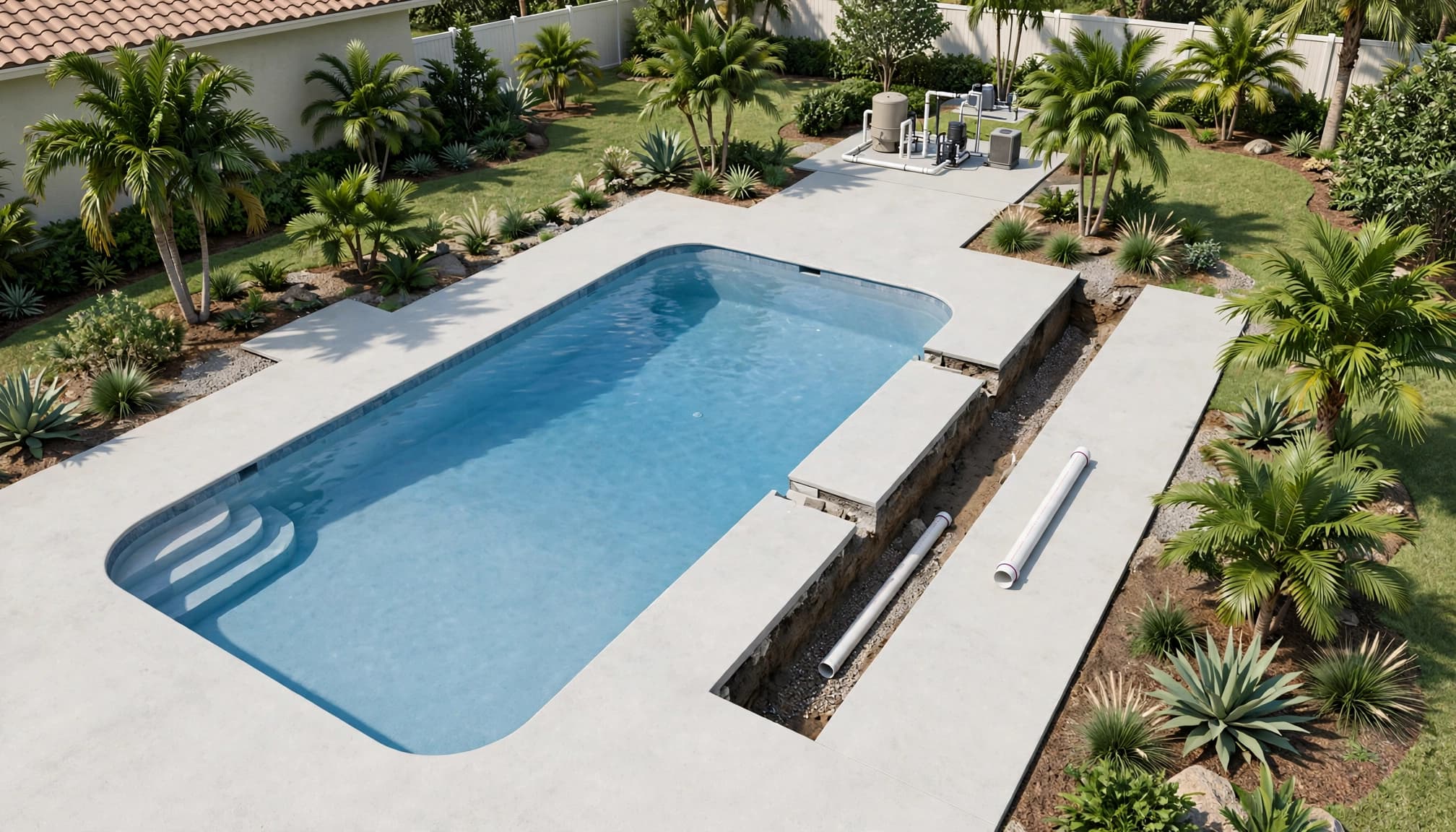
A renovation can create a practical window for plumbing work, but it doesn't make every buried line accessible. Removing an interior finish exposes parts of the shell, while pipes under a deck or yard may remain buried unless demolition or trenching reaches them.
Access depends on the exact work
If the project already includes deck removal or excavation near a known pipe, replacing a questionable line may be less disruptive now than after the pool is finished. If the line sits beneath intact decking or landscaping, accessing it may require additional demolition.
Ask which areas the renovation will actually open and which lines will remain underground. Don't assume that a new pool finish means every pipe is exposed. A written scope can separate accessible work from optional excavation.
Consider the cost of a later repair
Compare the added cost of replacement now with the likely disruption of opening a finished deck or yard to reach a line later. That comparison should use the actual pipe route and proposed work, not an assumption that every old pipe will fail.
When lines are replaced or exposed, record their routes, connections, and valve locations before covering them. Photos can help future repair work and reduce guesswork. Our pool renovation services in Southwest Florida can include a range of upgrades, so plumbing should be identified as its own part of the project scope.
Include permits and local requirements in the decision
Plumbing changes can expand a renovation beyond surface work. Moving return lines, changing suction piping, or adding a water feature may affect permit plans or trade-permit requirements. The exact requirements depend on the work and jurisdiction.
For example, Cape Coral pool plumbing permit guidance describes how plumbing and electrical changes may need separate attention. Keep the proposed pipe changes clearly described in the renovation scope so the work aligns with the applicable local process.
Key takeaways
- Pool age alone doesn't show whether its plumbing needs replacement.
- Use the material, repair history, visible condition, and pressure-test results together.
- A failed circuit may call for selective repair, not automatic replacement of every line.
- Full replacement needs a clear system-wide reason or a substantial layout change.
- Access during renovation and the cost of future repairs can affect the decision.
- Local permit requirements depend on the project and its jurisdiction.
Frequently asked questions
Should I replace pool plumbing whenever I resurface a gunite pool?
No. Resurfacing renews the pool's interior finish, but it doesn't prove that underground plumbing has failed. Base plumbing work on the condition of each line, test results, repair history, accessibility, and planned changes.
If one pool line fails a pressure test, should every line be replaced?
Not automatically. If testing isolates the issue to one circuit and the other lines show no signs of trouble, a selective repair may be appropriate. Multiple failed circuits or a major redesign may support a broader scope.
Does a passed pressure test mean the plumbing will never leak?
No. A passed test provides evidence about the line under the test conditions. It can inform the renovation decision, but it isn't a guarantee against future problems.
Make the decision line by line
A gunite renovation is a good time to assess pool plumbing, but it doesn't call for automatic full replacement. Let the condition of the system, test evidence, renovation access, future repair costs, and local requirements determine the scope. When each line's status is clear, you can choose between leaving it in place, replacing selected sections, or reworking the system.