Can You Move a Toilet During a Bathroom Remodel in Naples?
Explore Our Services
Contact Us Today!
(239) 322-9295
Yes, you can move a toilet during a bathroom remodel in Naples if the drain and vent can be routed properly and the home's construction allows the work. The farther the fixture moves, the more likely the project is to involve concealed pipes, flooring, or walls.
In Southwest Florida, the foundation, existing drain location, pipe slope, venting, and permit jurisdiction all affect the decision. Have a licensed plumber evaluate the bathroom before settling on a new layout.
Can You Move a Toilet During a Naples Remodel?
The short answer: often, if the plumbing route works
A toilet relocation can make a bathroom more comfortable or free up room for a larger shower or vanity. But the toilet connects to a large drain line, and its new position must work with that line and the plumbing vent.
The feasibility depends on the route between the new toilet location and the existing drain system. A nearby shift may be simpler than moving the fixture across the room, but distance alone doesn't decide the outcome.
Relocation changes more than the fixture location
Resetting a toilet in the same spot is different from moving it. Relocation can affect the drain, vent, water supply, flooring, and sometimes framing. It may also require access below the finished floor.
That's why the plumber should assess the existing plumbing before demolition or finalizing tile and cabinet selections. A drawing that looks good on paper still needs a workable route behind the finished surfaces.
What Determines Whether the Toilet Can Move?
Drain slope and venting set practical limits
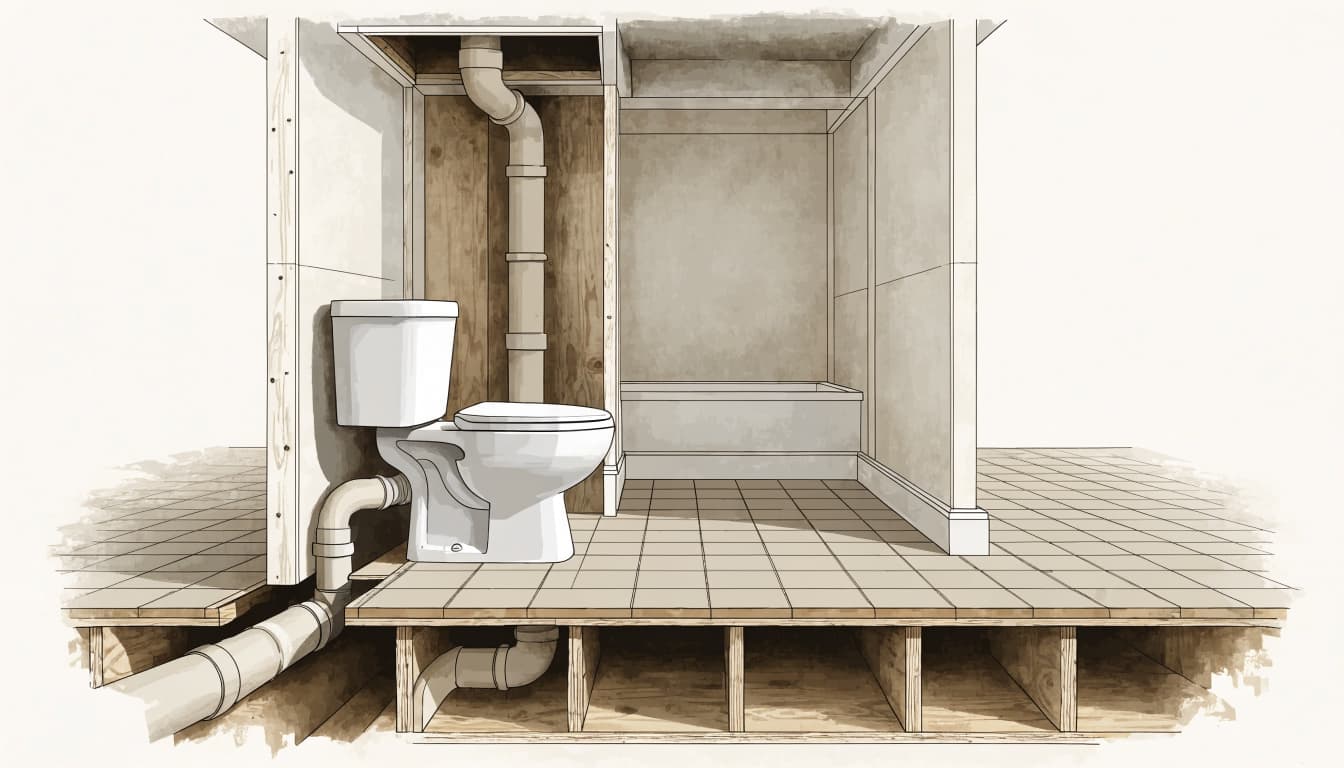
Drain pipes need enough slope to carry waste while allowing liquids to flow properly. The Florida Plumbing Code, 8th Edition (2023), sets minimum slopes for horizontal drainage piping. For example, it lists ¼ inch per foot for pipes 2½ inches or smaller, and ⅛ inch per foot for pipes from 3 to 6 inches.
The vent also matters. It helps maintain proper pressure in the drainage system. A plumber needs to determine whether the existing vent can serve the relocated toilet or whether the vent route must change. The new layout has to accommodate both systems, not only connect the toilet to a drain.
The foundation affects access and routing
In a slab-on-grade home, drain lines may run below the concrete floor. Relocating the toilet can require opening the floor to reach or reroute piping, followed by repair and finish work. Whether that's necessary depends on the existing plumbing and proposed location.
A raised-floor home may provide access beneath the bathroom, but joists and other structural elements can limit where a pipe can run. In either type of home, the plumber needs to consider the structure as well as the plumbing. Don't assume a slab can be cut or that a raised floor offers an easy route without a site-specific assessment.
Permits and Inspections in Naples and Collier County
The property's jurisdiction determines the permit path
A Naples mailing address doesn't necessarily mean the home is inside the City of Naples. Properties within the city use the city's permitting process, while homes in unincorporated areas fall under Collier County. The applicable requirements depend on the project's location and scope.
In unincorporated Collier County, moving a toilet changes drain, waste, and vent piping, so the work is classified as a plumbing alteration or remodel rather than a simple fixture reset. County application materials list plumbing plans that show the proposed scope. The City of Naples also calls for plans indicating proposed plumbing work. For a related local planning reference, see our Naples bathroom vanity height and clearance guide.
Flood-zone conditions may add paperwork. The City's plumbing checklist identifies additional FEMA-form information for some job sites in AE, AH, or VE zones.
Plan for inspections before the work is covered
When a permit applies, the plumbing work may need inspection while the pipes are still visible. That rough inspection must happen before the crew covers the work with flooring, drywall, or other finishes. A final inspection follows installation and fixture connection.
Planning the sequence matters. If a pipe route is covered before the required inspection, the work may need to be exposed again. Our Fort Myers bathroom remodel permit checklist offers a related overview of how plumbing and other work can affect a bathroom remodel's permit scope.
When Keeping the Toilet in Place Makes More Sense
A new layout should solve a real problem. If moving the toilet adds substantial demolition or complicates the drain route, keeping it near its current location may leave more room in the budget for other improvements.
Before approving a relocation, compare the benefit with the work it adds. A vanity shift, shower redesign, or storage change may improve how the room functions without changing the toilet's drain location. If relocation is still the right choice, settle it early so the plumbing, tile, and floor plans agree before construction begins.
We recommend having a licensed plumber assess the existing drain, vent, and foundation before the layout is finalized. That evaluation gives the remodeling team a practical basis for planning the work.
Key Takeaways
- A toilet can often be moved, but the drain route, slope, venting, and home construction determine feasibility.
- Slab-on-grade and raised-floor homes have different access and routing considerations.
- The City of Naples and unincorporated Collier County have separate permitting processes.
- Plan plumbing inspections before pipes are concealed, and involve a licensed plumber early.
Frequently Asked Questions
Does moving a toilet always mean cutting the slab?
No. The floor may need to be opened in some slab-on-grade homes, but the need depends on the existing pipe route and the proposed location. A plumber must assess the actual structure and drainage layout.
Is moving a toilet the same as replacing one?
No. Replacing a toilet in its existing position generally leaves the drain piping in place. Moving it changes the plumbing layout, so permitting and inspection requirements may differ based on the jurisdiction and scope of work.
Make the Layout Decision Before Demolition
Moving a toilet during a Naples bathroom remodel is possible when the plumbing route and home structure support the new position. The key is to evaluate drain slope, venting, access, and local permit requirements before construction starts.
A licensed plumber's assessment can help you decide whether relocation is practical or whether the bathroom will work better with the toilet in place.