


A vacant lot in Cape Coral can look wide open one day and complicated the next. A burrow near the building pad, driveway, or side setback can change the whole plan fast.
If you're buying land or starting a build, the Cape Coral burrowing owl rules should be part of your early due diligence. As of May 2026, the city and Florida wildlife process still centers on pre-permit checks, buffers, and permit steps when a burrow affects construction.
That matters for homeowners, builders, and investors. The right move is to check the lot early, document what you find, and budget for the possibility of wildlife work before site clearing starts.
What Cape Coral expects before you build
Burrowing owls are protected in Florida, and Cape Coral treats them as a real site-planning issue, not a last-minute nuisance. On a vacant lot, the city expects someone to check for burrows or owl activity before a permit moves forward.
In practice, that means the owner or builder needs to inspect the lot and complete the burrowing owl affidavit the city requires. If a burrow is found, and it could affect a slab, driveway, pool, sidewalk, or access path, the city may want a professional wildlife consultant involved.
The key point is simple. A lot can still be buildable, but the plan has to fit the bird first. If the build footprint and the buffer zone overlap, the project may need redesign, a permit path through the Florida Fish and Wildlife Conservation Commission, or mitigation.
A clean contract helps here too. Many owners review Florida new construction contract essentials 2026 before they commit, because the contract should say who handles survey work, consultant fees, and schedule shifts.
How to check a vacant lot before permit approval
A good site check is part walk, part recordkeeping. It does not need to be fancy, but it does need to be complete.
| Lot size | How to survey | What to record |
|---|---|---|
| 1 acre or less | Walk the whole lot, especially open, dry areas and edges of the site | Burrow location, owl sightings, photos, and nearby features |
| More than 1 acre | Walk parallel lines about 50 feet apart across the site | Same notes, plus which areas were covered |
| Suspected active burrow | Stop guessing and bring in a professional consultant | Evidence of activity, likely impact to the build area, and next steps |
That survey should happen before site clearing gets underway. It should also be done before you lock in grading, fill, driveway layout, or pool placement.
A few details matter most:
- Mark the burrow location on a site sketch.
- Photograph the burrow from a safe distance.
- Note the date and time of the sighting.
- Show how close it is to the pad, driveway, utilities, or easement.
- Keep copies of the affidavit and any consultant notes.
If the survey changes your plan, that is normal. It is also where a cost-plus home building in Southwest Florida setup can help, because transparent pricing makes added survey, permit, and redesign costs easier to track.
Buffers, nesting season, and when work has to pause
Cape Coral uses buffer zones to keep construction activity away from burrows. As of May 2026, the commonly used setup is a 10-foot buffer when owls are not nesting and a larger 33-foot buffer during nesting season, but the exact seasonal dates should be verified with the city before work starts.
That date check matters. Local guidance can change, and different documents sometimes show different date windows. The safe move is to confirm the current city and FWC timing before you clear, grade, or trench.
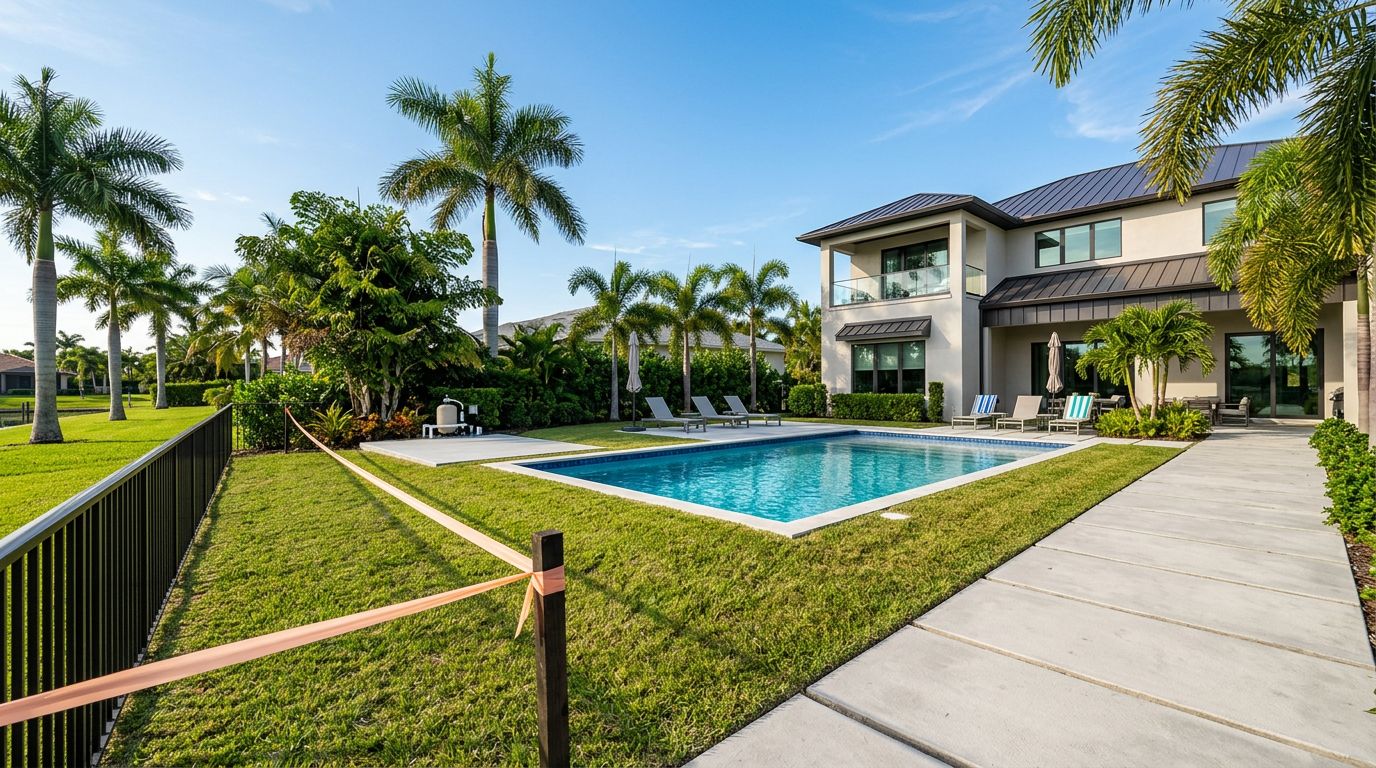
When a burrow is active, crews may need silt screens, warning signs, orange tape, and white PVC stakes to mark the protected area. In some cases, screening is placed on only part of the perimeter so the owls still have room to move.
If a burrow sits inside your footprint, don't guess. Stop the work plan, document the site, and confirm the current city and FWC path first.
If the burrow can be avoided, the project may continue with the buffer in place. If it cannot be avoided, the builder or owner may need an Incidental Take Permit from FWC before any burrow is destroyed or blocked.
That permit path usually takes planning. It may also require mitigation, such as starter burrows or artificial burrows. The city and wildlife rules can be strict about disturbing owls, eggs, or young, so do not treat this as a casual grading issue.
A builder who handles changes well makes a big difference here. Many owners also review avoiding change orders in new construction before site work starts, because owl-related shifts can turn into cost and time changes fast.
Common new-construction scenarios on Cape Coral lots
Some lots are easy. Others need a new plan on the spot. The examples below show how the rules often play out.
| Lot situation | Common next step | Main watch-out |
|---|---|---|
| Clear vacant lot, no burrows found | File the affidavit and move through permit review | Keep records in case the city asks for proof |
| Burrow near a side setback | Redesign the layout or keep the buffer clear | Don't let subcontractors wander into the protected zone |
| Burrow in the driveway or slab footprint | Bring in a consultant and confirm the permit path | This can affect grading, utilities, and timing |
| Active burrow during nesting season | Pause work in the area until the current rule path is confirmed | Avoid disturbing birds, eggs, or chicks |
| Burrow on an adjacent lot with access needs | Check whether workers, equipment, or staging will enter the buffer | Protected space can extend into work access zones |
For investors, the biggest lesson is timing. A site can look ready for a fast build, then one burrow turns into a redesign, a consultant visit, and a delayed permit issue.
For homeowners, the issue is often layout. A pool, garage, or driveway can be flexible if you know about the burrow early. If you learn about it after the slab plan is set, the fix gets harder.
For builders, coordination is everything. Survey, permit, and wildlife review need to happen before the site crew treats the lot like empty land.
Budget and contract details that keep the project on track
Wildlife compliance adds more than time. It can also add consultant fees, permit steps, and mitigation costs. Those items should be visible in the budget, not buried inside a vague allowance.
This is where a cost-plus home builder can make life easier. With the right setup, you see the real site work costs, the builder fee, and the items tied to the owl issue. That is the heart of how cost-plus fees work with open-book pricing.
A solid budget review should cover:
- permit fees for the lot and the house
- wildlife consultant fees, if needed
- mitigation or starter burrow work
- redesign costs for the pad, driveway, or pool
- extra time tied to permit review or stop-work delays
It also helps to separate city fees from wildlife costs. If you're lining up a build budget, 2026 permit fees for Cape Coral new homes give you a clearer view of what belongs to normal permitting and what comes from the owl issue.
The contract should also answer plain questions. Who hires the consultant? Who pays for mitigation? Who revises the site plan if the burrow blocks the driveway? Those details matter even more on vacant lots, where small site changes can ripple through the whole build.
A builder that explains costs in plain English helps here. If the project uses transparent pricing , you can see where the money goes and why the lot needs a different plan.
Conclusion
Cape Coral's owl rules do not have to derail a new build, but they do reward early attention. The lot survey, the affidavit, the buffer, and the permit path all matter before the first machine rolls in.
The smartest move is simple. Confirm the current city and FWC guidance, document the site, and keep wildlife costs visible in the budget. That approach protects the schedule, and it keeps a small burrow from becoming a big surprise.