Custom Home Storm Shutters: A Naples Selection Guide
Explore Our Services
Contact Us Today!
(239) 322-9295
A shutter system is only useful if you can close it before severe weather arrives. When choosing storm shutters for your Naples home, start with practical operation , then compare approved performance, coastal durability, and appearance.
Large sliders, upstairs windows, and seasonal absences can complicate an otherwise attractive choice. The right system fits both your home's construction and the person responsible for preparing it.
Begin with the openings and installation requirements, then narrow the options around how you'll use and maintain them.
Match Storm Shutters to Your Naples Home's Openings
Custom sizing matters, but dimensions alone don't establish storm protection. The product, mounting surface, fasteners, and installation details must work together.
Verify the exact product and opening
Ask your contractor to identify every opening that needs protection, including glazed doors and high windows. Required design pressures can vary with the site, building geometry, and opening location.
Documentation should match the exact shutter model, dimensions, wall construction, and anchorage. A Florida Product Approval or acceptable Miami-Dade Notice of Acceptance must cover the proposed configuration.
A broad "hurricane-rated" description isn't enough. Review impact windows and approved shutters with your design team before ordering.
Confirm the current permit path
The City of Naples and unincorporated Collier County have separate permitting authorities. Confirm which department handles your address and whether shutters require a separate permit.
Collier County's Windows, Doors, Shutters checklist, updated October 8, 2026, calls for product-approval documentation and existing-opening wind loads. The selected product's pressure capacity must satisfy the opening's requirements.
The 2023 Florida Building Code, 8th Edition, took effect December 31, 2023. However, confirm the applicable edition and current requirements with the building department and qualified professionals when applying.
Compare the Main Storm Shutter Systems
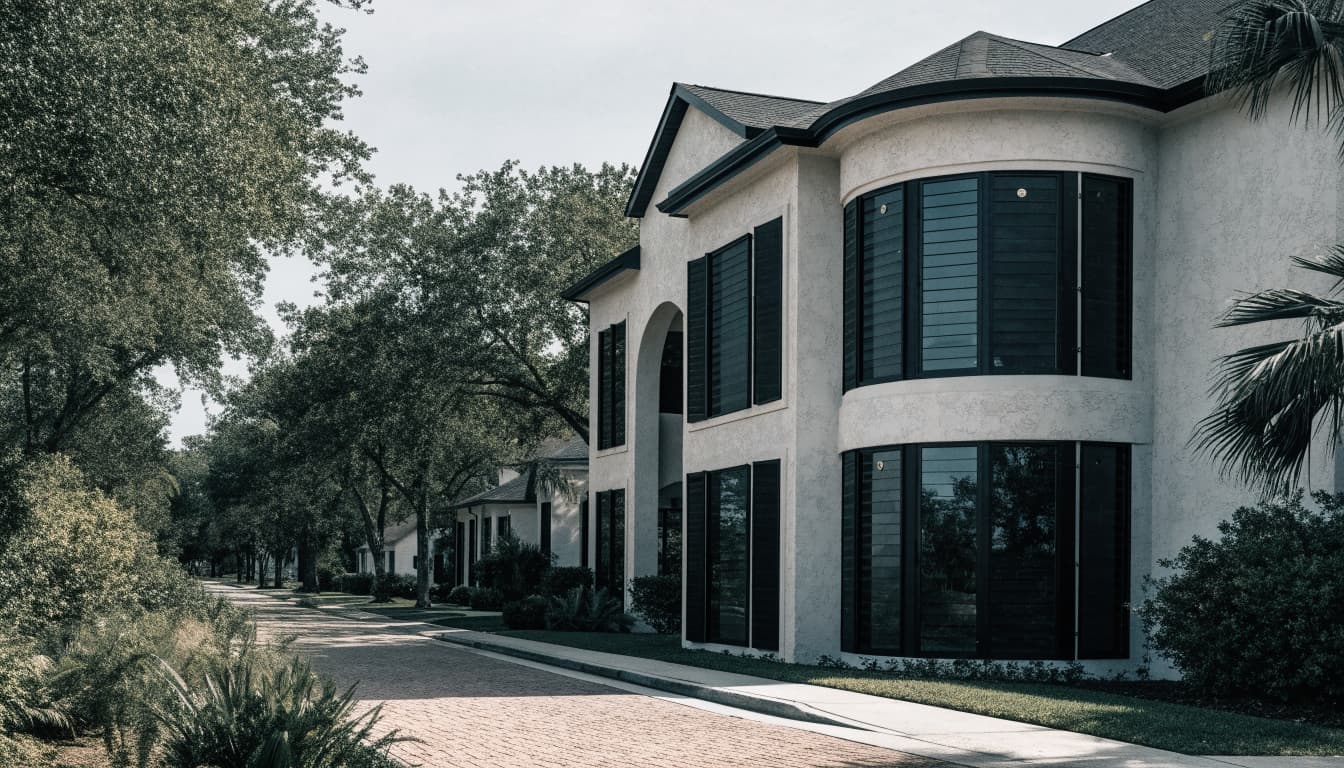
Each style changes how you prepare the house, store equipment, and use the exterior between storms. Compare operation alongside appearance.
| System | How it closes | Main planning consideration |
|---|---|---|
| Accordion | Panels slide across the opening and stack at the sides | Side-stack space and accessible locks |
| Roll-down | A curtain lowers from an overhead housing | Housing clearance, controls, and service access |
| Removable panels | Separate panels attach over the opening | Storage, lifting, and attachment access |
| Bahama | A top-hinged shutter closes against the opening | Approved hardware, clearance, and daylight |
| Colonial | Paired side-hinged panels close across the opening | Swing clearance and securing each panel |
The strongest choice is the approved system you can deploy reliably on each opening.
Accordion shutters stay attached, so there's no separate panel inventory. However, their side stacks can affect trim, views, and furniture placement near sliders.
Roll-down shutters offer manual or motorized operation, depending on the product. Their housings need space above the opening, and motors add electrical and maintenance considerations.
Removable panels require organized storage and hands-on installation. Compare panel weight and edge handling before committing to a whole-house package.
Bahama and colonial shutters can complement a custom home's architecture. However, decorative versions don't automatically provide impact protection. Confirm approval and installation requirements for the exact product, rather than relying on its style.
Choose Coastal Materials as a Complete Assembly
Naples salt air attacks vulnerable details, including screw heads, hinges, and damaged finishes. Buying durable panels won't compensate for unsuitable attachment hardware.
Compare finishes and fasteners
Powder-coated aluminum is common in coastal exterior products, but coating damage and trapped salt can encourage corrosion. Ask how the manufacturer handles cut edges, finish repairs, and exposed connections.
Type 316 stainless steel offers useful corrosion resistance for exposed coastal hardware, though it still needs care. Use it only where it matches the approved assembly and material-compatibility requirements.
Also confirm how the design separates dissimilar metals where necessary. Moisture between incompatible metals can cause galvanic corrosion, even when each component appears suitable by itself.
Prioritize difficult-to-service locations
Upper-story brackets, concealed anchors, and Gulf-facing attachments deserve careful specifications because repairs may require specialized access. Ask the installer to identify these locations before finalizing the quote.
Request written details for hardware materials, finish warranties, and any salt-exposure exclusions. A long panel warranty doesn't necessarily cover motors, labor, fasteners, or corrosion.
Avoid substituting hardware based only on a salesperson's description of a "marine-grade" upgrade. Your contractor should verify that every substitution remains compatible with the product approval and project requirements. Durability depends on the complete installation.
Make Deployment Work for Your Household
Choose around the person who will prepare the house, including any caretaker responsible while you're away. A showroom demonstration can't reveal every access problem.
Check reach, lifting, and clearance
Walk through the deployment process at each opening. Consider shutters behind landscaping, windows above a pool deck, and sliders surrounded by outdoor furniture.
For removable panels, evaluate the heaviest component and the route between storage and installation. Label panels by opening and keep the required hardware organized.
Permanently attached systems reduce storage work, but their locks and controls still need accessible positions. Ask for an operating demonstration before accepting the installation. Then practice while the weather is calm.
Plan for outages and safe access
For motorized shutters, ask what happens when utility power fails. Confirm whether the selected model includes a manual override or backup option, and how you'll reach it.
A manual override has limited value if furniture, landscaping, or mounting height prevents you from reaching it.
Have a qualified professional review emergency escape openings and door access with the shutters closed. Don't assume impact protection automatically resolves egress requirements.
Shutters also don't replace evacuation planning. Follow local emergency instructions and avoid delaying departure to finish difficult installations.
Coordinate Shutters With Windows and Home Design
New construction gives you the best opportunity to plan shutter housings, mounting zones, and controls before finishes go in. During remodeling, existing trim and wall conditions may limit the options.
Large sliders need particular attention. Their width can affect shutter configuration, attachment requirements, and the amount of visible hardware.
If you're replacing windows, compare approved impact glazing with shutters before signing separate contracts. Impact-rated windows and doors can reduce deployment work, but they still need suitable pressures, approvals, and installation details.
Also compare energy performance independently. Impact construction doesn't guarantee better thermal performance, and tint alone doesn't establish solar-control performance. Coordinate daylight, cooling, and storm protection in the window schedule.
For a coastal new home, review broader Naples coastal building requirements early. Coastal approvals, where applicable, don't replace local building review.
Finally, coordinate shutter tracks with drainage, flashing, and stucco details. Decorative trim must leave room for approved attachments and service access.
Get Professional Measurements and Installation
A professional site visit should assess more than opening width and height. Ask who will verify mounting conditions and resolve conflicts before fabrication.
The measurement and installation process should follow a clear sequence:
- Document each opening. Record dimensions, surrounding trim, mounting surfaces, access limitations, and the proposed shutter configuration.
- Check the approval against the site. Confirm pressure capacity, allowable spans, anchors, spacing, edge distances, and installation into the actual substrate.
- Verify the completed installation. Test operation, complete required inspections, and collect approvals, warranties, care instructions, and permit closeout records.
Stucco doesn't identify the structural material behind it. The installer needs to know whether the attachments engage concrete, masonry, framing, or another approved substrate.
On an older home, damaged material or uncertain construction may require further evaluation. Resolve those conditions before ordering a system that depends on them.
For motorized systems, establish responsibility for wiring and related permits. Before hiring, verify appropriate licensing and insurance, and request a written scope. The contract should also explain how concealed-condition repairs or changes will affect the price and schedule.
Keep Coastal Shutters Ready Year-Round
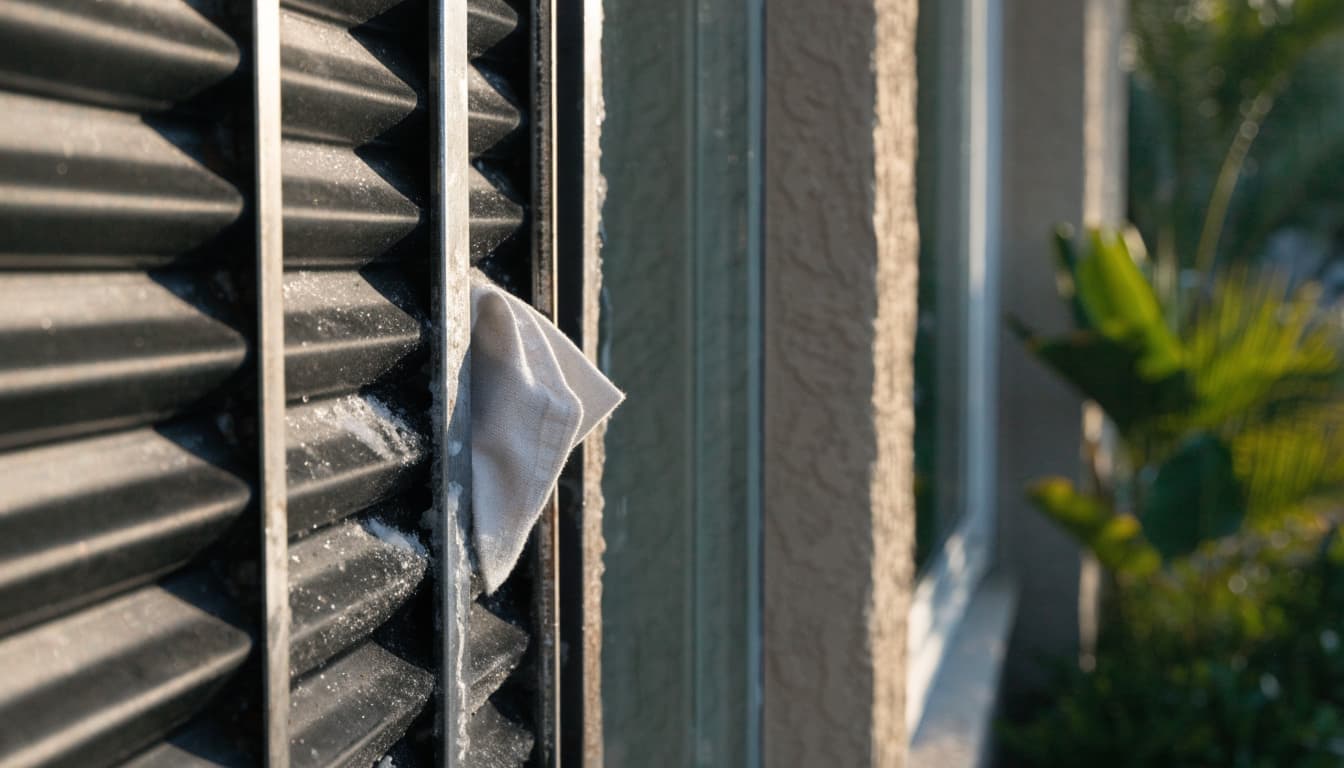
Follow the manufacturer's cleaning and service instructions for your exact system. No exterior shutter material is maintenance-free in Naples.
Freshwater rinsing helps remove salt deposits where the manufacturer permits it. Keep sand, leaves, and debris out of tracks and drainage paths. Avoid harsh chemicals or unapproved lubricants that may damage finishes or interfere with operation.
During routine checks, look for loose fasteners, chipped coatings, rust staining, sticking locks, and changes in shutter movement. Inspect nearby sealant and flashing as well, because water intrusion can damage attachment areas.
Give the system added attention after major storms or extended onshore winds. However, don't climb or handle damaged equipment without appropriate training and safe access.
For removable panels, inspect the stored pieces and attachment hardware before hurricane season. Meanwhile, test permanently mounted systems during calm weather, so you have time to arrange repairs.
Compare Complete Quotes, Not Headline Prices
A useful shutter estimate identifies each opening, the exact product, and the installation scope. A square-foot figure alone can't explain access work, wiring, mounting repairs, or permit costs.
Compare quotes on the same opening schedule. Look for included engineering or documentation, inspections, finish restoration, controls, and warranty responsibilities.
Removable panels may offer a lower initial purchase cost, while permanently mounted systems can reduce preparation labor. However, don't assume either choice is cheaper over its useful life. Storage needs, paid deployment help, maintenance, and service access affect ownership costs.
Ask about lead times and the payment schedule, but don't treat estimated dates as guarantees. For phased work, have your contractor explain how each stage fits the approved protection plan. Avoid an undocumented mix of products selected only to reduce the initial bill.
Choose a System You Can Keep Ready
The right storm shutters for a Naples home combine documented performance with reliable deployment . Coastal materials, sound attachments, and manageable maintenance matter as much as appearance.
Have a qualified professional measure the openings and explain the approval and permit path before you order. Then compare complete installation scopes rather than headline prices.
A well-planned system gives you a clear preparation routine and fewer access problems when severe weather approaches.