Fort Myers Whole-House Water Shutoff Planning for Custom Homes
Explore Our Services
Contact Us Today!
(239) 322-9295
A supply-line leak can do serious damage while you're away for a weekend or an entire season. In a Fort Myers custom home, a reachable valve gives you a way to stop incoming water quickly. A whole-house water shutoff also deserves attention before walls, cabinets, and outdoor features limit your options.
The strongest plan starts with the service route and ends with a homeowner who knows which valve to turn. Make those decisions while the plumbing layout is still on paper.
Make the shutoff decision before plumbing rough-in
The main valve belongs in the early conversations about custom home construction in Fort Myers. Your builder and licensed plumber need to know where water enters the building, how the pipe reaches its first branches, and which spaces will remain accessible after the home is finished.
Ask them to mark the proposed valve on the plumbing plan. Then compare that drawing with the garage, laundry, utility-room, and cabinet layouts. A valve that looks accessible on a bare framing plan may end up behind shelving or a water-treatment unit.
Early coordination also keeps other trades from claiming the same space. An electrical panel, HVAC equipment, and plumbing service each need room for safe operation and maintenance. For a home with a pool or extensive landscaping, identify the supply routes before the exterior layout is fixed.
A whole-house valve controls only the piping downstream of its location. Confirm every branch it will isolate before relying on it during an absence.
Where a whole-house water shutoff should go
A practical location is easy to reach without moving stored items or opening a wall. The exact arrangement depends on the service design and what the local authority approves, so have the plumber identify both the proposed homeowner valve and the utility's equipment on the plan.
Separate the homeowner valve from the meter
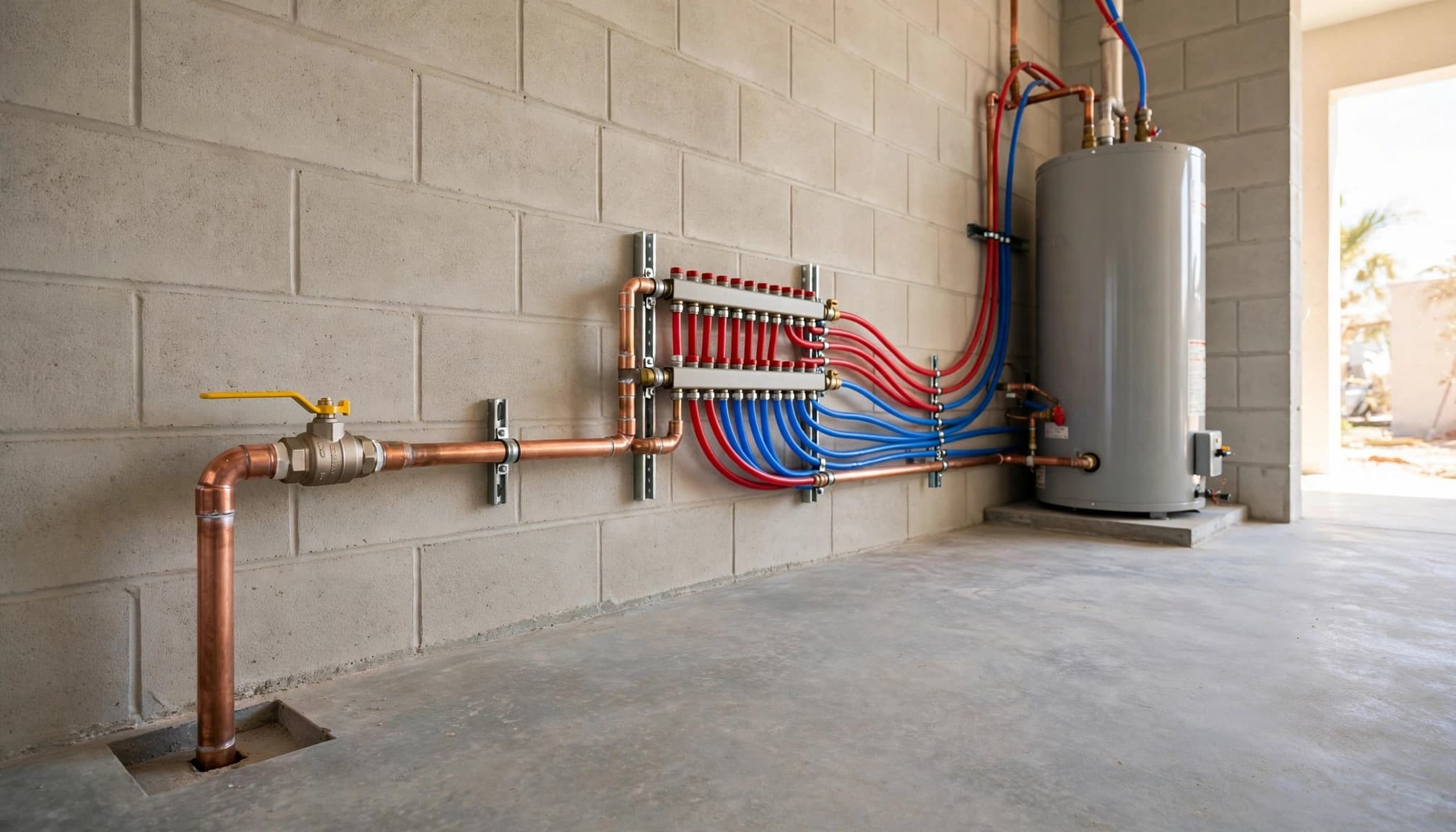
The meter area isn't automatically the best place for an emergency shutoff you plan to use. Discuss where the homeowner-operated valve will sit in relation to the meter, service entry, and first branch. Make sure its location is clear to everyone in the household.
Don't assume you can operate utility equipment in an emergency. Ask the serving utility and plumber which valve belongs to you and how to reach it. If an outdoor valve is part of the design, consider how a locked gate, landscaping, or storm debris might affect access.
Test the location against the finished room
Stand in the planned space and picture it with appliances, doors, and storage installed. Can you reach the handle at night? Will you have enough room to operate it if the floor is wet? A photograph taken after installation can help future owners locate it.
Review the location before the rough-in inspection and again before finishes close the area. New construction plumbing rough-in costs depend partly on layout and system complexity. Moving a service route late can affect more than the price of one valve.
Map what the main valve does and doesn't control
A house-wide shutoff should have a defined boundary. Ask the plumber to trace the pipe on the drawing and point out every connection before and after the proposed valve. This matters most on lots with several outdoor water uses.
Check irrigation, hose bibs, and pool connections
An irrigation system may have a separate connection or branch that the indoor main doesn't isolate. Pool-fill lines and exterior hose bibs also need to be located on the actual plan. Shutting water to the house shouldn't create uncertainty about which outdoor lines remain pressurized.
If the design includes a fire-sprinkler system, don't assume a domestic-water shutoff may control it. Have the plumber and fire-system professional review the supply arrangement and any applicable requirements. The same care applies to backflow-prevention equipment: its location and purpose depend on the service configuration.
Keep fixture shutoffs in the plan
The main valve helps when a leak isn't contained or the home will be empty. Accessible shutoffs at individual fixtures let you isolate a toilet, sink, or appliance without turning off every tap. Florida Building Code Plumbing Section 606.2 addresses fixture-supply shutoffs; it doesn't, by itself, establish where a Fort Myers whole-house valve must go.
Ask where the washing machine, dishwasher, water heater, and bathroom fixture valves will be accessible after cabinetry and appliances arrive. The plumber can then confirm the applicable code details for your plans.
Decide whether automatic shutoff protection fits the home
A manual valve works when someone is present to use it. An automatic system may help when a leak starts during an extended absence, but it adds equipment that needs installation, testing, and maintenance. It's a design choice to discuss, not a local requirement to assume.
Choose what triggers the valve
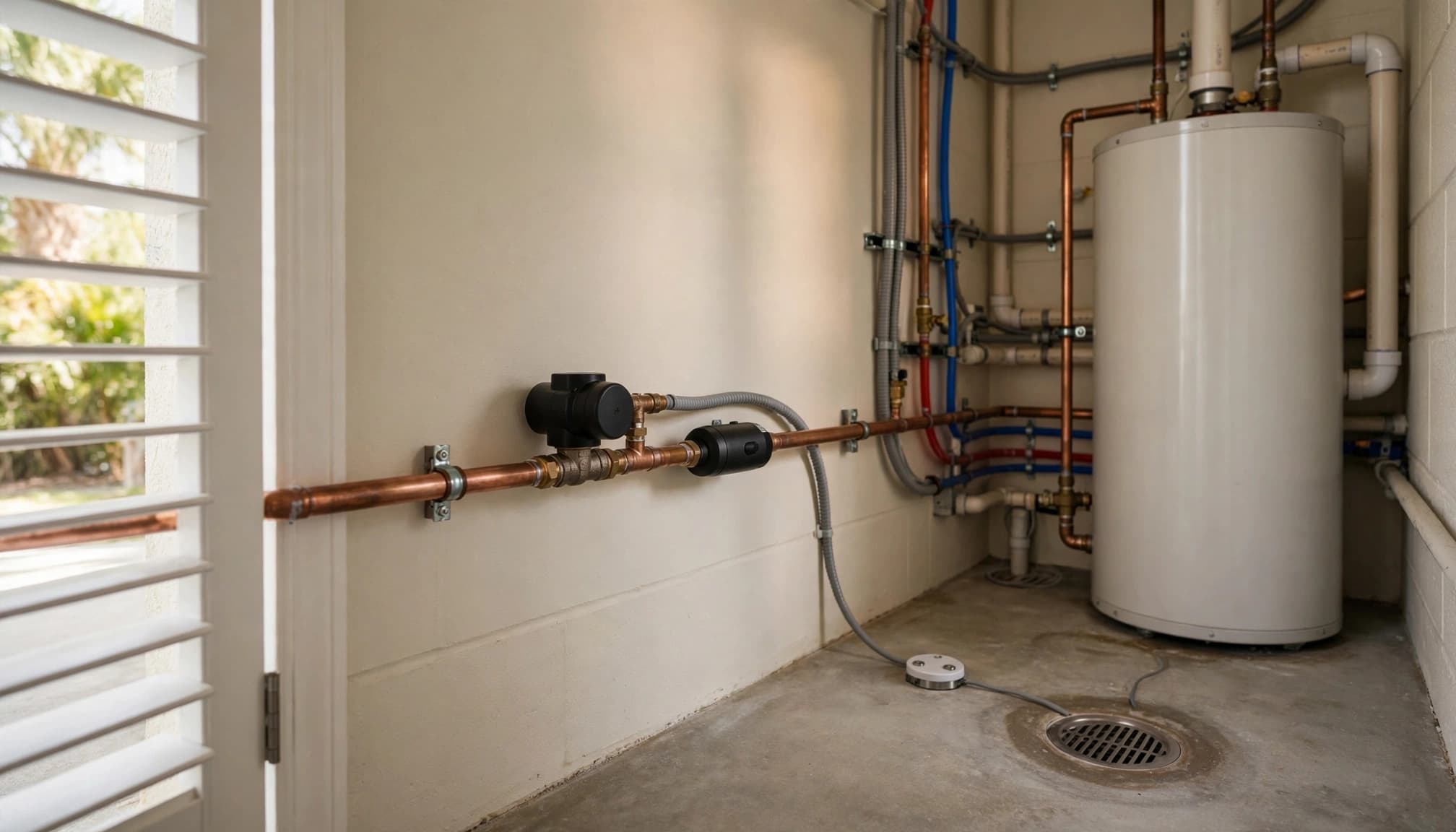
Some systems watch water flow and close a motorized valve when usage appears abnormal. Others use sensors placed near likely leak points, such as a water heater or laundry area. Ask your plumber how the proposed system detects trouble and what happens after an alert.
Also ask whether it requires power, internet access, batteries, or a subscription for the features you want. A phone notification isn't useful if nobody can respond, so decide who will receive alerts when you travel.
Plan for manual operation and testing
An automatic valve shouldn't leave the household guessing how to stop water during a power or network outage. Have the installer demonstrate manual operation and explain how to reopen the supply safely after an automatic closure.
Before buying equipment, confirm valve sizing, service access, and compatibility with water treatment or other plumbing components. Keep the manual shutoff clearly identified even if you add automation. Neither system stops rain intrusion, nor can it remove water already stored in pipes and the water heater.
Prepare for long absences and Southwest Florida storms
Fort Myers homeowners may leave for weeks during summer or evacuate ahead of a storm. A shutoff plan works better when it's part of a broader departure routine, rather than a valve nobody has tested.
Make an absence plan for this house
Before leaving, decide whether you'll close the homeowner valve, use an automatic system, or arrange for someone to check the property. Ask the plumber how closing the supply affects the home's water heater and any equipment that expects a water feed. A pool auto-fill, irrigation connection, or separately supplied system may keep running.
Write down the valve location and operating instructions for a trusted local contact. Then test the procedure while you're home, when a stuck handle or unexpected branch is easier to investigate.
Account for flood exposure without guessing at code
Heavy rain, wind, and site drainage can affect access to outdoor equipment. On an elevated or flood-prone lot, ask the design team to review the proposed shutoff location alongside service entry and flood-related plans. Avoid choosing a spot solely because it's close to the meter.
The home's broader wind and flood design requirements need a site-specific review. A plumbing shutoff limits certain supply-line leaks; it isn't protection against storm surge or a roof leak.
Confirm utility details, permits, and inspections
General planning advice cannot settle the approved valve location for a particular parcel. First, establish whether the property is inside City of Fort Myers limits or in unincorporated Lee County. Then have the builder and licensed plumber verify the current plan-review requirements with the appropriate department.
Review the actual water-service design
The City of Fort Myers publishes water-service and backflow details, including drawings identified as W-8A, W-9A, W-9B, W-11A, W-11B, W-12A, and W-12B. The design team should identify which detail, if any, applies to your lot and proposed connection. City of Fort Myers Utilities can be reached at 239-321-8100 .
Don't assume every domestic service needs the same backflow assembly. For example, the city's reclaimed-water provisions address approved backflow prevention for connections to that system. Your plumber and utility should confirm the requirements for the services you actually plan to install.
Verify the permit path before work begins
Lee County Building & Permitting Services says permits are required for work that installs or alters plumbing systems regulated by the Florida Building Code. That statement doesn't establish the inspection sequence for your particular build. For an unincorporated Lee County property, ask the department and your contractor what must appear on the drawings and when inspections occur. The county's permitting number is 239-533-8329 .
Permit costs may include more than the main building permit. Review Southwest Florida new-home permit fees while your team identifies the plumbing and other trade work in the budget.
Settle these choices before the walls close
Bring the floor plan, site plan, and plumbing drawing to one meeting with your builder and licensed plumber. Resolve the following in order:
- Mark the meter, service entry, proposed homeowner shutoff, and first branch on the plan.
- Trace which indoor and outdoor connections the valve will isolate, including any pool or irrigation supply.
- Check access against finished cabinetry, appliances, doors, storage, and landscaping.
- Decide whether leak sensors or an automatic valve belong in the project scope, then request an itemized quote.
- Confirm the applicable utility details, permit drawings, and inspection timing with the reviewing authority.
- At handover, operate the valve with the plumber and record its location for the household.
A drawing approved before rough-in is easier to build around than a change requested after finishes are installed. That is particularly useful when avoiding new-construction change orders.
Key takeaways
- Put the homeowner-operated shutoff on the plumbing plan before rough-in, then check access against the finished home.
- Trace every branch. A main valve may leave some outdoor systems supplied.
- Treat automatic shutoff as optional protection that still needs manual operation and maintenance.
- Have the local building department, utility, and licensed plumber confirm requirements for the parcel.
Frequently asked questions
Should I turn off the water every time I leave Fort Myers?
For an extended absence, closing the homeowner valve can limit damage from a supply-line leak. First, ask your plumber whether any equipment needs a continuing feed and which branches the valve controls. Test your departure routine before relying on it.
Will a smart shutoff replace the manual main valve?
Don't plan on that without approval from the licensed plumber and reviewing authority. The automatic device's position, access, and behavior during an outage all matter. Your handover should include a clear way to shut off the supply manually.
A shutoff you can find when it matters
A valve is most useful when its location, coverage, and operation are clear before a leak occurs. Set the plan before rough-in, confirm the local requirements, and test the installed system at handover.
That small piece of early coordination gives your household a practical response when water needs to stop quickly.