Gunite Pool Cracks: Structural Review in Fort Myers
Explore Our Services
Contact Us Today!
(239) 322-9295
A crack in your pool can leave you wondering whether to schedule resurfacing or investigate something more serious. With gunite pool cracks, the answer depends on what's moving , where the damage extends, and whether the pool is losing water.
Some cracks affect only the interior finish, while others warrant an assessment of the reinforced-concrete shell and surrounding site. Before approving a patch, start with the warning signs that help a qualified professional determine what needs closer review.
Key Takeaways for Fort Myers Homeowners
A visible crack doesn't establish structural damage, and a photograph can't confirm how deeply it extends. However, widening cracks, uneven edges, recurring repairs, and nearby settlement deserve prompt attention.
Begin with a licensed pool professional experienced in concrete-pool repairs. When findings suggest shell movement or compromised structural support, consult a Florida-licensed professional engineer with relevant pool experience before approving cosmetic work.
Surface Cracking Versus Possible Shell Damage
Gunite pools have a reinforced-concrete shell beneath their interior finish. A line in plaster or an aggregate finish doesn't automatically mean the concrete underneath has cracked.
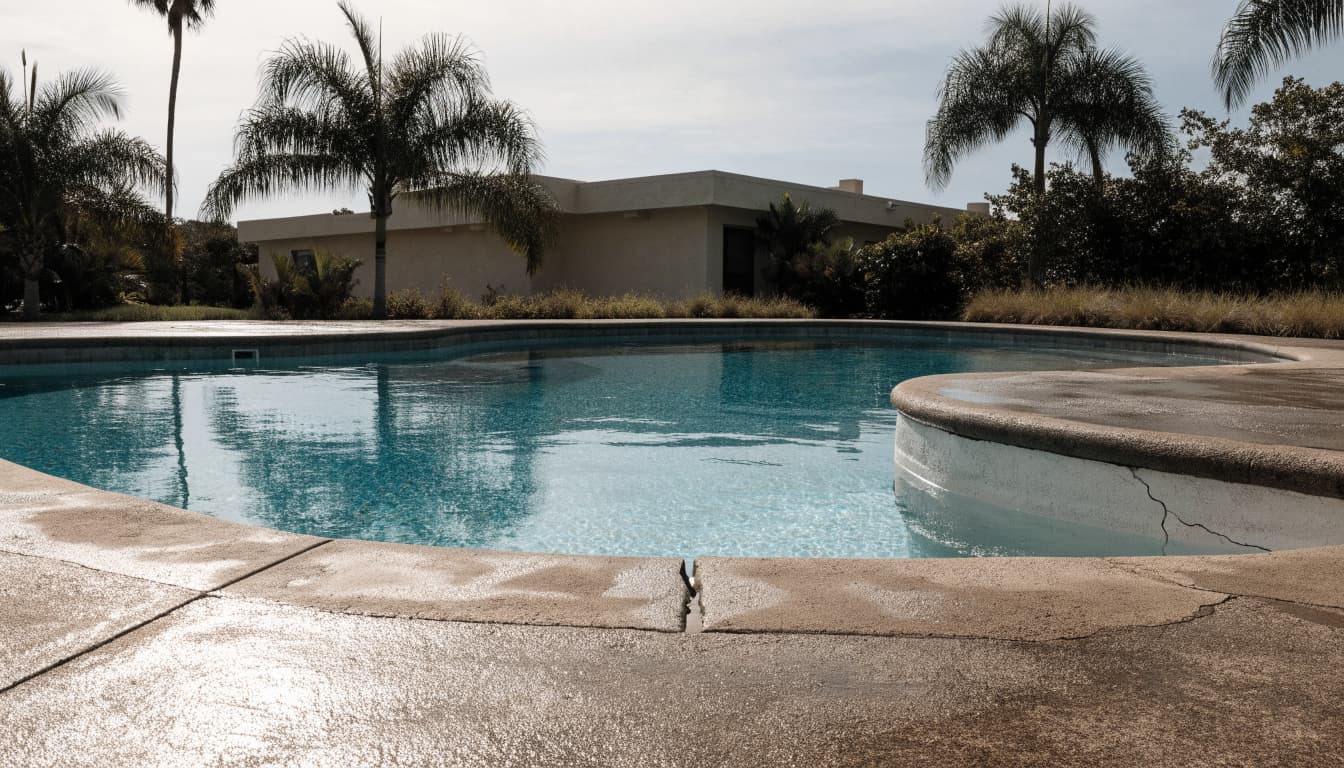
What surface-level cracking can look like
Fine lines confined to the finish may relate to shrinkage, application conditions, or deterioration of that surface layer. A stable-looking line without displacement may be less concerning than one that changes over time.
However, appearance alone can't establish depth. Hollow or loose finish areas also need evaluation because separation between layers can require different work than an isolated surface crack.
Record when you first noticed the damage and whether it has changed. That history helps the contractor decide what investigation makes sense.
What raises concern about the shell
Cracks extending across plaster, tile, and coping warrant closer inspection. So do cracks near steps, benches, raised spas, or changes in pool depth, where the structural details deserve review.
A continuous line across different materials can suggest movement, but it doesn't prove the shell has failed. Tile-bond problems and surrounding deck movement can also affect these areas.
The Fort Myers pool tile repair guide covers related warning signs, including loose tiles, recurring joint failures, and unexplained water loss.
Warning Signs That Gunite Pool Cracks Deserve Closer Review
The strongest warning signs involve change or displacement , rather than a crack's appearance in one photograph. Look at the damaged area and the surfaces around it.
Movement, uneven edges, and recurring damage
Arrange an assessment when you notice these conditions:
- One side of a crack sits higher than the other.
- A crack spreads, widens, or returns after repair.
- Several cracks develop a similar pattern near the pool.
- Coping separates, or nearby deck sections settle and become uneven.
Each sign calls for investigation, but none identifies the cause by itself. Deck settlement can occur independently of the shell. Likewise, a reopened patch may reflect movement, inadequate preparation, or an unsuitable repair.
The top perimeter of the shell, called the bond beam, also deserves attention when coping or adjacent tile shifts. Understanding pool bond beam structural basics helps you discuss that area with your contractor.
Water loss and loose material
Unexplained water loss increases the need for investigation, especially when it appears alongside new cracking. However, plumbing, fittings, equipment, evaporation, and splash-out also affect the water level.
Loose concrete, crumbling edges, or pieces separating from the pool require attention as well. Keep people away from unstable areas and newly uneven walking surfaces.
Water loss and cracking can occur together without sharing the same cause. The assessment should check both before assigning the leak to the shell.
Why Fort Myers Site Conditions Matter
Southwest Florida properties can have sandy soils, fill material, limestone, and shallow groundwater. Conditions vary by lot, so a neighbor's repair recommendation may not fit your pool.
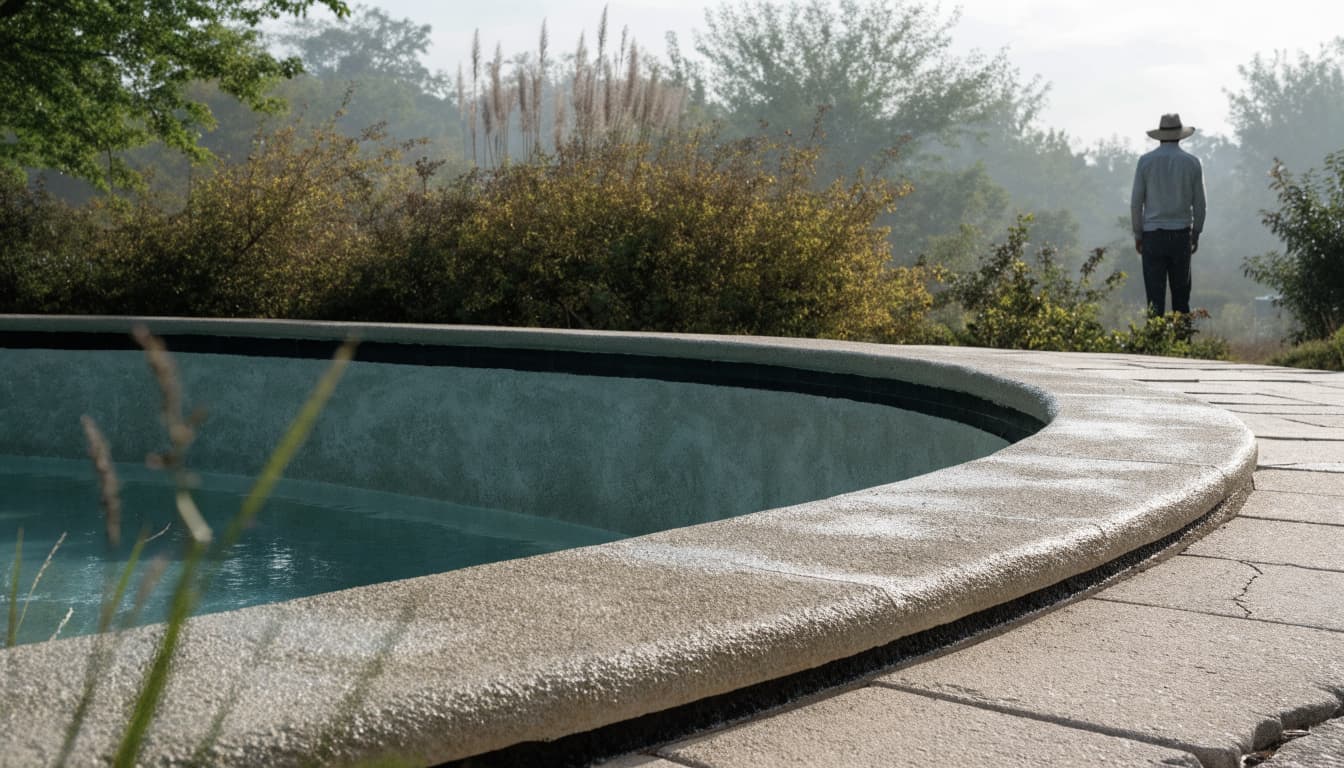
Rainfall, drainage, and soil support
Heavy rain can expose drainage problems around a pool. Watch for persistent ponding, washed-out areas, or water flowing toward the house and pool equipment.
A contractor should consider whether drainage or inadequate support contributes to nearby settlement. These conditions don't establish structural pool damage, but they can affect the repair plan.
The relationship between thresholds, coping, and deck slope also matters. Pool deck drainage and elevation planning helps explain why these elements need coordination.
Groundwater and an empty pool
An empty concrete pool can face upward pressure from groundwater outside the shell. That makes draining a pool a separate safety decision, not a routine first step in inspecting cracks.
Don't drain the pool yourself to expose damage. Have a qualified professional assess groundwater conditions and any necessary precautions first.
After flooding or substantial storm-related erosion, provide that history during the evaluation. The timing helps professionals investigate possible changes in site support.
When to Call a Pool Professional or Structural Engineer
Start with a licensed pool contractor or repair specialist who has experience evaluating gunite pools. Ask whether their assessment covers the finish, shell, plumbing, coping, and adjacent deck rather than only the visible crack.
A pool professional can identify finish problems, arrange leak investigation, and explain whether further structural assessment is appropriate. They should also state what remains uncertain and what additional evaluation they recommend.
Consult a Florida-licensed professional engineer with experience in reinforced-concrete pools when findings suggest structural movement, displaced shell sections, inadequate support, or damage involving raised features. Repeated cracking after repairs also warrants discussion about engineering review.
An engineer can assess the structural concern and determine whether additional testing, records, or site information are necessary. Where soil support remains uncertain, the evaluation may also need input from a geotechnical professional.
Rapidly changing displacement or unstable material deserves prompt attention. Restrict access to the affected area while arranging an assessment.
Verify each professional's current license through the appropriate Florida licensing board. Also ask about comparable projects and who will provide any required structural recommendations.
An estimate for resurfacing alone doesn't answer whether the underlying pool is sound.
What to Document Before the Assessment
Useful documentation helps the professional understand whether the damage is new, recurring, or connected to another change. Collect what you can safely observe without disturbing the pool.
- Photograph the crack from a consistent position, including nearby tile, coping, and decking.
- Note when you first saw it and whether its length, appearance, or surrounding surfaces have changed.
- Record water-level changes alongside rainfall, autofill operation, and ordinary pool use.
- Gather prior repair invoices, original pool plans, inspection records, and photographs from construction.
- Describe recent storms, drainage changes, nearby excavation, or landscaping work.
Keep records factual. For example, distinguish between noticing a crack after heavy rain and knowing that rain caused it.
Approved structural drawings are more useful than a sales rendering. They may show the reinforcement, shell details, bond beam, and connections at raised features.
Don't pry at tile, remove loose finish, or attempt to expose reinforcing steel. Leave investigative work to the professional so you don't create hazards or obscure the original condition.
Choose the Repair Scope Before Choosing a New Finish
Gunite pool cracks need a repair plan that matches the confirmed condition. A finish-only problem and a moving shell involve different questions, even when their visible lines look similar.
For stable surface damage, the scope may focus on the affected finish and its bond to the underlying material. If the assessment identifies shell damage or a support problem, the proposal should address those findings before cosmetic upgrades.
Resurfacing doesn't correct unstable soil, deck settlement, or structural movement. Covering the line may improve appearance temporarily while leaving the cause unresolved.
Ask for a written assessment explaining what the contractor found, what they couldn't confirm, and whether engineering input is needed. The proposal should distinguish investigation, structural work where applicable, drainage corrections, and finish restoration.
Also ask what the warranty covers if the crack returns. Recurring movement and finish workmanship are different issues, so coverage should be clear before work begins.
Cutting Edge Homes & Renovations' Fort Myers pool renovation services begin with an evaluation of the existing pool and the homeowner's goals. That assessment belongs ahead of finish selection.
Your contractor should verify permitting and inspection requirements for your address and repair scope. Requirements for new construction shouldn't be assumed to apply unchanged to every repair.
Frequently Asked Questions About Pool Cracks
Can a hairline crack be structural?
A thin crack can extend beyond the finish, while a more visible line may remain within a surface layer. Width alone doesn't settle the question. Its depth, location, history, and any associated displacement need on-site evaluation.
Does every leaking gunite pool need an engineer?
No. Plumbing or fittings may explain the leak without a structural shell problem. Begin with a qualified pool professional who can investigate water loss. Engineering review becomes appropriate when the findings raise concerns about the shell or its support.
Can I resurface first and investigate later?
Resurfacing can conceal evidence and leave the underlying condition unresolved. Arrange the assessment first, particularly when cracks reopen, surfaces shift, or water loss accompanies the damage. A sound repair scope should identify necessary corrections before the new finish covers them.
Get Clarity Before Covering the Crack
A visible pool crack deserves a clear explanation before you pay to hide it. Changing conditions make professional review especially important.
For Fort Myers homeowners, the practical next step is an on-site assessment that considers the pool and its surroundings together. When structural concerns remain, involve a qualified engineer before approving repairs.
The right scope addresses the condition beneath the finish as carefully as the surface you see.