
Kitchen Remodel Dust Control for Cape Coral Homes
Explore Our Services
Contact Us Today!
(239) 322-9295
A kitchen renovation can send dust well beyond the room where demolition happens. For households staying home, effective kitchen remodel dust control depends on setting clear boundaries, protecting air pathways and belongings, and agreeing on cleanup before work begins.
In Cape Coral, the household also needs to plan around warm, humid conditions and daily routines. A written plan with your contractor can reduce dust traveling into living areas and make the work easier to manage.
Key Takeaways
- Set up a contained work zone before demolition starts, with a defined entry and debris route.
- Protect the paths to bedrooms, bathrooms, and any temporary kitchen, not just the kitchen itself.
- Discuss HVAC vents and returns with the contractor. Don't cover grilles or shut down the system on your own.
- Arrange daily cleanup so dust and debris don't collect along household walkways.
- Keep children and pets out of construction areas, and plan ahead for people who are sensitive to dust or noise.
Why Dust Control Matters in an Occupied Home
Demolition can release fine dust, along with fragments from tile, drywall, cabinets, or countertops. People then carry dust on shoes and clothing, while air movement and frequently opened doors can spread particles into other rooms.
That matters even when the kitchen is separated from the rest of the house. A bedroom, bathroom, or refrigerator route may still cross the work area or its access path. Dust can also settle on belongings, counters, and surfaces that the household continues to use.
Good kitchen remodel dust control treats the home as a series of connected spaces. The plan should identify where construction happens, how workers enter and leave, which rooms stay in use, and how the household will move safely around the job.
Plan the Work Zone Before Demolition
Before cabinets or flooring come out, walk through the home with your contractor. Decide where the work zone begins and ends, which doors workers will use, and how materials and debris will travel outside. For more planning steps, see our guide to setting up before kitchen demolition.
Separate construction traffic from household routes
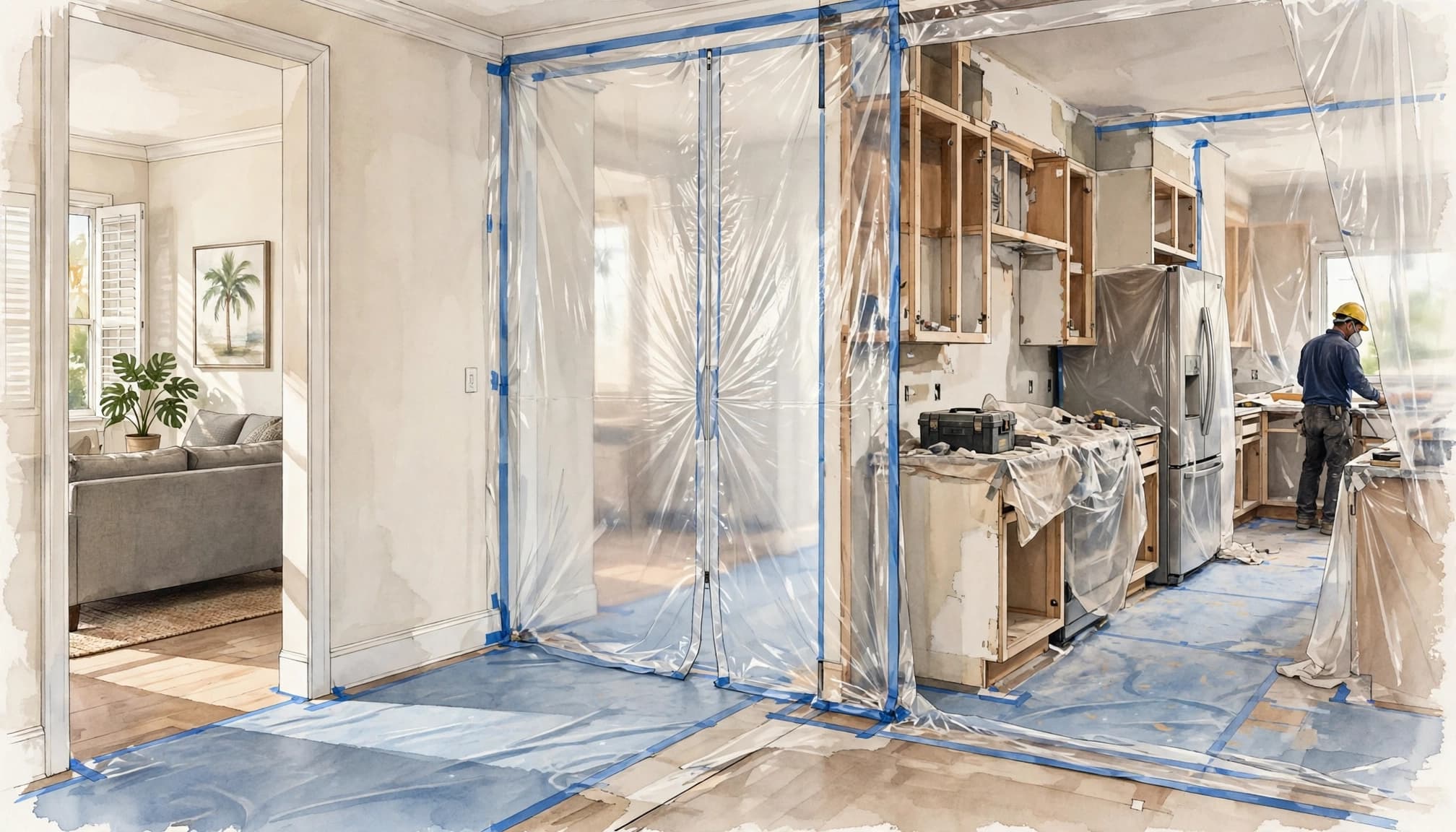
A temporary barrier can help separate the kitchen from adjoining rooms. Discuss how the barrier will close off openings, how workers will enter, and how it will stay in place during the workday. A zipper access flap can provide an entry point without leaving the opening exposed.
Floor protection should cover the route between the work area and the exterior exit. Keep it flat and secure so it doesn't create a tripping hazard. If workers need to pass near a temporary food-prep area, consider moving that setup to a different route or location.
Keep the household's daily route usable
Mark the path to the rooms you'll continue using, including bedrooms, bathrooms, and the temporary kitchen. Workers should have a separate route whenever the floor plan allows. Agree on where tools, materials, and debris can be stored so they don't block household access.
A temporary kitchen needs a boundary of its own. Keep it outside the construction path, and store food in closed containers. Cover appliances when they aren't in use, and don't let workers carry demolition debris above exposed food or clean dishes.
Protect Nearby Rooms and Belongings
Dust barriers help, but they can't protect every surface on their own. Before work begins, remove smaller belongings from nearby rooms and clear the route workers will use. Pack books, decorative items, and small electronics, then label boxes by room so they're easy to put back.
Move rugs, lamps, artwork, and other items away from exterior doors and debris paths. If furniture must remain nearby, use suitable coverings and keep pieces away from overhead work. Avoid leaving plastic pressed against wood furniture for long periods in humid conditions, since trapped moisture can harm finishes.
Consider moving heirlooms, jewelry, firearms, and delicate electronics off-site if possible. Take photos of valuable items before construction and keep them in a room that won't become part of the work zone. Close doors to bedrooms and other rooms when they're not in use, especially during dusty work.
Protect floors along the full route, including any stretch through a temporary kitchen or dining area. Ask who will maintain the protection and how the crew will prevent loose material from shifting underfoot.
Coordinate HVAC and Air Pathways
Air movement can carry dust through a home, so discuss the HVAC plan before demolition, sanding, or drywall work. Ask the contractor how vents and returns will be handled during each phase. Don't cover return-air grilles or turn off the system without professional guidance.

Ask about the system before work starts
Share the location of supply vents and return grilles with the remodeling team. Ask whether the work plan calls for protecting any openings or using air-cleaning equipment during specific tasks. The approach should fit the project and the HVAC system.
Keep the conversation practical: who decides what happens, when will the plan change, and who will restore normal operation afterward? If the project includes HVAC work, coordinate those steps with the appropriate professional rather than improvising around vents or equipment.
Watch for dust beyond the barrier
Check nearby rooms during the project, especially around doors, thresholds, and visible air returns. If dust appears outside the work zone, tell the contractor promptly so the team can address the barrier or work practices. Don't wait until the end of demolition to mention a recurring problem.
Set Expectations for Daily Cleanup
Daily cleanup limits the dust and debris that can be tracked through the house. Agree on what the crew will clean before leaving, including the work-zone entrance, protected floor route, and any shared areas used to carry materials.
Counters and other household surfaces are best cleaned with a damp cloth rather than dry dusting, which can lift particles into the air. Store food in lidded containers, and cover appliances when they aren't being used. Keep household cleaning supplies separate from construction tools and materials.
Demolition debris belongs in the contractor's designated container. Loose nails, broken tile, and wood scraps shouldn't collect near the access route or anywhere children and pets might reach them. Ask how the crew will handle waste at the end of each workday and who will clear any debris that gets tracked outside the work zone.
Protect Pets and Sensitive Household Members
Children and pets need a firm boundary around the construction zone. A closed door or child gate can help, but explain the rule clearly and keep pets away from open doors, cords, tools, and stacked materials. Confirm which exterior doors crews may use and how they'll keep gates and doors secured during material runs.
Demolition noise can also disrupt household routines. Agree on the workday start time and identify loud workdays in advance when possible. If someone works from home, share important call periods with the contractor. Families with babies, older adults, or people sensitive to dust may need a daytime plan that keeps them away from active work.
Some pets do better in a quiet room away from the work route. Others may need care outside the home during noisy demolition. Whichever arrangement you choose, don't use the kitchen work zone as a temporary pet area.
Coordinate the Details With Your Contractor
A useful plan covers more than plastic and floor coverings. Discuss the crew entrance, parking, material storage, debris route, restroom access, and which rooms remain off-limits. Decide who locks up each evening and how the household will receive updates if a work phase affects access or utilities.
Write down the expected schedule for demolition, appliance removal, deliveries, and any water or power interruptions. This helps you plan meals, protect belongings, and move anything from rooms that will become inaccessible. If you're remodeling your Fort Myers home while living in it, phasing the work around rooms that need to remain usable can make a major difference.
Agree on the containment and cleanup plan
Ask the contractor to describe how the kitchen will be separated, how the floor route will be protected, and how workers will carry debris outside. Confirm who will inspect the barrier and access path each day. If dust crosses the boundary, agree on how you'll report it and who will address it.
Match the plan to the remodel scope
Cabinet replacement may create a different work pattern than tile removal, sanding, or opening a wall. Discuss the sequence of dusty tasks and any changes that could affect nearby rooms or the HVAC conversation. For a broader look at kitchen design and remodeling, plan the layout and construction scope early, since changes during work can affect access and scheduling.
Frequently Asked Questions
Should I cover the HVAC return during demolition?
Don't cover a return grille or shut down the system without professional guidance. Ask your contractor how vents and returns will be handled during dusty phases, and follow the plan agreed on for your home.
How can I protect food and dishes near the work?
Keep the temporary food-prep area outside the construction route. Store food in sealed or lidded containers, cover appliances when they're idle, and keep clean dishes away from worker traffic and demolition debris.
What if dust appears outside the work zone?
Tell the contractor as soon as you notice it. Point out where the dust is settling and when it appeared, so the crew can review the barrier, traffic route, and work practices.
Keep the Boundary Clear
The most useful dust-control plan is in place before demolition and gets attention every day. Clear work-zone boundaries, protected routes, sensible HVAC coordination, and routine cleanup help keep the occupied parts of a Cape Coral home more manageable during renovation.
Staying in the house works best when everyone knows which spaces are active, which paths remain clear, and how to respond when dust crosses the line.