
Naples Popcorn Ceiling Removal: Test Before Demolition
Explore Our Services
Contact Us Today!
(239) 322-9295
Popcorn ceiling removal can change the look of a room, but demolition should wait until you know what the ceiling contains. Older homes may have asbestos in textured ceiling materials, and disturbing them can release hazardous fibers.
Planning Naples popcorn ceiling removal starts with a qualified asbestos professional assessing the material. Appearance and age alone can't confirm whether asbestos is present, so testing must come before scraping, sanding, drilling, or other work.
Start Naples popcorn ceiling removal with testing
A popcorn finish may look ordinary, but its appearance can't identify its ingredients. Some older textured ceilings contain asbestos, while others don't. The only responsible way to make a decision is to have the material assessed by a qualified asbestos professional.
Testing and removal are separate steps. An asbestos professional evaluates the material and arranges appropriate sampling. If the result indicates asbestos, a licensed professional handles abatement when needed. A remodeling crew shouldn't treat an untested ceiling as ordinary demolition debris.
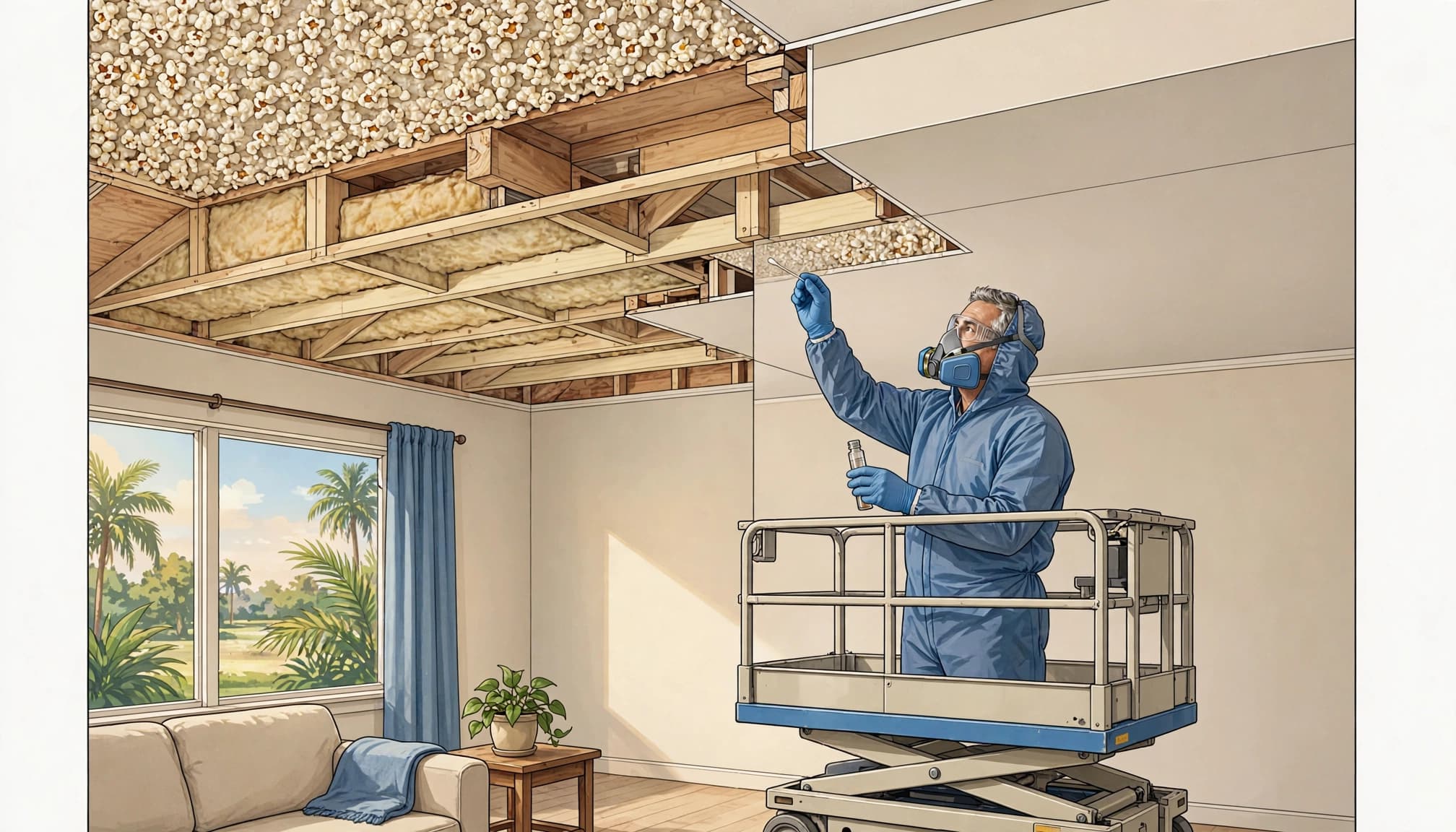
Why appearance isn't enough
A ceiling's texture, color, and condition don't reliably show whether asbestos is present. A smooth-looking patch or a section that appears damaged doesn't provide a definite answer either. Likewise, the home's age may raise the question, but it can't confirm the contents of a particular ceiling.
That uncertainty matters before renovation. Scraping, sanding, drilling, or opening the ceiling can disturb material and create dust. Therefore, leave the surface intact until a qualified professional has assessed it and advised on the next step.
Testing doesn't remove the material
A test answers a question about the ceiling's contents. It doesn't make the ceiling safe to disturb, remove it, or clean up material already released. Those are separate tasks with different responsibilities.
If the assessment identifies asbestos, the next step is to understand whether the planned work requires abatement and who is qualified to perform it. A licensed abatement professional should manage that work when needed. Keep the assessment and removal responsibilities clear before setting a demolition date.
What to do while you wait for an assessment
The safest approach is to keep the ceiling undisturbed. Don't scrape or sand it to see what's underneath, and don't drill through it to install a fixture or inspect a cavity. Avoid sweeping or dry dusting any loose material. These actions can disturb the surface before you know what it contains.
You can still plan the project without starting demolition. Write down which rooms are included, what work you want done, and whether lighting, fans, or other ceiling features will change. Share that scope with the assessment professional and remodeling contractor so they can coordinate the right sequence.
Also keep household members away from any area where the ceiling has already been damaged or where loose debris is present. Don't attempt to collect a sample yourself. A qualified asbestos professional should handle assessment and sampling, rather than a homeowner or general remodeling crew.
If the project is underway, pause work that could disturb the ceiling until the assessment guides the next step. Work in a separate area may be able to continue, but the team should define that boundary clearly and avoid tracking dust or debris between spaces.
What happens if asbestos is found
A positive result changes the work plan. The finding doesn't mean every room needs the same response, but it does mean the affected material shouldn't be removed like ordinary ceiling texture. The licensed abatement professional can determine the appropriate work for the material and project.
Before work begins, make sure the responsibilities are clear. The assessment professional documents findings, the abatement professional addresses affected material when required, and the remodeling contractor coordinates reconstruction after that work. These roles shouldn't be blurred into an informal instruction to "take it down."
Set the scope before work begins
The project team should identify the affected area, the work that will happen there, and how it connects to the rest of the renovation. Ask for the scope and sequence in writing, including the point when the remodeling work can resume. That gives everyone a common plan before crews arrive.
Keep the area out of normal household use while the appropriate professionals decide how to proceed. Don't move loose debris or try to cover, seal, or remove the affected ceiling yourself. If conditions change or additional material is exposed, the work plan may need to change too.
Keep abatement and remodeling distinct
Removal by a qualified abatement professional is different from the finish work that follows. Once the affected material has been addressed, the renovation can move on to the agreed repairs and new ceiling finish. The remodeling contractor can coordinate that next phase without taking on asbestos sampling or abatement.
This separation helps prevent a rushed start in which demolition begins before the right people have assessed the material. It also gives homeowners a clearer view of which work is included at each stage.
If the test finds no asbestos
A result that doesn't identify asbestos can help the project move forward, but it isn't a demolition instruction by itself. The remodeling team still needs to plan how it will remove the texture, protect the room, manage debris, and repair the ceiling. The amount of work depends on the project's scope and the ceiling's condition.
Before removal, consider what else is happening above or around the ceiling. Water staining, recurring leaks, or musty odors can point to a separate moisture concern. If those signs are present, address them before closing or refinishing the area. Our guide to mold inspection before demolition covers how an assessment can inform work in areas with suspected moisture problems.
A clean asbestos result doesn't establish that the ceiling is dry, sound, or free from other concerns. It answers the asbestos question for the tested material. Keep the rest of the renovation plan tied to what the room actually needs.
Coordinate ceiling work with the wider renovation
Ceiling removal can affect more than the finish. A whole-home remodel may also include lighting changes, fan replacement, electrical work, insulation, roof repairs, or other updates that meet at the ceiling plane. Deciding the sequence early helps the project team avoid finishing the surface before related work is complete.
For example, if a room needs new lighting, plan that work before the final ceiling finish. If roof or plumbing work has caused staining, address the source before covering it. A ceiling that looks finished won't resolve a leak or repair an underlying issue.

Set the order for trades
The assessment comes first, followed by any necessary abatement. Then the team can coordinate ceiling demolition, mechanical or electrical work, repairs, and finish installation in a suitable order. The exact sequence depends on the scope, but the important point is that the ceiling shouldn't be disturbed before the material has been assessed.
When several rooms are involved, map out which areas are ready for work and which still need evaluation. That can help the team organize access and scheduling without treating the entire home as one undifferentiated work zone.
Make the finish part of the plan
After the removal phase, choose a finish that suits the room and the broader renovation. A smooth ceiling may require surface preparation and repair before painting. If the home has different ceiling heights or existing details, account for those transitions when planning the final appearance.
A written scope should distinguish assessment, abatement if needed, demolition, repairs, and finish work. That makes it easier to understand the handoff between specialists and the remodeling crew. For a broader project, see what to expect during whole-home remodeling.
Key takeaways
- Popcorn ceiling material may contain asbestos, especially in older homes, but age and appearance can't confirm it.
- Have a qualified asbestos professional assess and sample the material before disturbing the ceiling.
- Don't scrape, sand, drill, or remove the ceiling while its contents are unknown.
- Testing and removal are different tasks. Licensed professionals should handle abatement when needed.
- Coordinate ceiling work with other repairs and renovation trades before choosing a demolition date.
Frequently asked questions
Can I scrape off a small section to check for asbestos?
No. A small area can still release dust if the material contains asbestos. Don't scrape, sand, drill, or collect a sample yourself. Arrange an assessment with a qualified asbestos professional while the ceiling remains undisturbed.
Does a positive test mean the whole ceiling must be removed?
Not automatically. The result informs a professional assessment of the material and proposed work. A licensed abatement professional can determine the appropriate response when abatement is needed. Don't assume the full room or home requires the same work.
Can my remodeling contractor test the ceiling?
Asbestos testing and remodeling are separate responsibilities. Have a qualified asbestos professional handle assessment and sampling. Then coordinate the findings with the remodeling contractor and a licensed abatement professional if the work requires abatement.
Should I schedule demolition before the test?
No. Schedule work that could disturb the ceiling only after assessment has informed the plan. You can still plan the project scope, room access, and related renovation work while waiting, as long as the ceiling remains undisturbed.
Put testing first, then plan the work
A textured ceiling can't be cleared for demolition by sight or by age alone. The right first step is a professional assessment, followed by the appropriate removal plan if asbestos is present.
For Naples popcorn ceiling removal, that sequence protects the household and gives the renovation team a clearer path from assessment to finished ceiling.