Temporary Kitchen Setup Ideas for a Fort Myers Remodel
Explore Our Services
Contact Us Today!
(239) 322-9295
Losing your kitchen sink can disrupt your day faster than losing your stove. A temporary kitchen setup keeps meals manageable when it gives you reliable water access , cold storage, and a clean place to prepare food.
During a Fort Myers remodel, heat, humidity, and construction traffic also affect where that station belongs. You don't need to recreate your entire kitchen, but you do need to protect the routines your household uses every day.
Start by choosing a location that will remain accessible after demolition begins.
Key Takeaways
- Build your temporary station before workers disconnect the existing kitchen, with food, dishes, and everyday appliances already in place.
- Prioritize water and refrigeration, then select cooking equipment around the meals your household normally eats.
- Keep food preparation outside the construction path, and use climate-controlled space for temperature-sensitive supplies.
Choose a Temporary Kitchen Setup Location
The largest available space isn't always the most useful. A dining-room corner near refrigeration may work better than a roomy garage with no convenient sink.
Choose a spot outside the route workers will use for cabinets, tools, and debris. You should reach food and drinking water without entering the demolition area.
These common locations offer different advantages.
| Location | Main advantage | Main limitation |
|---|---|---|
| Laundry room | Nearby water and a washable floor | Hoses, moisture, and limited workspace |
| Dining area | Comfortable indoor access | Distance from a sink and family traffic |
| Garage | Room for storage and equipment | Heat, humidity, and pests |
| Enclosed lanai | Separation from indoor construction | Weather exposure and outdoor temperatures |
A climate-controlled indoor location is usually the stronger choice for everyday food storage. However, a laundry room only works when you can keep food and appliances separate from detergent, damp surfaces, and utility equipment.
Walk through your normal morning before moving anything. Leave space to open the refrigerator, prepare breakfast, and pack lunches without blocking a doorway. If someone uses a walker or wheelchair, preserve the route they already depend on.
Keep the dining table available for eating whenever possible. Moving every appliance onto it can solve storage while creating another daily inconvenience.
Build a Compact Station Before Demolition
Prepare the station while your existing kitchen still works. Our guidance on pre-demolition kitchen planning covers the household arrangements that belong ahead of appliance removal.
Give preparation and cooking separate space
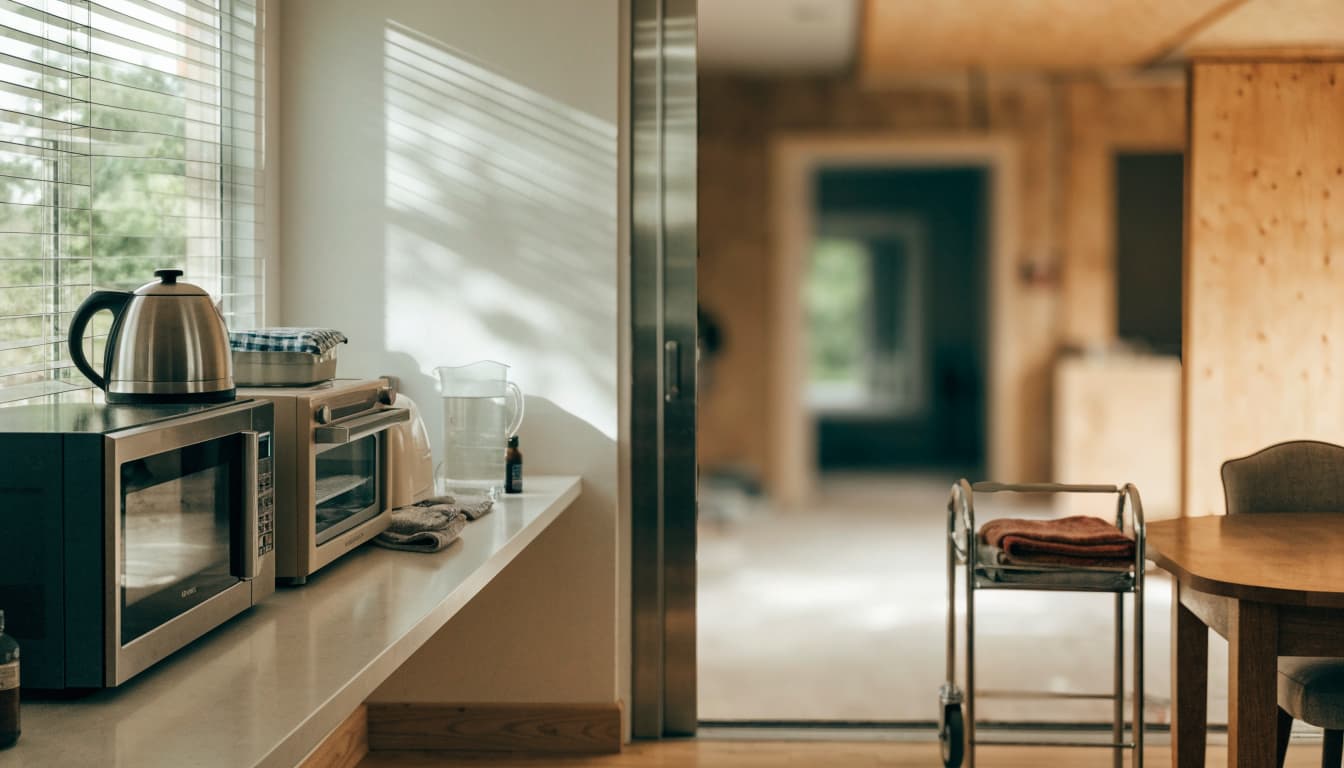
Divide the station into practical areas for storage, preparation, cooking, and cleanup. Even a small setup works better when hot dishes have somewhere to land and groceries don't cover the cutting board.
A sturdy washable table can handle preparation, while a suitable separate surface holds cooking appliances. Keep frequently used items within easy reach, with backup supplies in covered containers nearby.
Position the refrigerator so its door opens freely. Also leave enough room to remove a hot bowl from the microwave without reaching across another appliance.
Unpack for your actual habits
Keep the coffee maker accessible if breakfast starts with coffee. For packed lunches, prioritize containers, sandwich supplies, and a clear preparation surface.
A microwave handles reheating and simple meals. An electric kettle supports drinks and instant oatmeal, while a portable induction burner or toaster oven adds cooking options when the location safely accommodates it.
Keep a cutting board, knife, can opener, and a few utensils handy. Pack away duplicate cookware and serving pieces. A smaller working collection makes cleanup easier and leaves more space for food preparation.
Move these essentials before the kitchen entrance becomes restricted.
Keep Water and Refrigeration Accessible
Water and cold storage determine whether your temporary kitchen stays useful beyond breakfast. Plan both before choosing extra cooking equipment.
Create a clean dishwashing routine
Use an available household sink outside the work zone. A laundry sink can be practical if you keep it clean and separate food cleanup from laundry products.
Carry dishes in a washable tub rather than balancing loose plates through the house. Set aside another clean area for drying, so washed items don't return to a crowded cooking surface.
Store drinking water in the food-preparation area during planned interruptions. However, water containers don't replace a workable handwashing and dishwashing arrangement. Plumbing disconnections and temporary connections belong with qualified professionals.
Preserve dependable cold storage
Keep the existing refrigerator in service outside the construction zone when the project allows. Otherwise, a compact refrigerator can support a smaller grocery routine.
Leave room for appliance ventilation and keep access clear. Don't let construction supplies accumulate around the refrigerator or turn it into a storage shelf for tools.
Southwest Florida heat makes a garage a poor default for temperature-sensitive supplies. Keep medication and heat-sensitive food inside the climate-controlled part of your home.
Meanwhile, organize refrigerated food so you can see what needs using. Smaller shopping trips reduce overcrowding and make meal planning easier.
Plan Appliance Use and Power
Buying several countertop appliances doesn't automatically improve a temporary kitchen. Each one needs suitable space, safe power access, and a purpose in your meal routine.
Choose equipment around available power
Have a qualified electrician assess the planned location when several appliances will share it. A microwave, toaster oven, and portable burner can place substantial demand on household wiring.
Arrange appliance use around the power available rather than treating a power strip as extra capacity. Keep cords away from water, doorways, and places where children could pull equipment down.
For the permanent kitchen, our guidance on planning kitchen electrical circuits explains why appliance decisions belong before cabinets and countertops close off wiring access.
Leave breathing room around heat
Use stable surfaces appropriate for each appliance, with unobstructed ventilation. Keep towels, curtains, paper packaging, and plastic storage containers away from cooking equipment.
Avoid squeezing a toaster oven beneath a crowded shelf or beside hanging fabric. Because temporary stations often occupy living spaces, materials normally far from cooking can end up dangerously close.
Keep portable cooking equipment away from sink splashes and washing-machine hoses. If the room can't accommodate heat safely, rely on simpler meals and a different cooking location.
Make Meals Easier in a Florida Home
A temporary kitchen works better with a repeatable meal plan than with a growing collection of gadgets. Choose food that fits the space and creates little cleanup.
Rotate meals that need little equipment
Breakfast can stay simple with yogurt, fruit, cereal, or microwave oatmeal. Wraps and sandwiches make practical lunches because they don't compete with dinner preparation for cooking space.
For dinner, combine microwave rice, cooked chicken, and vegetables. Rotisserie chicken, salads, canned soup, and simple skillet meals also reduce preparation work.
Prepare and freeze meals before demolition if you have dependable freezer space. Then shop in smaller amounts instead of trying to maintain a full pantry.
Use takeout as a planned fallback for disruptive workdays. It becomes more useful when it covers a particular gap rather than replacing every meal.
Use the lanai as a dining space
A covered or screened lanai can give your household somewhere to eat away from indoor disruption. Keep the main food-storage station indoors when outdoor conditions make it unsuitable.
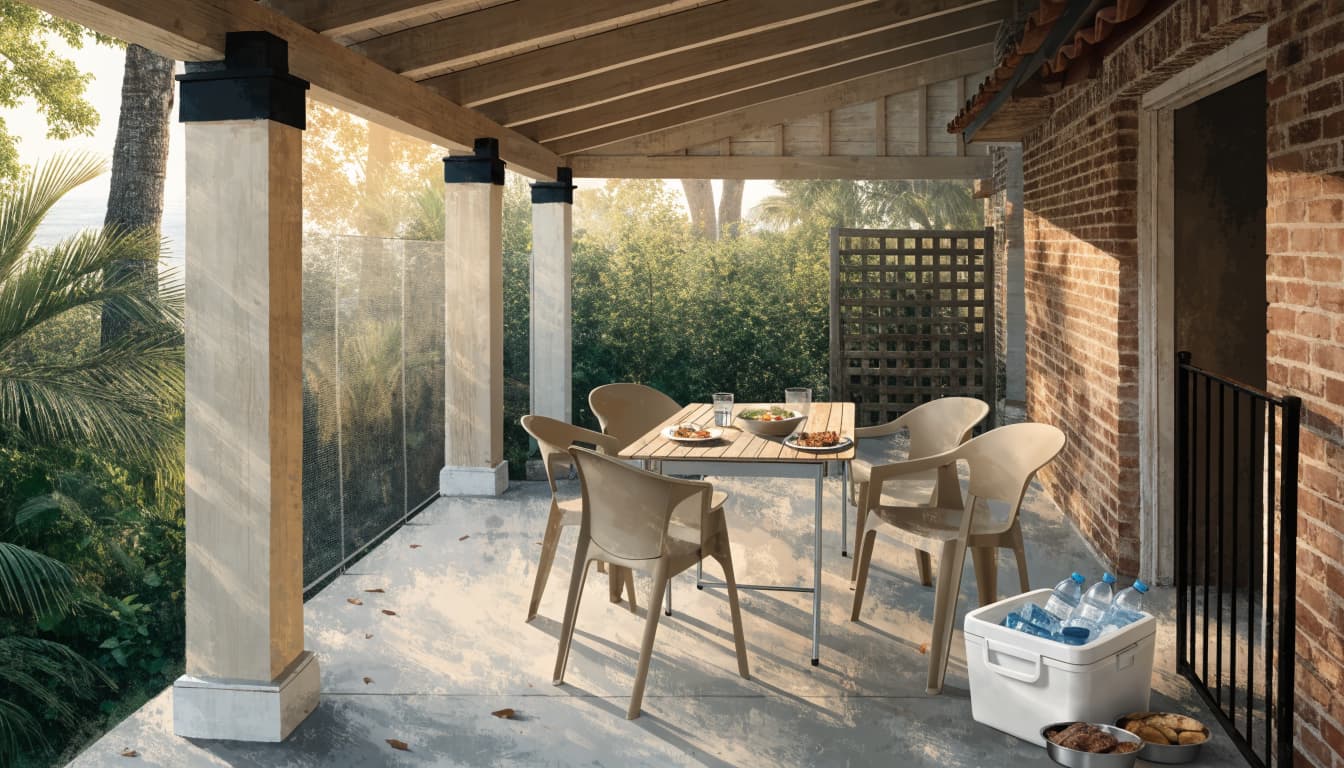
Bring meals outside when you're ready to eat, then return leftovers and supplies indoors. Heat, humidity, and wind-driven rain make permanent outdoor staging less dependable.
Our advice on living at home during remodeling addresses the broader challenge of keeping usable rooms separate from active work.
Never bring a grill or fuel-burning outdoor cooking equipment indoors or into an enclosed lanai.
Protect Daily Routines From Construction
Keep the temporary food area on the clean side of the project's dust barriers. Covered food containers help with storage, but they don't make an active demolition area suitable for preparing meals.
Coordinate floor protection and walking routes with the construction plan. The path between your refrigerator, cleanup sink, and eating area should remain separate from material handling wherever possible.
Children and pets need physical boundaries around both the work zone and portable cooking equipment. Use a closed door or suitable gate, store knives and cleaning products securely, and keep cords out of reach.
For pets unsettled by demolition noise, arrange a quiet room away from exterior doors and workers' routes.
The setup also needs to last beyond cabinet removal. Installed cabinets don't mean a usable kitchen : countertop templating follows base-cabinet installation, and final countertop work comes later.
Keep temporary essentials unpacked until the permanent sink, refrigeration, and cooking area are ready. Returning supplies too early can leave you carrying dishes through unfinished work.
Finally, put planned utility interruptions and appliance-removal dates on the household schedule. If the remodel changes the island, sink, range, or walls, settle those decisions before demolition. Changes after rough-in work can require revised plans, additional labor, or new inspections.
Frequently Asked Questions
Can I use my garage as a temporary kitchen?
A clean garage can provide storage and workspace, but Fort Myers heat and humidity make it less suitable for everyday food storage. Water access may also be inconvenient.
Keep medication and temperature-sensitive supplies indoors. Separate the station from vehicles, chemicals, tools, and construction materials, and don't use fuel-burning outdoor cooking equipment inside.
What should I keep out during a kitchen remodel?
Keep the dishes and utensils your household uses daily, plus a cutting board, knife, can opener, and food-storage containers. Add cooking appliances according to your meals and available space.
Leave coffee supplies and lunch-packing items accessible if they're part of your routine. Store occasional-use cookware elsewhere so it doesn't crowd preparation and cleanup.
When should I dismantle the temporary station?
Keep it working until the permanent kitchen supports your basic daily needs. Cabinet installation alone isn't enough if the sink, countertops, or appliances remain unavailable.
Move essentials back once their permanent locations are clean and usable. This avoids unpacking everything into areas where installation work continues.
Keep the Essentials Working Through Your Remodel
A useful temporary kitchen protects the routines you depend on: preparing breakfast, storing groceries, washing dishes, and feeding your household. Reliable access matters more than recreating every feature of the old room.
Bring those daily needs into the planning conversation for our Fort Myers kitchen remodeling services. With a clean location, practical equipment, and clear separation from construction, your temporary station can keep ordinary meals manageable while the permanent kitchen takes shape.