Rust Stains in Gunite Pools: Surface or Rebar Trouble?
Explore Our Services
Contact Us Today!
(239) 322-9295
A rust-colored mark on your pool wall can look alarming, but its appearance alone doesn't tell you what's happening underneath. Rust stains in a gunite pool may affect only the interior finish, or they may accompany a condition that needs closer investigation.
The safest approach is to separate surface discoloration from the condition of the reinforced concrete shell. A removable stain doesn't prove the shell is sound, and a stubborn stain doesn't prove rebar corrosion.
Start with the surrounding symptoms before choosing a cleaning treatment, resurfacing project, or repair.
Surface Stains Versus Possible Shell Concerns
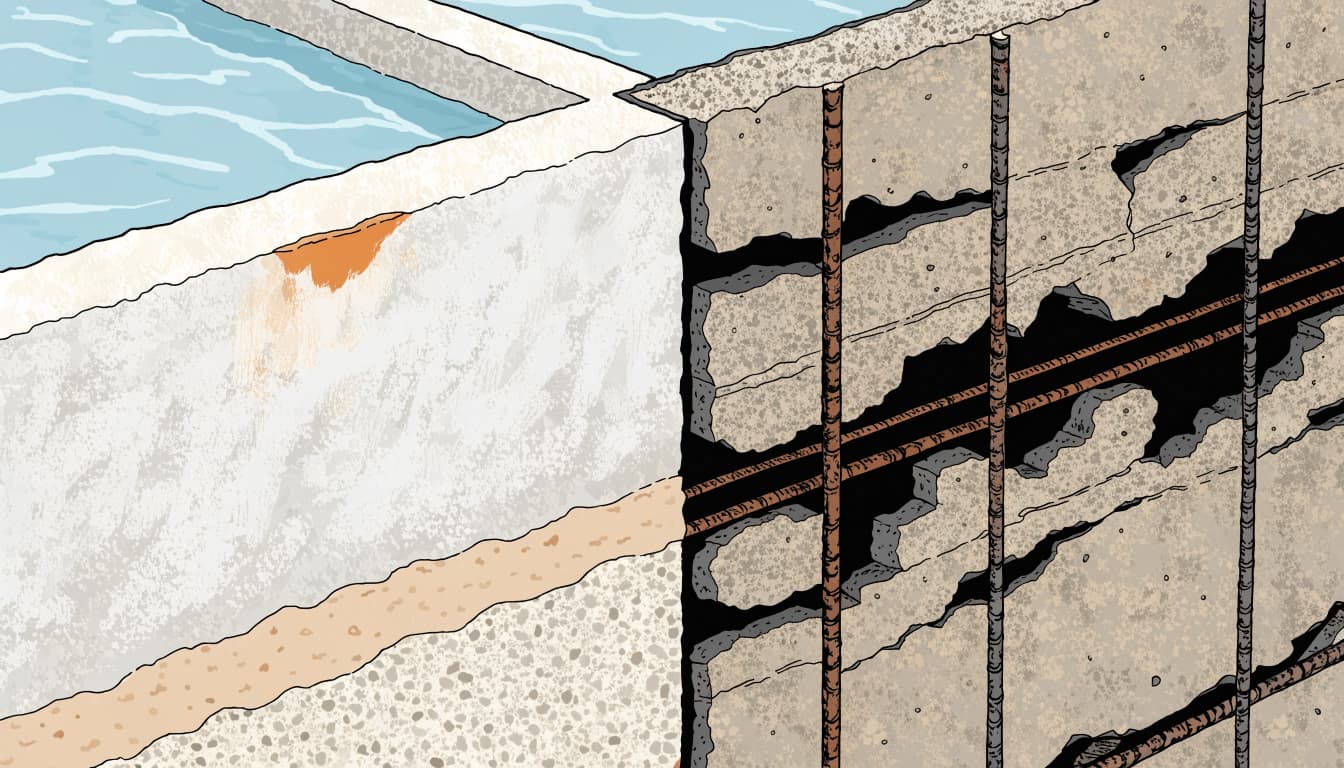
A gunite pool has separate layers with different jobs. Understanding those layers helps you avoid treating every mark as structural damage or dismissing a warning sign as cosmetic.
The interior finish is the visible surface
Plaster, quartz, or pebble aggregate forms the surface you see and touch underwater. Discoloration can affect that finish without establishing that the concrete shell beneath it has failed.
When staining remains limited to the finish, suitable professional treatment may improve its appearance. Older finishes may also need resurfacing because of broader wear, roughness, or deterioration.
Our gunite pool surface finish guide explains how the interior finish differs from the reinforced shell. Choosing a new finish and evaluating the structure are separate decisions.
Rebar belongs to the structural shell
Rebar is the steel reinforcement embedded in the concrete. Its placement and concrete cover form part of the pool's engineered construction.
Possible corrosion within that shell requires a different assessment than surface staining. Cleaning the visible mark cannot establish the condition of concealed steel.
However, the presence of a rust-colored stain doesn't automatically mean the reinforcement is deteriorating. A qualified pool professional must evaluate the mark alongside cracks, exposed material, water loss, and other conditions.
Why Color and One Stain Test Aren't Enough
Orange, brown, or reddish discoloration is a starting observation, not a diagnosis. The surrounding finish and the pool's recent history matter more than assigning a cause from a photograph.
A treatment response has limits
If a stain lightens during appropriate professional treatment, that shows the visible discoloration responded. It doesn't establish where the discoloration originated or rule out another problem below the finish.
Likewise, an unchanged stain doesn't prove the steel is corroding. Finish wear and other conditions can complicate the result.
Avoid using one spot treatment as permission to ignore a nearby crack. Instead, keep the appearance of the stain and the condition of the shell as separate questions.
A returning mark needs context
A stain that returns deserves attention, especially when it appears with cracking, separation, or exposed steel. Still, recurrence alone doesn't identify the source.
Record whether the mark returns in the same location and whether its surroundings change. A dated sequence of photographs gives the professional more useful information than one close-up.
Removing the visible stain doesn't establish that concealed reinforcement is sound. Structural concerns need their own assessment.
That distinction helps prevent repeated cosmetic treatment from delaying an inspection when other warning signs are present.
Signs That Warrant a Pool Shell Assessment
Rust stains in gunite pools deserve closer investigation when other symptoms accompany them. Some warning signs concern the finish, while others may involve the shell, fittings, plumbing, or surrounding ground.
Cracks, separation, and exposed material
Arrange a professional assessment for cracks that widen, cross several areas, or reopen after patching. Also report separation around returns, skimmers, drains, tile, or coping.
Loose material, soft spots, or exposed reinforcement need prompt attention. Keep people away from damaged areas with sharp edges or exposed steel.
A hollow sound beneath the finish can indicate loss of bond, but it doesn't establish shell failure. Don't chip away material or probe the stained area to investigate.
For a recently built pool, our gunite pool shell curing guidance also addresses cracks and defects that need review before finish work proceeds.
Water loss and movement add urgency
Water loss beyond normal evaporation and splash-out deserves leak investigation. Yet it doesn't prove the shell is leaking; plumbing, fittings, and equipment can also require attention.
Meanwhile, uneven areas, changing gaps near coping, or repeated separation may suggest movement that needs evaluation.
Tell the professional about these symptoms together rather than reporting only the stain. A rust-colored mark beside a widening crack requires a different investigation than isolated discoloration on an otherwise intact finish.
Safe Next Steps Before Any Stain Treatment
You can gather useful information without disturbing the finish or exposing the shell. The goal is to preserve evidence and avoid making the condition harder to assess.
- Photograph the mark from a distance and close up. Include nearby steps, fittings, or tile so its location is clear.
- Record when you first noticed it and whether it has changed. Note recent finish work, previous treatment, or recurring cracks.
- Keep routine water-care records available. Recent readings and service history give the pool professional useful background.
- Arrange an inspection if the stain accompanies cracks, loose finish, exposed steel, separation, or unexplained water loss.
Until the condition is understood, avoid repeated scrubbing or experimenting with stronger chemicals. A pool professional can select a finish-compatible treatment when the evidence supports a surface-staining problem.
Don't use aggressive acid treatment as a DIY diagnostic tool. It can damage the finish and doesn't establish whether concealed reinforcement needs attention.
Also, don't drain the pool simply to get a closer look. Groundwater pressure can create serious problems for an empty pool, particularly when site conditions are wet.
In Southwest Florida, drainage decisions belong with a qualified pool professional who can assess the pool and surrounding conditions. If sharp damage or exposed steel is present, pause pool use until the area receives professional attention.
What a Professional Inspection Can Determine
A useful inspection evaluates the pool as a system. It should distinguish observations from confirmed findings and explain which parts of the condition remain concealed.
The assessment starts with visible conditions
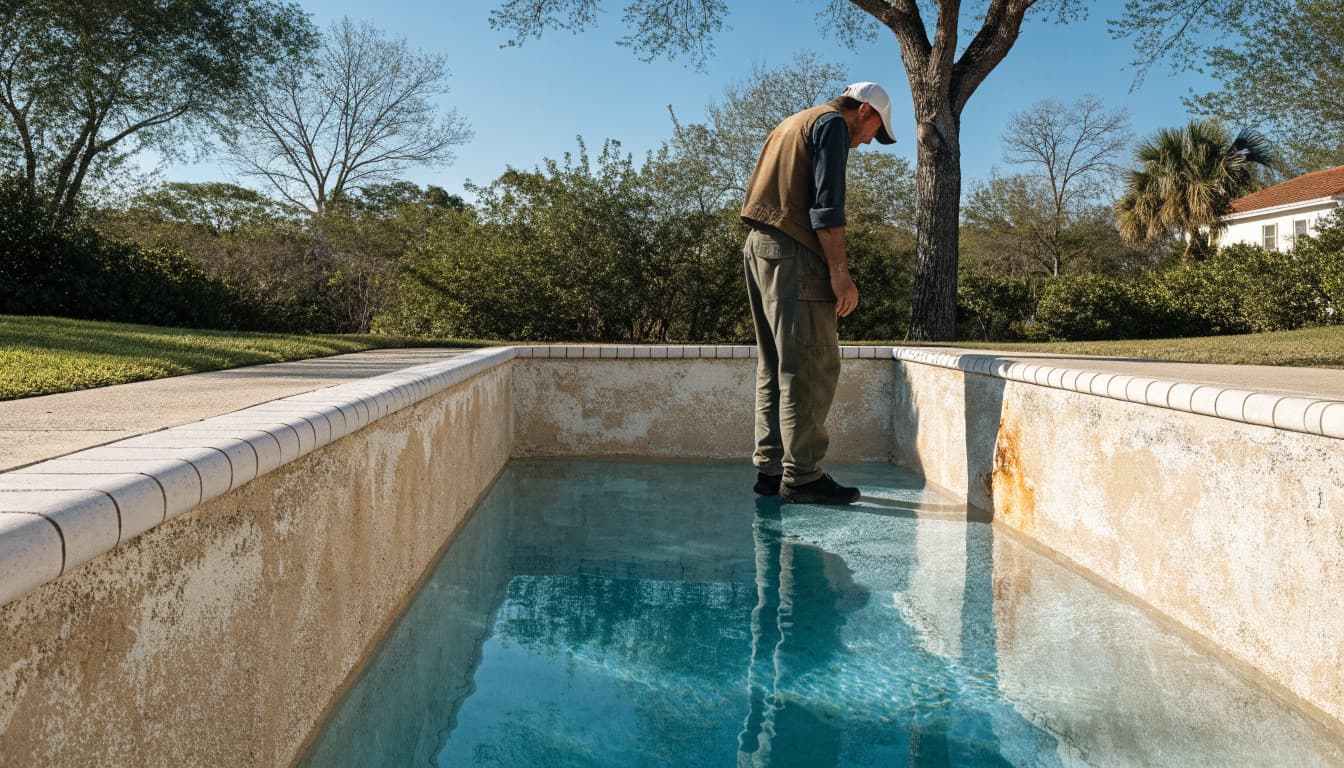
The professional reviews the finish, cracks, fittings, tile line, coping, and surrounding deck. Water-level history and previous repairs help establish whether the problem is changing.
A visual inspection can identify areas that need further investigation. However, it cannot reveal every condition behind an intact finish or locate an underground plumbing leak by itself.
Depending on the symptoms, the next step may involve leak detection, dye testing, or pressure testing of plumbing. Each test answers a particular question rather than providing a universal verdict on the pool.
Structural concerns may need engineering review
When damage suggests shell movement, significant cracking, or compromised reinforcement, a structural engineer may need to evaluate the condition.
The written findings should distinguish finish damage, plumbing problems, and structural concerns. That separation helps the repair proposal address the actual problem.
For example, a leaking fitting and a worn interior finish may require different work within the same renovation. Neither condition automatically justifies removing the pool.
If concealed areas need exposure, the contractor should define that investigation before proceeding. Homeowners shouldn't cut, chip, or remove shell material themselves.
When Resurfacing Is the Appropriate Scope
Resurfacing replaces the interior finish. It can address worn surfaces and persistent cosmetic problems when the underlying shell remains suitable for that work.
It cannot correct a moving shell or repair a leaking plumbing line.
Surface wear can justify a new finish
Widespread roughness, thinning finish, uneven appearance, and discoloration that resists appropriate care may make resurfacing reasonable.
Many gunite pools reach a resurfacing stage after roughly seven to ten years , but that range is a planning guide. Finish type, installation quality, water chemistry, maintenance, and use affect service life.
A pool's age alone doesn't establish the scope. Our guidance on Naples gunite pool resurfacing addresses the difference between aging finishes and conditions that need deeper investigation.
Shell concerns come before cosmetic work
If an inspection identifies damage beyond the finish, the renovation plan must account for it before a new surface goes on.
Removing an old finish may reveal conditions that weren't visible during the initial assessment. The proposal should explain how the contractor will document those findings and separate additional repairs from finish work.
Expect the pool to be unavailable for several days or longer. Preparation, repairs, weather, finish selection, and curing requirements all affect the schedule. A short promised turnaround shouldn't override necessary inspection or preparation.
Plan the Repair Around Findings, Not Appearance
A stain doesn't provide enough information to price structural work. The useful starting point is a documented scope that separates diagnosis, necessary repairs, and optional improvements.
An estimate should identify whether it covers stain treatment, finish replacement, leak repair, or work involving the shell. Those are different tasks, even when they occur during one project.
If the pool needs renovation, required repairs should remain distinct from upgrades such as new tile, coping, or decking. That makes the proposal easier to understand and prevents cosmetic choices from obscuring unresolved damage.
Our Cape Coral pool renovation services include resurfacing, tile replacement, coping replacement, and deck renovations. The appropriate combination depends on the pool's condition and the homeowner's goals.
Neither a rust-colored mark nor water loss alone justifies demolition. Replacement deserves consideration only when testing and structural evaluation support that scope.
Key Takeaways
- A rust-colored stain cannot identify concealed rebar corrosion by appearance alone.
- Successful stain treatment addresses visible discoloration, but it doesn't establish the condition of the shell.
- Cracks, separation, exposed steel, movement, and unexplained water loss warrant professional assessment before cosmetic work.
- Resurfacing can renew a worn finish, while structural or plumbing problems require their own repair scope.
Address the Condition Before Replacing the Finish
Rust stains in a gunite pool call for a measured response. The strongest evidence comes from the stain's history, surrounding symptoms, and a professional assessment.
Keep surface appearance and shell condition separate when deciding what work is needed. A clean-looking finish cannot substitute for resolving confirmed damage underneath.
If the stain accompanies cracking, separation, exposed reinforcement, or unexplained water loss, arrange an inspection before approving stain treatment or resurfacing.