Where to Place Exterior Outlets on a Fort Myers Home
Explore Our Services
Contact Us Today!
(239) 322-9295
An outdoor outlet loses much of its value when using it means stretching a cord across the lanai. For exterior outlets in Fort Myers, the right locations depend on your furniture, outdoor equipment, and exposure to water.
Plan power access before stucco, pavers, pool decking, and landscaping make changes harder. A licensed electrician should apply local rules and site conditions to the final design, including protection and equipment selection.
Start with how your family will use each outdoor area.
Map Outdoor Activities Before Choosing Outlet Locations
Place your outdoor furniture, appliances, and equipment on the site plan before marking receptacles. An empty exterior wall may look convenient during construction but become inaccessible behind a grill, storage cabinet, or dense planting.
Think through everyday activities: cleaning the driveway, charging tools, entertaining on the patio, and operating landscape lighting. Each activity needs power in a different place. Also, distinguish occasional plug-in use from equipment that needs a planned circuit or permanent connection.
Outdoor refrigerators, pool systems, motorized hurricane shutters, and future EV charging can affect the home's electrical design. Build these decisions into early custom-home electrical planning so locations and electrical loads reach the drawings together.
Consider access after construction, too. Can you reach the outlet without moving heavy furniture? Will a door swing hit the cover? Can a plugged-in cord stay clear of walking routes?
A practical outlet plan answers those questions before the electrician installs boxes. It also distinguishes general-purpose receptacles from lighting connections, equipment disconnects, and other electrical components.
Place Patio and Lanai Outlets Around the Finished Layout
A covered lanai needs thoughtful electrical planning even when the roof provides shade and shelter. Wind-driven rain, pool splash, humidity, and cleaning water can still reach its walls and floor.
Keep Power Close to Seating and Entertainment
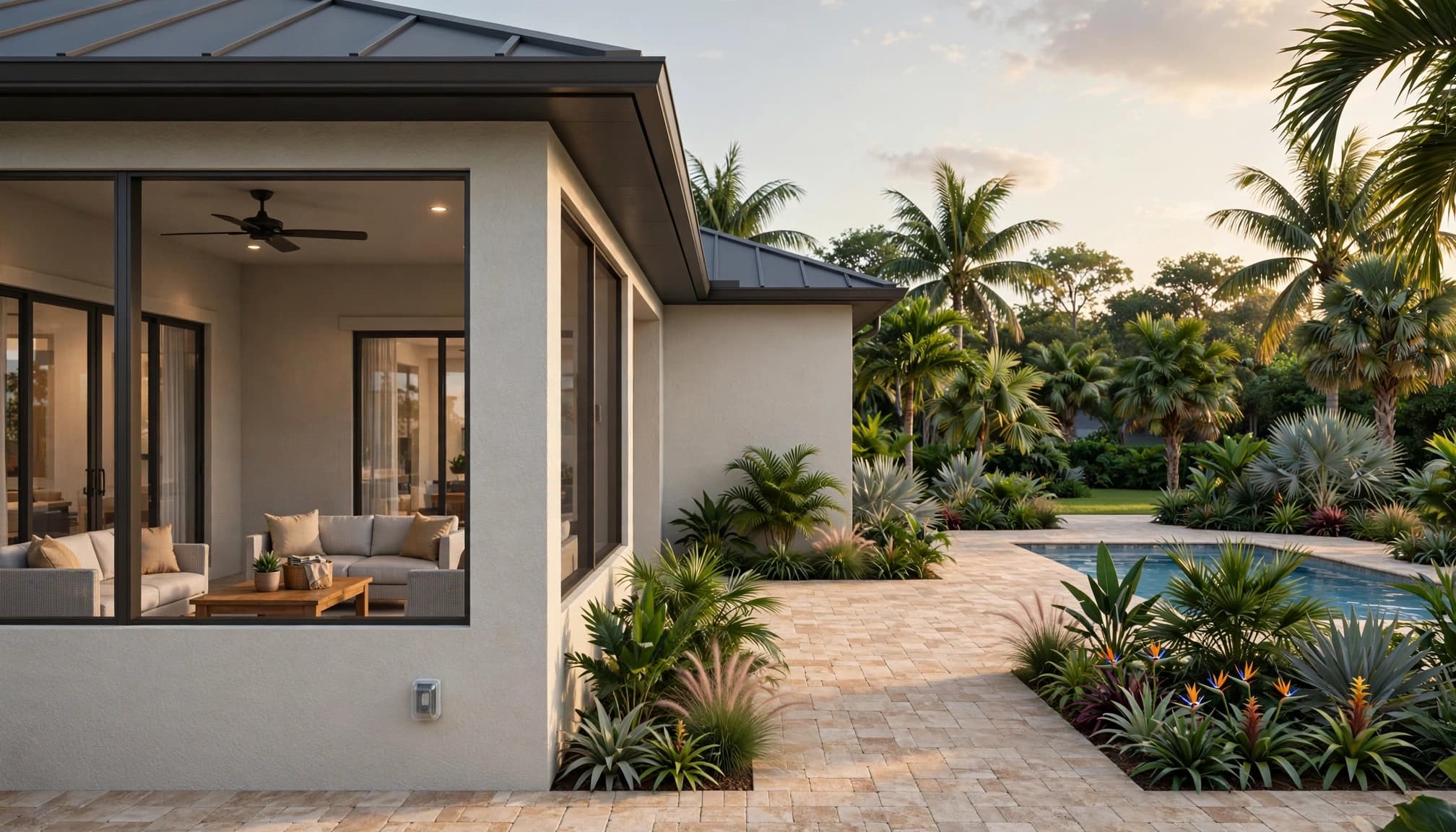
Place receptacles near the areas where you expect to use lamps, portable speakers, or other outdoor-rated accessories. Favor accessible wall locations beside seating groups rather than locations hidden behind bulky furniture.
For a wall-mounted outdoor television, coordinate power with the mounting location and cable route. The receptacle and cover still need room for access and proper use.
Also, keep cords away from sliding-door tracks and the main route between the house and pool. For our Fort Myers backyard and lanai design projects, electrical locations should follow the finished seating and circulation plan.
Separate Outdoor Kitchen Needs From General Patio Power
An outdoor kitchen needs equipment selections before the electrical layout becomes final. Refrigeration, countertop appliances, and other equipment can require different connections and circuit arrangements.
Locate countertop power where you can use appliances without routing cords across the sink or cooking surface. Meanwhile, keep appliance connections accessible for service.
A convenient patio receptacle shouldn't become the assumed power source for every kitchen appliance. Give the electrician the selected equipment specifications so the design accounts for actual electrical demand, cabinetry, and exposure.
Plan Pool-Area Power Separately From Convenience Outlets
Pool-area electrical planning needs coordination among the builder, licensed electrician, pool contractor, and inspector. General backyard receptacles and pool equipment connections have different purposes and shouldn't share an improvised layout.
Keep Everyday Cords Away From Water
Locate convenience outlets so you can use them without stretching cords beside the water or across wet walking areas. Consider pool splash, outdoor showers, hose stations, and the route people take after swimming.
A nearby wall may offer better access than a floor box exposed to deck washing and splash. However, the final location depends on the pool layout and the electrical design.
Good pool and lanai layout planning accounts for doors, seating, and service routes before electrical locations become fixed.
Give Pool Equipment Its Own Coordinated Plan
Pool pumps, heaters, controls, and lighting need connections suited to the selected equipment. Include them in the home's load planning rather than treating them as ordinary plug-in accessories.
Keep the equipment area accessible for maintenance. Landscaping, enclosure walls, and storage shouldn't interfere with electrical controls or service access.
The electrician and pool contractor should resolve grounding, bonding, protection, and equipment connections together. Homeowners can identify desired features, but pool electrical work belongs with qualified professionals.
Put Garage and Driveway Outlets Near Actual Work Areas
The garage exterior often supports cleaning, maintenance, and yard work. Place power where these activities happen without creating cords across vehicle routes or entry paths.
Serve the Garage Opening and Side Yard
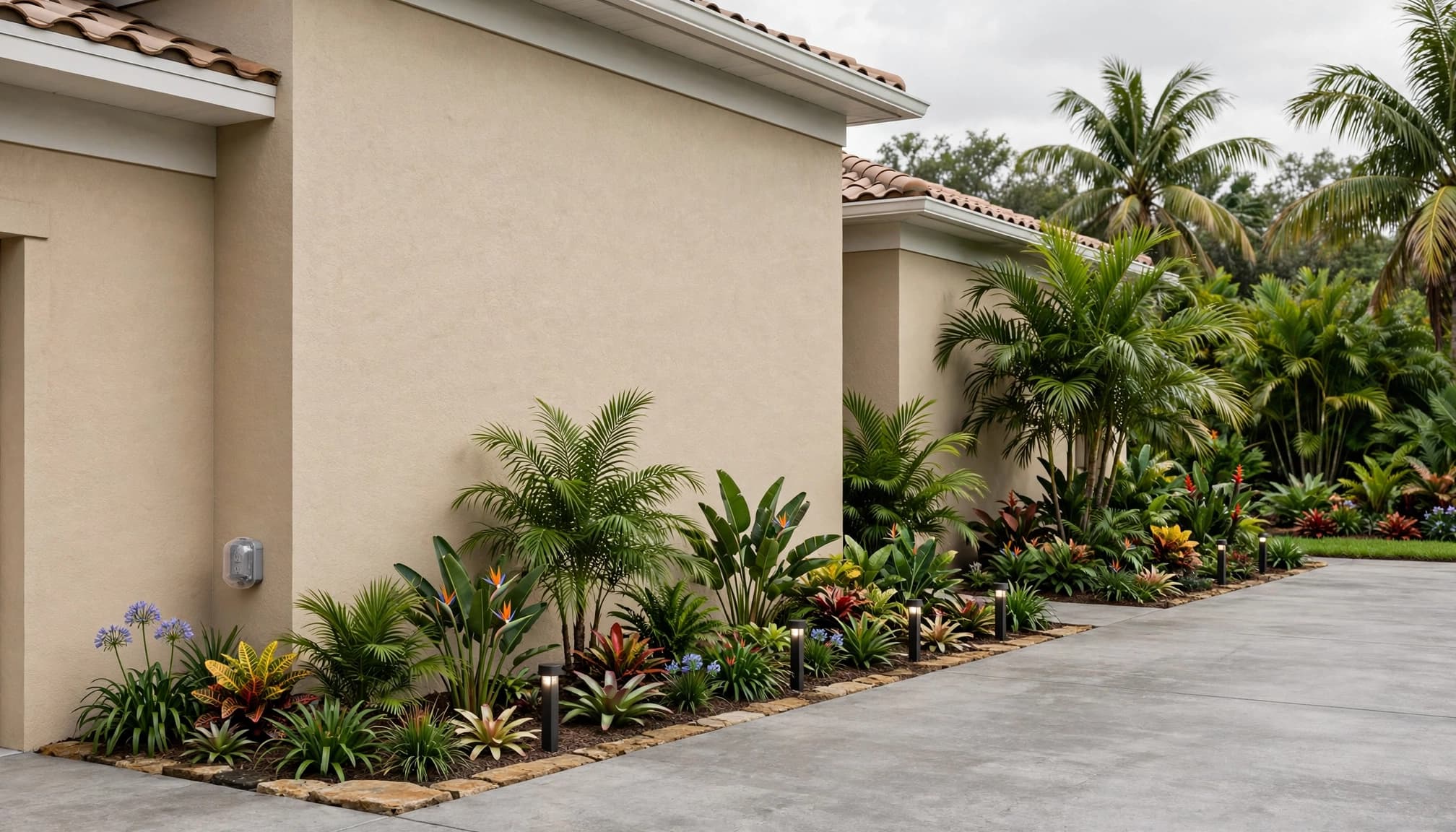
An accessible outlet near the garage opening can support outdoor-rated cleaning equipment or temporary tool use. Position it where a parked vehicle won't prevent access.
A side-yard outlet may also be useful for yard equipment, especially when the rear patio is far away. Plan its location around gates, trash storage, and the path used to move equipment.
Avoid placing it behind the likely storage spot for bins or ladders. Although the wall looks open during framing, everyday garage storage can quickly make that location inconvenient.
Account for Driveway Washing and Future Charging
Driveway cleaning needs power access that doesn't require cords through a partially closed garage door. Keep the outlet away from direct hose spray and locations where runoff collects.
Also, consider whether future vehicle or golf-cart charging belongs inside the garage or in a protected parking area. Charging equipment needs its own electrical planning based on its specifications.
Don't assume a general exterior receptacle will support the charging arrangement you eventually choose. Reserve the equipment location and wiring route during design so later work doesn't compete with finished walls or paving.
Position Landscaping Outlets for Access and Maintenance
Landscape lighting often uses a transformer, so its power location should work with the lighting design. Place the connection where equipment can remain accessible without becoming a prominent feature of the yard.
Keep receptacles out of areas where irrigation sprays directly onto them. Dense shrubs can also hide covers and make inspection or maintenance difficult. Plan around mature plant size, not just the small plants shown at installation.
For front-entry decorations or seasonal lighting, a discreet accessible location near the intended display can reduce cords across the entry walk. Consider how doors, porch furniture, and planting beds affect the route.
Detached garden structures and distant gathering areas need early planning. A long extension cord across the lawn creates problems during mowing, rain, and foot traffic. Instead, have the electrician design an appropriate permanent supply for the intended use.
Also, coordinate underground routes with irrigation, drainage, and future planting. Resolving those routes before landscaping protects access and avoids unnecessary disruption later.
Match Exterior Outlets in Fort Myers to Their Exposure
Location is only part of the plan. Outdoor receptacles also need suitable protection, boxes, covers, and installation methods for the conditions they will face.
Understand What GFCI Protection Does
Ground-fault circuit interrupter protection, commonly called GFCI protection, reduces shock risk by interrupting power when it detects an imbalance in current. It's an important part of planning electrical use around moisture.
The electrician should determine the protection arrangement for each location and circuit. Protection may involve a receptacle or a device upstream, so an outlet without visible test buttons may still have GFCI protection.
Before using the completed system, learn where its test and reset controls are located. Those controls need accessible locations rather than spaces hidden behind permanent cabinets or stored equipment.
GFCI protection doesn't waterproof an outlet or make an unsuitable location near water safe.
Select Weather-Resistant Receptacles and Suitable Covers
Weather-resistant receptacles and protective covers address different parts of outdoor exposure. A receptacle designed for exterior conditions still needs a box and cover suited to its location.
Where equipment remains plugged in, the cover needs to protect the connection during use. A cover that closes only after unplugging may not suit that purpose.
Southwest Florida humidity and coastal salt air also affect exposed hardware. The electrician should select boxes, fittings, and fasteners appropriate for the environment. Don't substitute an indoor floor outlet for an exterior installation simply because its finish looks attractive.
Coordinate Finished Surfaces and Future Outdoor Projects
Mark exterior outlet locations against the finished elevations, not only the framing. Stucco thickness, paver levels, raised planting beds, and outdoor cabinetry can change accessibility and exposure.
Coordinate covers with door trim, wall finishes, and screen-enclosure components. A receptacle shouldn't end up behind a screen frame or beneath a cabinet overhang that prevents its cover from opening.
Drainage matters as well. Keep the electrical layout connected to roof runoff, grading, and areas that may collect water. On waterfront or flood-sensitive sites, equipment placement also needs coordination with the approved elevation and flood design.
Future projects deserve space in the plan. A later lanai extension, outdoor kitchen, pool cage, or detached structure can make new wiring routes difficult. Trenches may otherwise cross finished pavers, irrigation, landscaping, or concrete decking.
Approved conduit pathways or other provisions can support those additions when the electrician designs them for the planned use. However, spare breaker spaces alone don't establish available electrical capacity; future loads still need evaluation.
Use our electrical walkthrough checklist to review exterior locations before finishes conceal the rough-in. Document agreed changes so the drawings and installed work stay aligned.
Key Takeaways for Your Exterior Outlet Plan
- Place outlets around finished furniture, equipment, and walking routes rather than whichever wall is easiest to reach during construction.
- Treat lanais, pool areas, driveways, and landscaped spaces as different exposure zones with different electrical needs.
- Include major equipment and future outdoor projects in electrical planning before paving, decking, and wall finishes restrict access.
- Have the licensed electrician resolve local requirements, protective devices, and equipment selection as part of the complete design.
Build Convenience Into the Plan, Not the Extension Cord
Useful exterior outlets in Fort Myers belong where daily activities happen, with safe access and appropriate protection for the environment. The strongest layout connects outdoor living, equipment needs, and finished construction details before installation begins.
Bring your outdoor-use plan into the electrical design early. Your patio, driveway, and backyard should work without making extension cords a permanent part of the home.