Whole-Home Surge Protection for a New Custom Home
Explore Our Services
Contact Us Today!
(239) 322-9295
Whole home surge protection starts with a properly rated surge protective device at your home's electrical service. For a new custom home, the best time to specify it is before the electrical plans are finalized .
That gives your builder and electrician room to coordinate the device with your panel, grounding system, and future equipment. In Southwest Florida, those plans may also need to account for solar, a generator, pool controls, and storm exposure.
Key Takeaways
- Include a listed surge protective device, or SPD, in the electrical plans and construction price.
- Match its ratings and installation location to your home's service equipment.
- Discuss additional protection for solar, backup power, and sensitive electronics.
- Keep the equipment accessible and document its model, location, and maintenance instructions.
What Whole-Home Surge Protection Does
A surge protective device limits transient voltage spikes that reach the electrical system. Surges can come from utility disturbances, nearby lightning, or equipment switching on and off.
An SPD at the service is an important first layer, but it can't promise that every appliance will survive every surge. Nearby or direct lightning can produce severe energy, and surges can also enter through other connected wiring.
An SPD doesn't keep the lights on during an outage or replace a generator, battery, GFCI, or AFCI. Those devices address different electrical needs.
Know the code baseline
The National Electrical Code added a dwelling-unit service surge protection requirement in its 2020 edition and continued it in the 2023 edition. The 2023 edition also added a separate feeder-related provision. Those rules shouldn't be treated as a requirement for an SPD at every branch panel.
In November 2026, Florida's statewide building code is the 8th Edition (2023). The 9th Edition (2026) takes effect on December 31, 2026. Your project's permit date and applicable local requirements determine the rules for the job.
Specify the Surge Device Before Construction
Ask for the SPD to appear on the electrical drawings and in the written scope, rather than relying on a general promise of surge protection. The specification should identify its location, type, listing, and ratings.
Choose a listed Type 1 or Type 2 device
A UL 1449-listed SPD is evaluated under the safety standard for surge protective devices. Two types commonly enter the service-equipment discussion:
- Type 1 devices are permanently connected and can be suitable on either the line side or load side of service equipment, subject to their listing and instructions.
- Type 2 devices are permanently connected on the load side of service overcurrent protection.
The electrician should select the type that fits the approved service design. A Type 1 label doesn't mean a homeowner can install a device ahead of the meter or bypass utility requirements.
Put the model and status indicator in the scope
Ask the builder to identify the selected model or approved equivalent in the proposal. Include the required connection method, enclosure, labor, and any breaker specified by the manufacturer.
An indicator light or other status display makes the device easier to monitor after move-in. If the indicator is inside an enclosure, ask how you'll see its status without removing a cover.
Understand the Ratings That Matter
A large number on the front of a surge protector doesn't tell you everything about its performance. Your electrician should compare devices using the same rating basis and match the SPD to the electrical system.
Match voltage and limiting performance
The SPD must suit the home's service voltage and configuration. Many homes use a 120/240-volt, single-phase system, but the electrician should specify the device for the service actually shown on your plans.
MCOV , or maximum continuous operating voltage, describes the voltage a protection mode can tolerate continuously. It must suit the system without causing the device to operate during normal service conditions.
VPR , or voltage protection rating, describes a measured limiting voltage. A lower VPR can indicate lower let-through voltage under the rating test, but compare devices on the same protection modes and test basis.
Separate surge capacity from fault protection
Manufacturers may advertise surge-current capacity in kiloamps, or kA. That figure isn't the same as nominal discharge current , marked In, which describes a standardized test rating. Compare advertised capacities carefully because manufacturers may state them using different bases.
The short-circuit current rating , or SCCR, addresses a different concern: whether the device is suitable for the available fault current at its installation point. Your electrician should include SCCR in the selection, along with the manufacturer's required overcurrent protection.
Plan the SPD Location and Connections
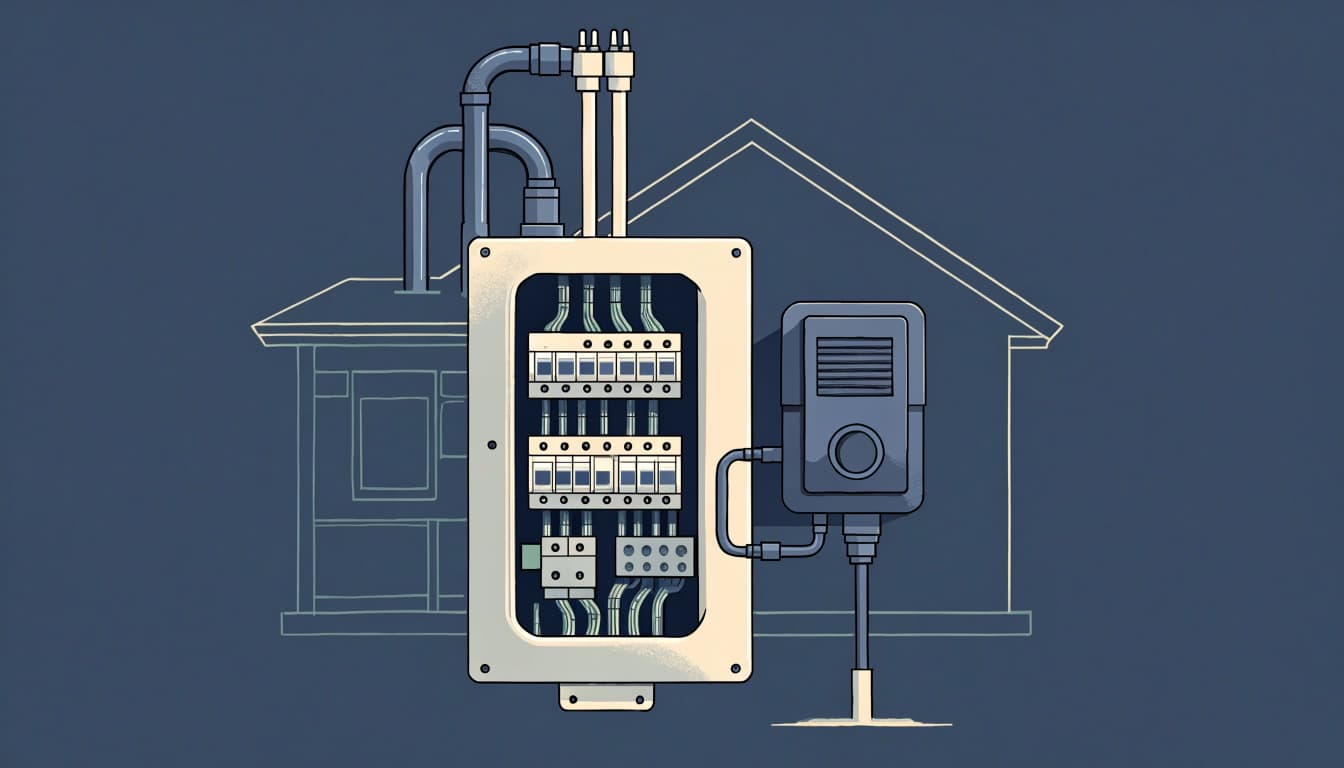
The service SPD belongs in or near the service equipment, according to the applicable design and device instructions. Its exact position affects both installation and future access.
Leave room at the service equipment
An external SPD needs a suitable mounting location and a practical connection route. An integrated device needs compatible equipment and enough room within the selected assembly.
Reserve the required working clearance around the panel, too. Cabinets, shelving, garage storage, and pool equipment shouldn't block access. Our guide to electrical panel location planning covers these decisions before framing.
Coordinate wiring, bonding, and the site
Short, direct connections generally help an SPD respond effectively. The electrician should follow the device instructions and coordinate the connection with the home's grounding and bonding system.
For a raised or waterfront home, the service route also has to fit the site plan and flood-related requirements. Exterior equipment needs an enclosure suitable for its location, with access that won't disappear behind landscaping or a future screen enclosure.
Include Solar, Batteries, Generators, and EV Charging
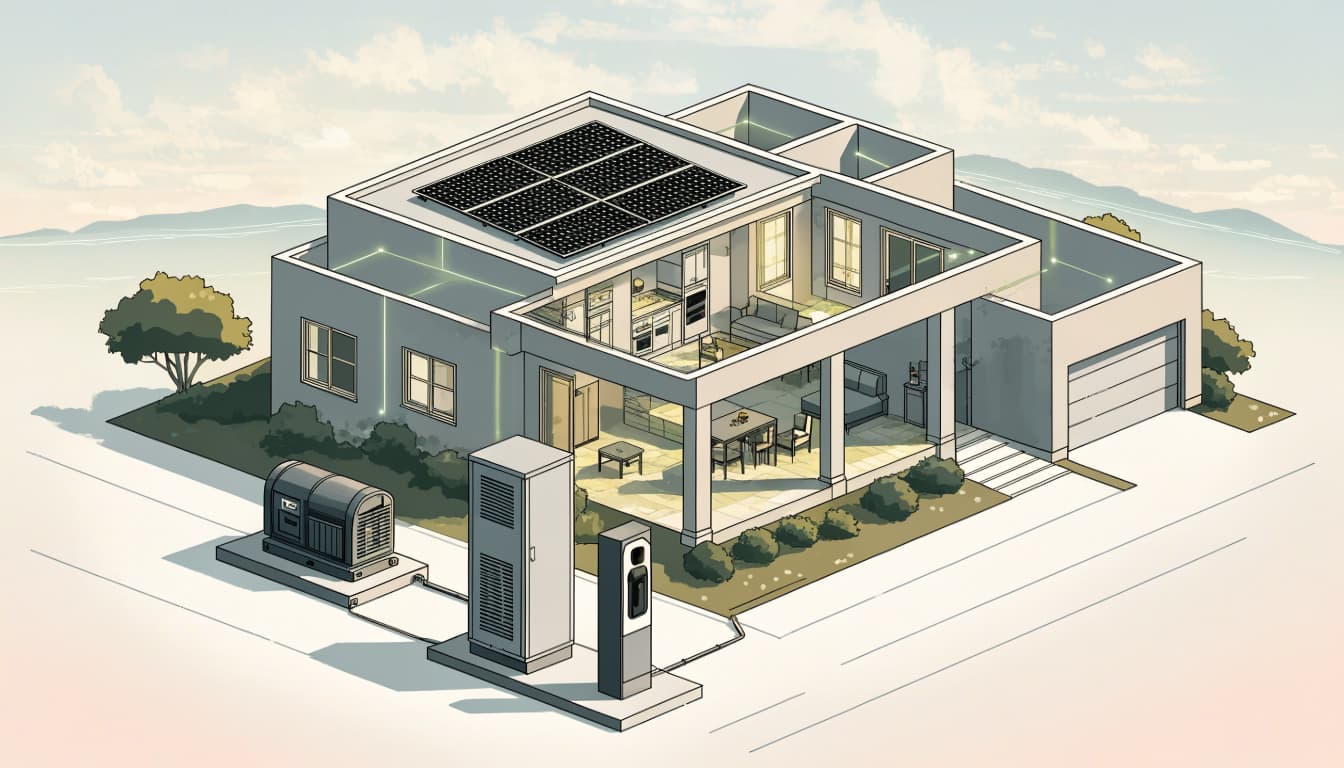
Tell the design team about future energy equipment even if you don't plan to install it immediately. The service SPD should be considered alongside the equipment layout, connection paths, and any later upgrade.
Solar and battery storage
Solar equipment can include both AC and DC circuits. An SPD intended for an AC service isn't automatically appropriate for a photovoltaic DC circuit. The solar designer and electrician should identify any additional protection suited to the inverter, circuit voltage, and equipment instructions.
Battery plans also affect the electrical layout. A critical-loads panel may supply selected circuits during an outage, while other circuits remain outside the backup system. Ask the team to show where the battery, transfer equipment, and protected panels will sit.
Generators and EV chargers
A standby generator adds another power source and transfer equipment to the design. Ask the electrician how the proposed protection relates to both utility and generator operating modes.
An EV charger adds a substantial electrical load, but a charger connection doesn't automatically call for a separate SPD in every design. Reserve panel capacity and a route to the garage, then consider added protection based on the selected charger and its location.
Add Protection for Sensitive Electronics
The service device is the first layer, not necessarily the last. A home office, entertainment system, or security network may benefit from protection closer to the equipment.
Use point-of-use devices where they help
A listed surge protector at a receptacle can provide another layer for a television, computer, or network equipment. Look for a device appropriate for the load and follow its instructions.
A battery backup, also called a UPS, can keep a modem or router running through a short outage if it has enough capacity. Some units include surge protection, but backup power and surge protection are separate functions. Choose equipment that provides the functions you need.
Include communications and outdoor wiring
A power-line SPD doesn't protect every path into a device. Coaxial, telephone, and outdoor network wiring can connect sensitive equipment to conductors outside the home.
When you plan security wiring before drywall, discuss suitable protection and bonding at exterior cable entries. Cameras, a network switch, and a recorder may each need consideration based on their wiring and equipment design.
Questions to Ask Before the Plans Are Final
Bring these questions to your builder and licensed electrician while the panel location and equipment list are still open:
- Where will the service SPD be installed, and is its cost included in the electrical scope?
- What type and model are specified, and how do their voltage, VPR, In, and SCCR ratings fit the service?
- Will solar, a battery, a generator, or a remote panel change the protection plan?
- Can the indicator be seen and the device serviced without obstructing panel access?
- Which added protections are included for network equipment, outdoor wiring, or other sensitive loads?
Ask for the answers to appear in the drawings, equipment schedule, or written proposal. Our custom home electrical walkthrough checklist can help you review the wider electrical plan before walls close.
Document the Installation for Maintenance
At completion, keep a copy of the final electrical drawings and panel directory with the SPD manufacturer's instructions. Record the device's model number, location, installation date, and the electrician's contact information.
Ask what the indicator should show during normal operation and what a failed indicator means for that model. Some devices have replaceable modules; others require replacement of the unit. Have a licensed electrician handle service or replacement.
After a significant electrical event, look at any indicator that's visible without opening equipment. If it shows a fault, arrange service. Never remove a panel cover or touch damaged electrical equipment yourself.
Frequently Asked Questions
Does a surge protector stop lightning damage?
It reduces exposure to transient voltage, but it can't guarantee protection against a direct lightning strike or every severe surge. Service-level and point-of-use devices offer layers of protection; neither makes connected equipment immune.
Does every subpanel need its own SPD?
A service SPD doesn't automatically mean every subpanel needs another device. The design team should consider the applicable feeder requirements, the equipment served, and whether added protection is appropriate for the layout.
Will surge protection keep my home powered during an outage?
No. An SPD addresses voltage surges, while a generator or battery system supplies backup power. If continued operation matters, plan those systems together and identify which circuits the backup equipment will support.
Make Surge Protection Part of the Home Plan
A service SPD is a practical starting point for a new Southwest Florida home. Its value depends on a suitable device, a well-planned installation, and coordination with the equipment it will protect.
Put those details in the electrical scope before construction. With a clear record and an accessible indicator, you'll also have a better basis for maintaining the protection after move-in.