Fort Myers Window Glass: U-Factor and SHGC Explained
Explore Our Services
Contact Us Today!
(239) 322-9295
A beautiful pool view loses some appeal when the room beside it overheats every afternoon. For a Fort Myers custom home, understanding window U-factor and SHGC helps you choose glass that limits unwanted heat without sacrificing useful daylight.
The strongest window plan balances solar heat control with views, shade, comfort, and storm protection. Start with what the ratings measure, then connect those numbers to each opening in your home.
What Window U-Factor and SHGC Tell You
U-factor and solar heat gain coefficient, or SHGC, describe different ways heat moves through a window. Both matter, but a favorable rating in one category doesn't guarantee strong performance in the other.
U-factor measures heat transfer through the window
U-factor describes how readily heat passes through the window assembly because of temperature differences. That assembly includes the glass, frame, and other components.
A lower U-factor means less heat transfer and better insulating performance. A higher value means heat moves through the assembly more readily.
In Fort Myers, outdoor heat can move toward your air-conditioned interior. A lower U-factor helps limit that transfer. During cooler weather, it also helps reduce heat escaping from indoors.
However, U-factor doesn't tell you how much solar heat enters when sunlight strikes the glass. For that, you need SHGC.
SHGC measures incoming solar heat
SHGC describes the share of solar energy that enters through a window. It includes energy transmitted directly and absorbed energy that later flows indoors.
A lower SHGC admits less solar heat. A higher rating allows more solar energy inside, which can help in heating-focused climates but adds unwanted heat during Florida's cooling season.
Here's the distinction at a glance.
| Rating | What it measures | What a lower value means |
|---|---|---|
| U-factor | Heat transfer through the window assembly | Better insulation |
| SHGC | Solar heat entering through the window | Less solar heat gain |
| Visible transmittance | Visible light passing through the window | Less daylight transmission |
Visible transmittance adds the daylight information that U-factor and SHGC don't provide.
Why Fort Myers Sun Puts SHGC First
Southwest Florida's hot, sunny conditions make solar heat control a major window-selection priority. Start by reviewing SHGC, then assess U-factor alongside the home's overall energy design.
East and west openings need special attention
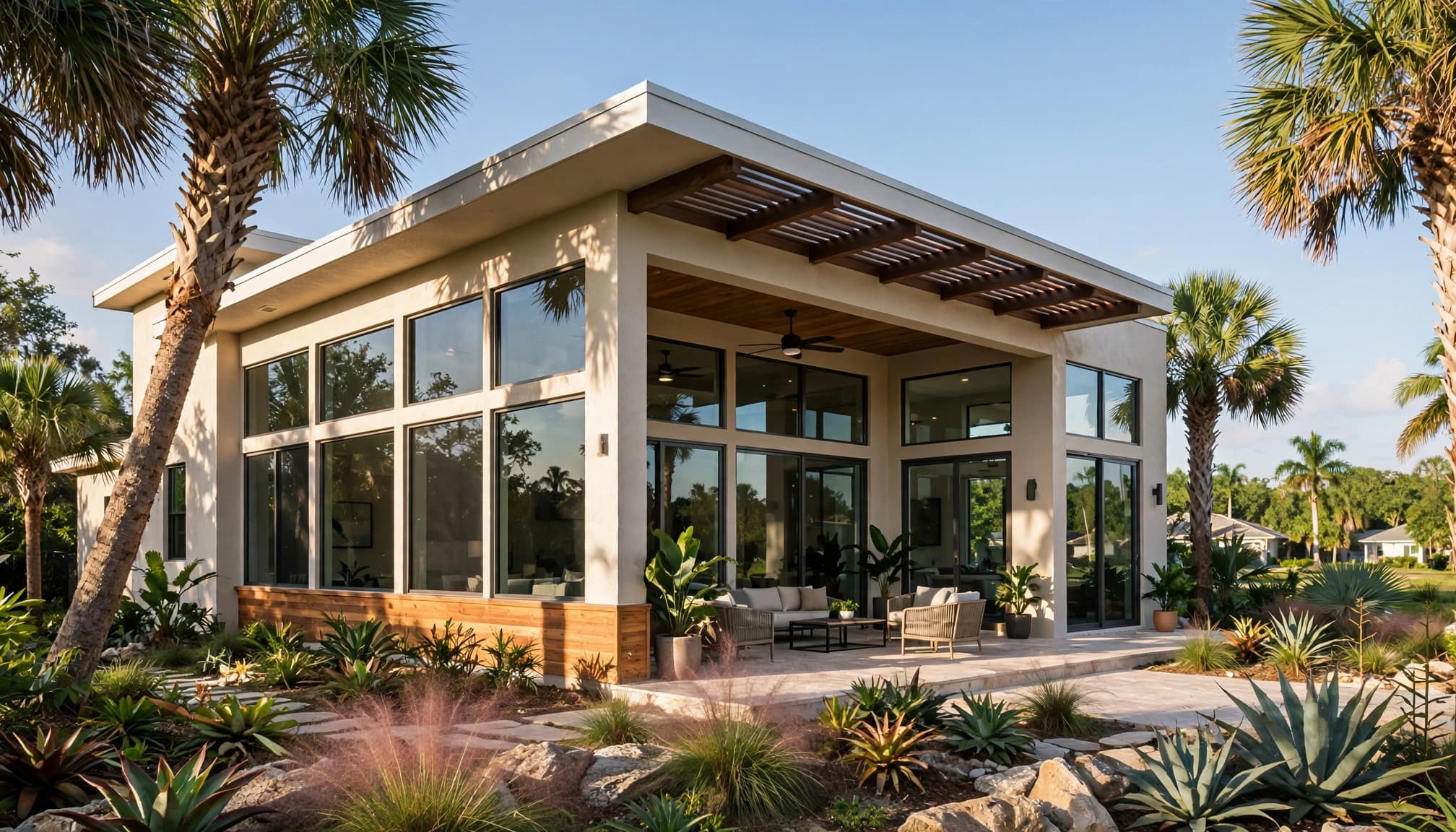
East-facing glass receives morning sun. West-facing openings face a tougher comfort challenge because afternoon sunlight arrives when outdoor conditions are already hot.
Low-angle sunlight can also reach beneath roof overhangs. Therefore, a large west-facing window needs careful review of glass performance and exterior shading.
For a west-facing pool view, consider the opening's size and protection together. Lower-SHGC glass, a covered outdoor area, or appropriately designed vertical shade can help reduce exposure.
The guidance on Fort Myers window placement connects these choices to room use, roof design, and the surrounding property.
North and south exposures offer different opportunities
North-facing windows often provide softer daylight, although reflected sunlight and seasonal conditions still matter. South-facing windows can work well with horizontal overhangs designed for the actual opening and sun angles.
A decorative overhang may provide little protection if its depth doesn't match the window's position. Similarly, nearby pavement or neighboring walls can reflect sunlight toward otherwise sheltered glass.
Review the lot rather than relying on compass direction alone. Existing trees, adjacent buildings, and planned outdoor structures all affect the sunlight reaching each opening.
Keep Daylight Without Inviting Excess Heat
Lower solar heat gain doesn't automatically require dark rooms. Glass selection should separate the amount of visible light you want from the solar heat you want to limit.
Review visible transmittance alongside SHGC
Visible transmittance, often abbreviated VT, measures how much visible light passes through a window. Higher VT generally allows more daylight; lower VT admits less.
Solar-control low-e coatings can reduce solar heat gain while preserving useful daylight. However, glass packages differ, so compare their documented ratings rather than choosing by tint alone.
Ask to see samples before approving the glass. Color, reflectivity, and the view through a sample matter, especially beside finishes or neighboring windows.
Also remember that daylight and glare aren't identical. Bright direct sunlight across a television or kitchen work surface can be uncomfortable even when the room feels well lit.
Use shade and placement to improve comfort
Exterior shade intercepts sunlight before it reaches the glass. Interior blinds help with glare and privacy, but they act after sunlight has entered through the window.
A covered lanai can protect larger living-room openings. Meanwhile, high-set windows can bring light into interior spaces while preserving wall space and privacy.
The principles behind window orientation and exterior shade apply across Southwest Florida, although each property needs its own review.
Low SHGC controls solar heat, but it doesn't describe glare. Review daylight, shade, and sight lines separately.
Several carefully placed openings can distribute useful light better than one oversized, unshaded wall of glass.
Read Ratings for the Complete Window
Descriptions such as "energy-efficient," "low-e," and "hurricane glass" don't provide enough information to compare products. Ask for the documented performance of the selected window configuration.

Check the NFRC label
The National Fenestration Rating Council, or NFRC, provides standardized window performance ratings. Its label helps you compare U-factor, SHGC, and visible transmittance on a consistent basis.
Confirm that the ratings apply to the selected product series, frame, operating style, and glass package. A different coating or configuration can change performance.
Also distinguish whole-window ratings from glass-only values. Center-of-glass performance leaves out the effects of the frame and glass edges, so it isn't a substitute for an assembly rating.
Compare more than the coating name
Low-e means low emissivity. These coatings reduce radiant heat transfer, but manufacturers design different low-e packages for different climate priorities.
For Fort Myers, solar-control performance deserves attention. Glass chosen mainly to retain winter warmth in a cold climate may allow more solar heat than you want.
Frames, spacers, and insulated-glass construction also affect U-factor. Therefore, compare complete assemblies rather than assuming two windows with low-e glass perform alike.
Air leakage is another consideration. Neither U-factor nor SHGC describes how well installation seals the opening, so weather sealing and installation details need their own review.
Match Glass Choices to the Room
A custom home gives you the chance to select windows around how each space works. Using one glass package throughout may simplify ordering, but it shouldn't replace a room-by-room review.
In a great room, prioritize views while checking afternoon exposure and television glare. Larger openings often work better beneath a covered lanai or another planned shade element.
Kitchen windows need a different balance. Daylight should reach useful work areas without creating harsh glare across countertops or adding afternoon heat beside cooking surfaces.
Bedrooms need comfortable light and privacy. If a window forms part of the required emergency escape route, its operation and usable opening also need professional review.
Bathrooms and stairwells can benefit from high windows. However, elevated openings still require a plan for cleaning, maintenance, and storm protection.
Glass area matters, too. Even efficient glazing can add substantial cooling load when the design includes large expanses of glass.
During Fort Myers custom home construction, coordinate window sizes with furniture layouts, roof overhangs, outdoor living areas, and mechanical design. That coordination helps avoid expensive changes after framing.
Coordinate Efficiency With Hurricane Protection
Thermal performance and storm performance answer separate questions. Low U-factor and SHGC ratings don't establish impact resistance, and an impact-rated window doesn't automatically provide strong solar control.
Impact-resistant assemblies can include solar-control glass options. Still, compare the energy ratings for the complete product rather than assuming all impact windows perform alike.
The selected unit also needs appropriate documentation for its size, design pressure, anchorage, and installation. Product approvals must correspond to the actual assembly and project conditions.
Similarly, energy ratings don't establish whether a bedroom window satisfies emergency escape requirements. Those dimensions and operating details need a separate check.
Planning daylight and storm protection together helps keep the window schedule consistent with the structural drawings and elevations.
Have a Florida-licensed architect, engineer, or qualified building professional confirm the applicable requirements with the local permitting authority. Avoid relying on a broad product description or a familiar brand name as proof of compliance.
For homeowners, the practical goal is straightforward: select one documented assembly that fits the opening's energy, structural, and everyday-use needs.
Settle Window Choices Before Ordering
Window decisions should reach the energy designer and HVAC contractor before equipment selection. The cooling design needs the actual glass area, orientation, ratings, and planned shade.
A Manual J load calculation evaluates the home's heating and cooling needs. Window selections belong in that calculation alongside insulation, roof construction, and other building-envelope details.
Changing a glass package or enlarging a slider later can affect the design assumptions. Therefore, send substitutions back to the appropriate professionals before approving them.
When comparing proposals, request enough detail to identify what each price includes:
- Confirm the window series, frame, operating style, glass package, and documented energy ratings.
- Check that dimensions, storm-protection documentation, and installation details match the planned openings.
- Ask whether the proposal includes removal where applicable, flashing, sealing, anchorage, and finish repairs.
- Identify any substitutions before ordering and review their effect on energy and structural performance.
For a whole-home remodel, existing openings and waterproofing conditions also affect scope. A quote that covers only the window unit won't explain the full installed cost.
Avoid assuming an upgrade will produce a particular bill reduction. Cooling use also depends on thermostat settings, air leakage, HVAC performance, and household habits.
Key Takeaways for Fort Myers Homeowners
Lower U-factor means better insulation, while lower SHGC means less incoming solar heat. In Fort Myers, review solar control first without ignoring the rest of the window assembly.
Compare visible transmittance to preserve useful daylight. Then assess orientation, exterior shade, and room use to manage glare and comfort.
Finally, keep energy ratings separate from impact protection and product approvals. All belong in the same coordinated window schedule, but each requires its own verification.
Choose Glass for the Home You'll Live In
The right window glass supports the view without making the room beside it uncomfortable. Documented performance gives you a better basis for selection than tint, coating names, or sales descriptions alone.
Review each opening with your builder before ordering. When glass, shade, installation, and HVAC design agree, your Fort Myers home can offer generous daylight with better control of unwanted heat.