Gunite Pool Filters: Cartridge, Sand, or DE in Naples?
Explore Our Services
Contact Us Today!
(239) 322-9295
A beautiful pool can become frustrating when its filter doesn't match the way you use it. When comparing gunite pool filters in Naples, the useful differences are particle capture, cleaning work, water discharge, and ongoing expenses.
Cartridge, sand, and diatomaceous earth (DE) filters can all work with a gunite pool. The right choice depends on your maintenance priorities and the complete circulation system, so start with the pool design before choosing equipment.
Why Gunite Pool Filters Need a Whole-System Plan
The shell material alone doesn't determine which filter you need. A filter handles circulating water, while the pool's interior finish, plumbing, pump, and sanitation system have separate jobs.
Custom features affect circulation
Gunite pools are built on-site, which allows custom depths, freeform layouts, tanning ledges, and attached spas. However, those features also require careful return placement and plumbing design.
A waterfall or spa may have different operating needs than ordinary pool filtration. Ask the builder which features share the filtration circuit and which use separate pumps.
If you're still choosing a shell, compare gunite and shotcrete construction alongside the equipment plan. Structural choices and filtration choices belong in the same project discussion, but they solve different problems.
Match the filter to actual pump operation
Horsepower alone doesn't tell you whether the pump and filter work well together. Plumbing resistance, operating speed, valves, heaters, and water features all affect flow.
Have the contractor check the proposed filter against the pump's planned operating settings and the manufacturer's limits. A different filter won't correct poorly placed returns or a plumbing restriction.
How Cartridge, Sand, and DE Filtration Compare
Each type traps debris differently. That affects water polishing and the work required to restore flow when the filter gets dirty.
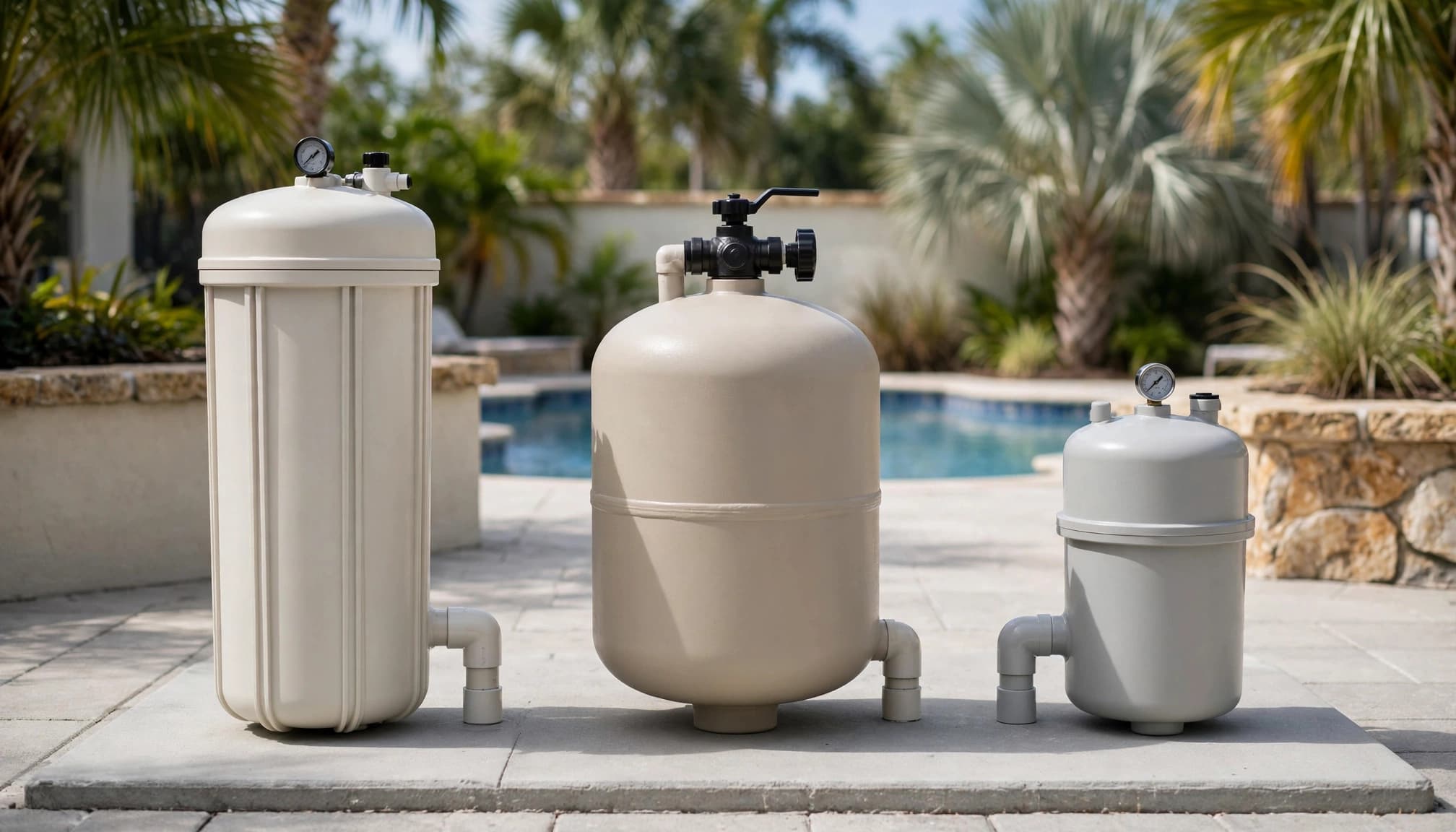
Cartridge filters use pleated elements
Water passes through pleated filter material that holds suspended debris. Cartridge filtration generally captures smaller particles than conventional pool-filter sand, although actual performance depends on the element and operating conditions.
This makes cartridge equipment worth considering when you want good everyday clarity without routine backwashing. However, debris eventually fills the pleats, so someone must remove and clean the elements.
Inspect the fabric, end caps, and seals during cleaning. Damaged elements or poor seating can let dirty water bypass the filtering material.
Sand filters use a bed of media
A sand filter sends water through a media bed that catches debris. Traditional pool-filter sand generally provides less fine-particle capture than cartridge or DE filtration.
Its practical appeal is the cleaning process: a compatible valve reverses water flow to flush trapped dirt out through a waste line.
Nevertheless, sand filtration still needs inspection and proper valve operation. Channeling through the media, damaged internal parts, or unsuitable replacement media can reduce performance. Use the media specified for the particular filter.
DE filters use a powder coating
DE filters coat internal grids or other supporting elements with diatomaceous earth. That coating provides fine-particle capture and generally polishes water more finely than conventional sand or cartridge filtration.
The trade-off is powder handling and additional service steps. Cleaning removes some or all of the coating, which must be restored according to the equipment instructions.
A DE filter also needs sound internal elements and seals. If powder returns to the pool, have the system checked rather than repeatedly adding more.
Maintenance and Water Use: Follow the Cleaning Process
Cleaning methods matter as much as filtration performance, especially if you're maintaining the pool yourself.
Cartridge cleaning needs access and rinse water
Cartridge filters don't use routine backwashing. Instead, you shut down the system, safely release pressure, open the housing, and remove the elements for cleaning.
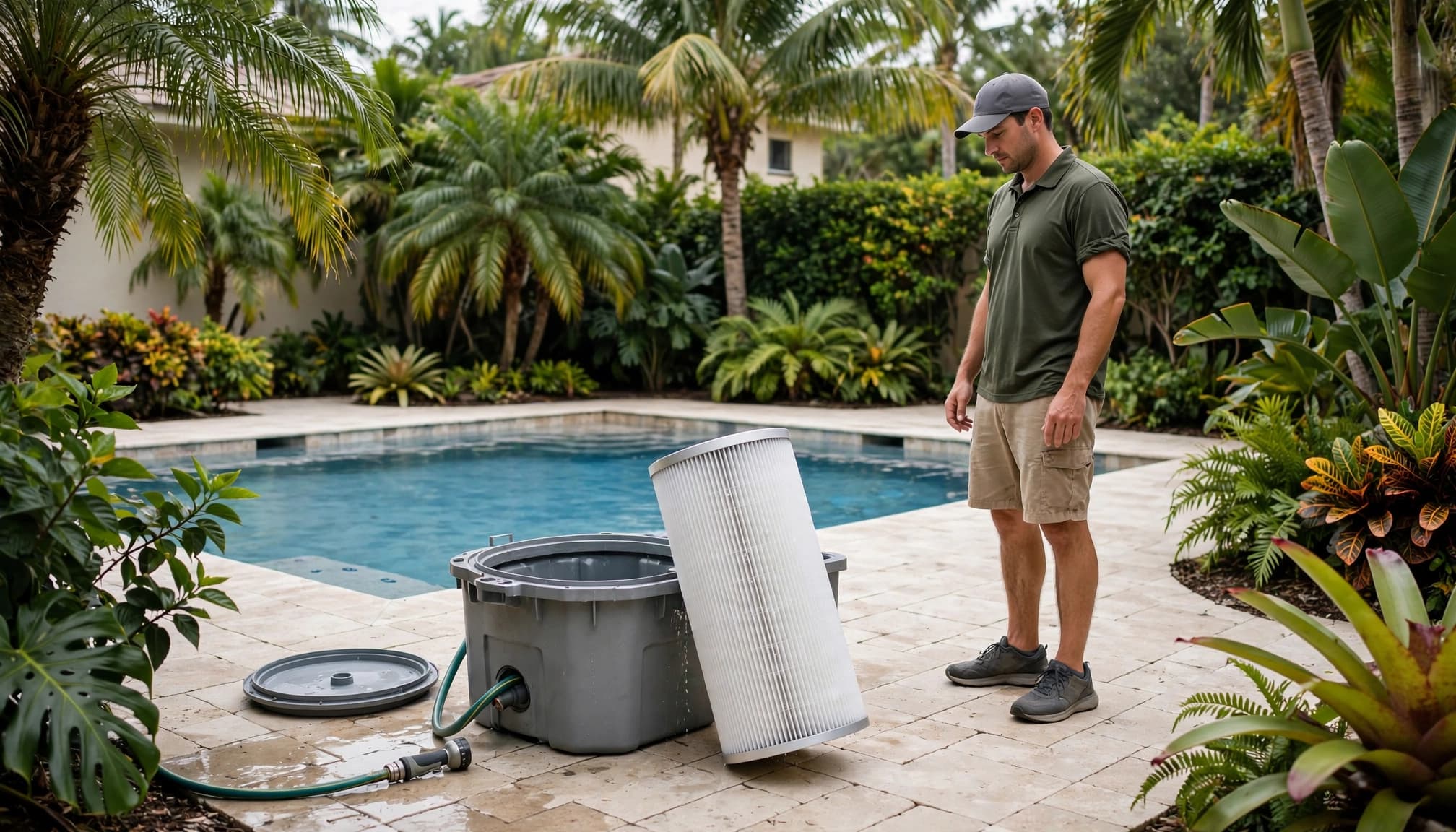
The process still uses water. Rinsing technique, accumulated debris, and element condition affect how much cleaning requires.
Leave room above and around the housing for removal. Also, ask where rinse water should go, especially beside landscaping, pavers, or a drainage swale.
Use the manufacturer's cleaning procedure rather than aggressive spraying or an improvised chemical soak. Neither appearance nor a calendar date alone tells you whether an element needs replacement.
Sand and many DE filters discharge pool water
Sand filters commonly use backwashing followed by the valve's prescribed rinse procedure. Many DE filters also backwash, although cleaning methods vary by design.
Because backwashing sends pool water through a waste line, the pool may need refilling afterward. Replacement water can also change its chemistry.
Before installation, confirm an acceptable discharge route with the contractor and applicable local requirements. Don't assume a nearby storm drain is an approved destination.
A convenient backwash valve doesn't solve disposal planning. The equipment pad still needs a suitable route for dirty water and, with DE, spent filter material.
Follow model-specific guidance for pressure changes, cleaning, and powder replacement rather than a universal service schedule.
Operating Costs Go Beyond the Filter Purchase
A useful comparison includes installation, cleaning labor, replacement materials, water, and electricity. The tank price alone leaves several ownership expenses out.
Each type has different recurring expenses
Cartridge ownership includes element cleaning and eventual replacement. Ask for the replacement-element part number and price before approving equipment, especially when comparing single-element and multi-element designs.
Sand filters have their own costs, including valve service, internal repairs, and media replacement when needed. Backwashing also brings water and possible chemistry-adjustment expenses.
DE ownership includes replacement powder and service of its internal filtering elements. Professional cleaning can involve disassembly as well as restoring the powder coating.
These categories don't establish one universal cost winner. Compare written proposals that include the equipment, plumbing modifications, discharge work, and expected service tasks.
Electricity depends on the complete system
Filter resistance affects the pump's work, but the filter category alone doesn't predict your electric bill. Pump speed, run time, dirty-filter conditions, and plumbing also matter.
A variable-speed pump should have settings coordinated with filtration, heating, sanitation, and any shared water features. Running at unnecessary speed can increase energy use without fixing poor circulation.
For operating-cost estimates, ask the contractor to identify the assumed pump settings, run time, and utility rate. Also, ask which operating modes the estimate includes, such as heating or spa use.
Naples Conditions That Should Influence Your Choice
Southwest Florida weather affects pool care, but it doesn't make one filter type automatically superior. Your property's exposure and maintenance arrangements are more useful decision points.
Debris exposure changes the cleaning workload
Palm fronds, leaves, windblown dirt, and nearby landscaping can increase debris after windy weather. Larger material should reach skimmer and pump baskets before it burdens the filter.
A screened pool and an open backyard pool can have different cleaning needs. Likewise, frequent entertaining can introduce more sunscreen and swimmer-related contamination.
Discuss automatic covers for Naples pools while planning the backyard. A compatible cover can limit incoming debris, but it doesn't replace filtration or water treatment.
After storms, remove accessible debris and inspect the equipment before returning to normal operation. If electrical equipment flooded, have a qualified professional assess it before use.
Filtration doesn't replace balanced water chemistry
Warm weather and sunlight make consistent sanitation important. A filter removes suspended material, but it doesn't maintain the chlorine level or correct pH.
Saltwater pools still need a filter. Their chlorine generator changes how sanitizer enters the water, not how suspended particles leave it.
Similarly, a finer filter won't correct calcium scaling, metal staining, or damage caused by poor water balance. Protect the selected plaster, quartz, pebble, or tile finish with appropriate chemistry.
For coastal properties, also review exposed hardware, equipment protection, and drainage. Salt air and heavy rainfall deserve attention during installation planning, regardless of filter type.
Which Filter Fits Your Maintenance Priorities?
Start with the task you're willing to perform consistently. Then compare equipment that your contractor confirms is compatible with the pool system.
| Your priority | Type worth considering | Practical trade-off |
|---|---|---|
| Avoid routine backwashing | Cartridge | Elements need removal and cleaning. |
| Prefer valve-operated cleaning | Sand | Backwashing needs a discharge route. |
| Prioritize fine-particle polishing | DE | Powder handling adds service steps. |
| Delegate pool care | Any compatible type | Confirm the service company's scope and charges. |
The strongest fit depends on whether you can support the cleaning method, rather than which tank looks simplest.
For a seasonal Naples home, ask who will inspect pressure, clean baskets, and respond when flow drops. An equipment choice that works with reliable professional service may be inconvenient without it.
For a family pool with frequent use, discuss how the technician handles heavier debris loads and changing water conditions. Filter choice is only one part of that plan.
Also, consider physical access. Opening a housing, lifting elements, servicing a valve, and handling powder all require usable working space. A crowded pad makes routine care harder.
What to Confirm Before Installation or Replacement
Ask for a proposal that names the exact filter model and explains its fit with the existing or proposed circulation system. A category-only description leaves too much uncertain.
Before approving the work, confirm these points:
- The contractor has checked pump operation, plumbing, heater needs, and any shared spa or water-feature circuits.
- The equipment layout allows safe access to the housing, valves, drains, and replaceable parts.
- Cleaning and waste-discharge arrangements suit the property and applicable requirements.
- The quote identifies installation work, replacement materials, warranty terms, and service responsibilities.
For new construction, settle these details before the equipment pad, deck, and surrounding outdoor features are finalized. Coordinate electrical work, drainage, and permits with the broader pool plan.
For an existing pool, first identify whether poor clarity comes from filtration, circulation, sanitation, or a failing component. Replacing a filter without diagnosing the problem can leave the same complaint unresolved.
If the project includes resurfacing an aging gunite pool, coordinate equipment evaluation with finish preparation and startup instructions.
Cutting Edge Homes & Renovations offers Southwest Florida pool renovations that can include updated equipment, resurfacing, and broader redesign work. Combining those decisions helps keep the equipment layout consistent with the finished backyard.
Choose the Filter You Can Maintain Well
Cartridge, sand, and DE filters each offer a workable approach for a Naples gunite pool. Their differences become useful when you connect them to cleaning habits , discharge planning, and the circulation system.
Ask for a model-specific recommendation with a clear installation and service scope. The right filter is one that fits the pool's operation and receives the care it needs throughout the year.