Why Is Water Temperature Uneven in a New Fort Myers Home?
Explore Our Services
Contact Us Today!
(239) 322-9295
Uneven water temperature in a new Fort Myers home can come from the heater, a mixing valve, changing water demand, or a plumbing installation issue. The pattern matters: a brief temperature shift at one shower points to a different issue than unstable hot water at several fixtures.
Start by noting where the temperature changes and what else is running. Those details help your builder or plumber identify whether the issue is local or affects the home's plumbing system.
Common causes of uneven hot water
The water heater and the components that mix hot and cold water both affect what comes out of a faucet. In a newly built home, equipment settings, capacity, or installation can all be factors.
Heater settings, recovery, and tankless flow
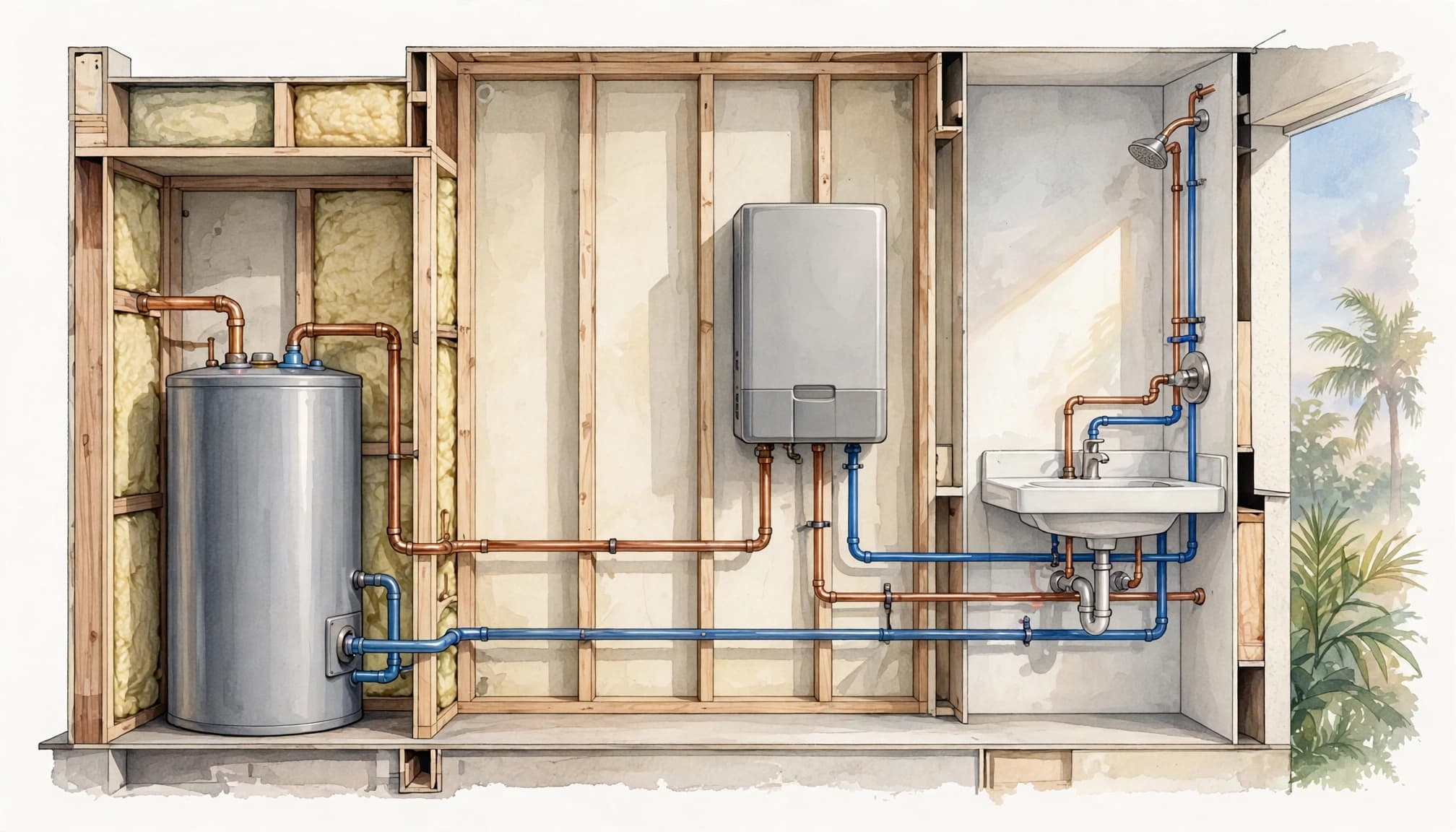
If a storage heater's temperature setting is too low, water may feel lukewarm. After several showers or other heavy hot-water use, the tank may also need time to reheat. A new tankless heater can struggle when simultaneous demand exceeds its capacity. Some units may also behave inconsistently if the flow through them is too low to sustain operation.
These causes can look similar at the tap, so note whether the issue begins after sustained use, happens only when another fixture runs, or occurs every time you use hot water.
A mixing valve or fixture problem
A thermostatic mixing valve blends hot and cold water to control delivery temperature. If it's faulty, incorrectly adjusted, or installed in a way that doesn't match the system, the water may arrive too cool or vary over time.
When only one shower or faucet has a problem, the cause may be closer to that fixture. A shower valve or faucet cartridge can affect the hot-and-cold balance. If multiple fixtures show the same temperature change, the heater or a shared component deserves attention.
Why other fixtures can change shower temperature
When a toilet refills, a washing machine draws water, or another faucet opens, the home's plumbing has to serve more than one outlet. A small, brief flow change may occur. A pronounced or repeatable change, especially in several rooms, needs closer assessment.
Pressure and flow are related but different. Pressure is the force in the pipes, while flow is the amount of water moving through them. If pressure changes affect hot and cold supplies unequally, a shower can shift temperature even if the heater itself is working.
For more context, see why water pressure drops when multiple fixtures run. A noticeable pressure change doesn't, by itself, prove the cause of a temperature problem.
Plumbing layout and installation can play a role
Long hot-water lines can mean a longer wait for hot water, particularly when the heater sits far from a bathroom or kitchen. Pipe sizing, fixture locations, valves, filters, and treatment equipment can also affect how water reaches an outlet. A manifold or trunk-line layout may work well when properly designed, but neither guarantees stable temperature on its own. Our article on plumbing manifold systems versus trunk lines covers the layout tradeoffs.
Installation details matter too. A partly closed valve, a connection issue, or a problem with a fixture can create symptoms soon after move-in. If temperature swings occur across multiple fixtures, ask the builder to coordinate an inspection of the heater, shared valves, and plumbing connections. For new construction, hot-water recirculation planning also explains how heater placement and pipe routes affect delivery time.
Safe checks you can make at home
You can gather useful information without opening walls or changing equipment settings. Test one fixture at a time, then repeat while another fixture runs. Note whether the water becomes cooler, hotter, or simply weaker.
Record:
- Which fixtures were running when the change happened.
- Whether the issue affects hot water, cold water, or both.
- Which rooms are affected and how long the shift lasts.
- Whether the problem happens all day or during particular periods.
Check hot-water delivery at each fixture and write down unusually long waits or water that becomes unexpectedly scalding. The new-home plumbing checks before move-in offer more guidance on recording these symptoms. Don't adjust heater controls, pressure regulators, or unfamiliar valves yourself.
When to contact your builder or a plumber
For a new home, report persistent temperature swings to the builder. They can coordinate with the plumbing contractor and review the heater, mixing valve, service connection, and fixtures. Share your notes, including whether the issue affects one bathroom or the whole home.
Contact a licensed plumber when the problem continues, worsens, or affects normal use. Get help promptly if water becomes scalding, you see a leak, hear water running when fixtures are off, or notice a sudden drop across the home. Don't force valve handles or work on concealed pipes. A professional can determine whether the cause is a repair, equipment adjustment, or a supply-side issue.
Key takeaways
Uneven temperature can come from the heater, mixing valve, fixture, or a change in water demand. The location and timing of the shift help narrow down the source. Keep a brief record of what was running, which fixtures were affected, and whether the water temperature or flow changed.
Frequently asked questions
Is a slight temperature change normal when two fixtures run?
A brief, small change may happen when fixtures draw from shared supply lines. A strong, repeated swing, or one that affects several rooms, deserves attention from the builder or a plumber.
Should I adjust the water heater myself?
No. Don't change the heater settings or pressure controls to troubleshoot a new-home problem. Record what you observe and ask the builder or a licensed plumber to assess the equipment.
Get uneven water temperature checked
The same symptom can come from several different parts of the system, so the pattern is more useful than a guess. Note when the temperature shifts, which fixtures are involved, and whether other water is running. Then share those details with your builder or plumber.