
Commercial Roof Parapet Leaks: Coping and Membrane Failures
Explore Our Services
Contact Us Today!
(239) 322-9295
Commercial roof parapet leaks often begin where the roof membrane meets the wall or where metal coping sections join. In Southwest Florida, heavy rain and strong winds can expose small gaps at these details, allowing water to travel into the roof assembly and interior.
A ceiling stain points to a symptom, not necessarily the entry point. Finding the cause means tracing the water path across the coping, flashing, membrane termination, and drainage system.
Key Takeaways
- Failed coping joints, loose metal, damaged flashing, and weak membrane terminations can all admit water at a parapet.
- Interior stains and damp insulation show where moisture has traveled, not always where it entered.
- The right repair depends on the roofing system, existing materials, and condition of the surrounding assembly.
- A qualified commercial roofing professional should assess the leak before repairs begin.
Recognizing Parapet Leak Symptoms
Water may travel along a wall, roof deck, or insulation before it appears indoors. A leak near a parapet can therefore leave a stain some distance from the actual opening.
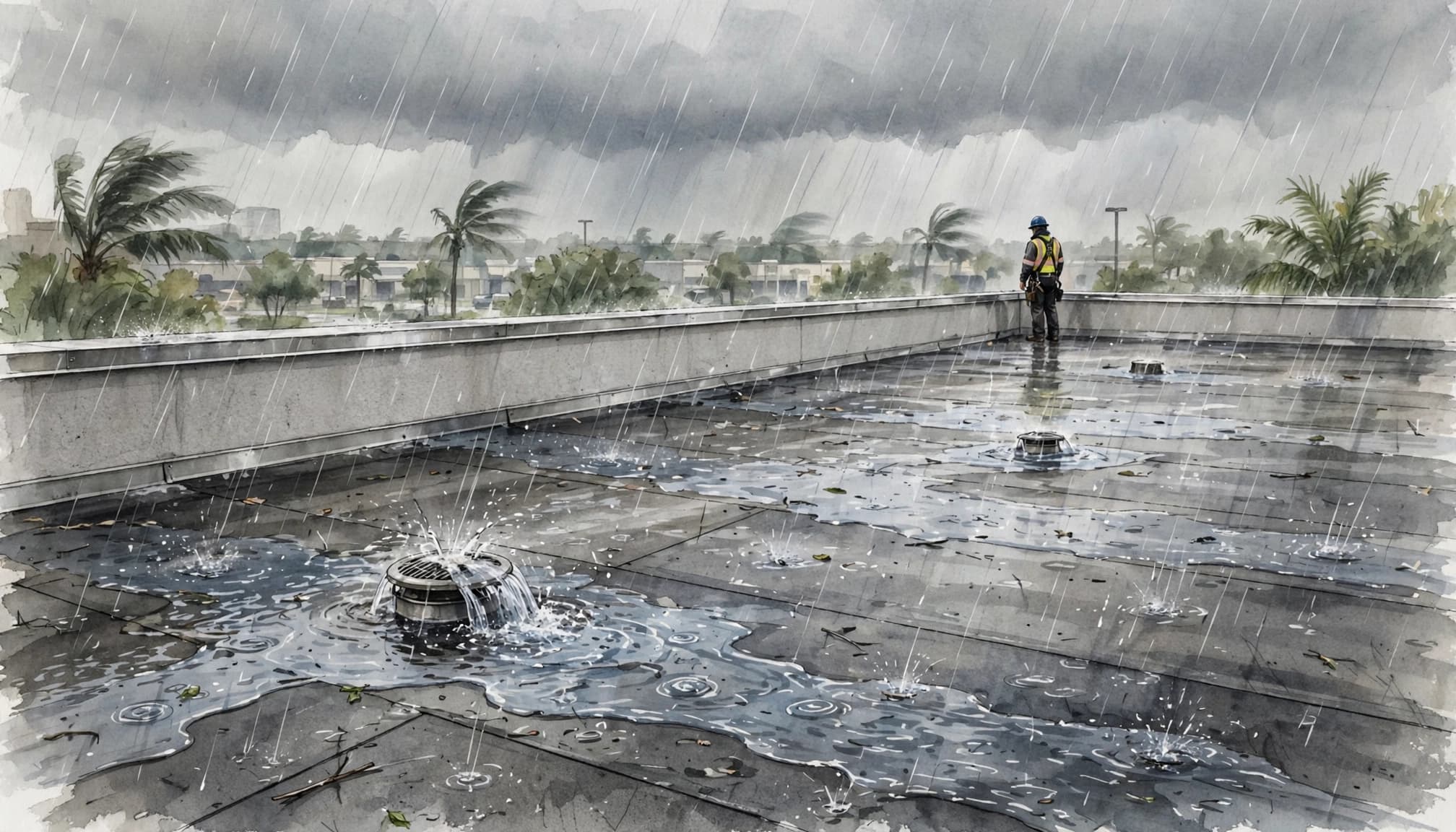
Interior signs point to moisture, not its source
Watch for ceiling discoloration, bubbling paint, damp drywall, musty odors, or recurring drips after rain. If the area grows after successive storms, that pattern helps a roofer connect the leak to weather exposure.
However, a stain alone can't confirm a roof leak. Air-conditioning condensate lines and plumbing pipes can also cause water marks. The timing matters: a stain that appears after rainfall makes a roof inspection a sensible first step. Estero roof leak detection explains how timing and other clues help narrow the possible source.
Roof and wall clues need context
From a safe location, look for visible changes such as loose coping, open joints, damaged membrane, or water staining on the exterior wall. Ponding near the parapet can keep vulnerable details wet for longer.
These clues help direct an inspection, but none proves the cause on its own. A contractor needs to assess how the roof surface, wall flashing, and parapet cap connect.
How Coping Failures Let Water In
Coping is the protective cap installed along the top of a parapet wall. It sheds rain away from the wall, but its joints and attachment details can become weak points.
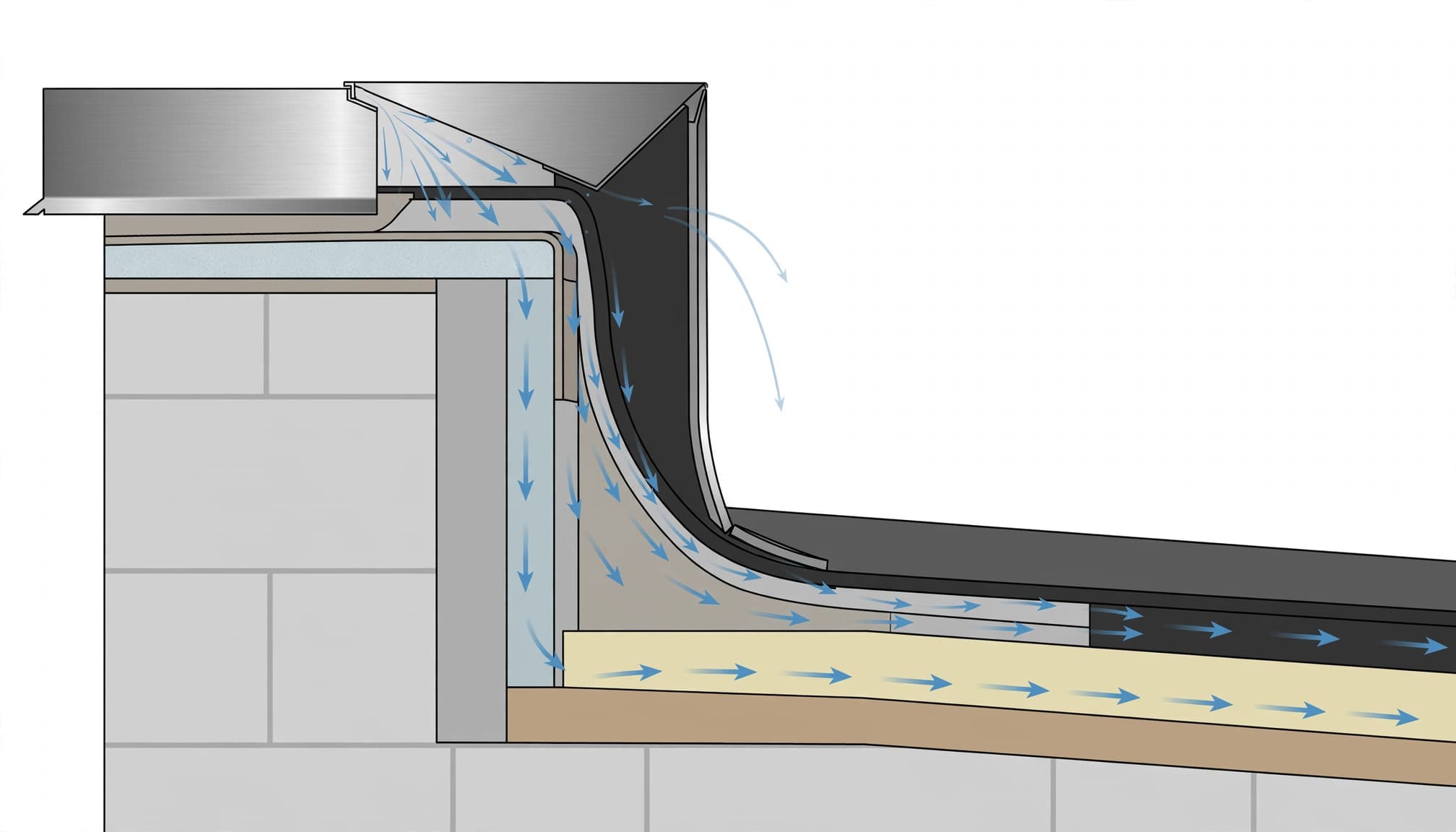
Open joints interrupt the water-shedding surface
Coping sections meet at joints that must limit water entry while accommodating movement. If a joint separates, deteriorates, or no longer sheds water correctly, rain can pass beneath the cap and reach the top of the wall.
Sealant may help protect a properly designed joint, but it can crack or lose adhesion over time. Reapplying sealant without addressing a damaged joint or supporting detail may leave the underlying path open.
Loose coping exposes the wall edge
Coping that shifts, lifts, or is improperly secured can leave gaps beneath the metal. Wind-driven rain can enter those openings, wet the wall, and reach the roof assembly. Loose sections may also indicate problems with the attachment system or substrate.
A visual gap doesn't reveal the full extent of damage. The metal, its supports, the wall beneath it, and the roof-side flashing all need assessment before a repair is selected.
Inadequate Flashing and Membrane Transitions
The parapet is a meeting point between the roof membrane and the vertical wall. Flashing and membrane terminations must connect those surfaces in a way that directs water outward.
Flashing must guide water over the roof
Flashing protects the transition where the roof meets the wall. If it is missing, damaged, poorly attached, or not integrated with the roofing membrane, water may run behind the flashing instead of back onto the roof.
Sealant alone doesn't create a complete flashing system. It can support a sound detail, but it can't replace correct integration between flashing, membrane, and wall components.
A weak termination can let water behind the membrane
The membrane needs a suitable connection to the wall flashing and a secure termination. If the edge is poorly detailed, detached, or incompatible with the roof assembly, water can get behind the membrane and spread beneath the roof surface.
Different systems require different materials and methods. TPO and modified bitumen, for example, don't share every seam or flashing procedure. Details should follow the requirements of the specific roofing system rather than a one-size-fits-all patch. For a closer look at low-slope materials, see our information on modified bitumen roofing for flat additions.
How a Roofer Traces Water Entry
A reliable diagnosis connects visible evidence with the way water moves across the roof. The inspection should include the suspected parapet and the nearby roof area, not only the spot above an interior stain.
Follow the path across the roof assembly
A qualified roofer can examine coping joints, loose metal, flashing overlaps, membrane edges, seams, and the wall surface. They may also look for damp insulation, damaged roof materials, or signs that water has traveled beneath the surface.
The route can be indirect. Water entering at a parapet may move along the deck or through insulation before reaching a ceiling. That's why applying a patch directly above a stain can miss the actual opening.
Consider drainage and other moisture sources
Standing water, blocked drains, or a poorly functioning overflow route can leave roof details exposed to water longer. A roofer should consider drainage along with the coping and membrane, particularly where the parapet contains a scupper.
Interior moisture can also come from plumbing or air-conditioning components. Comparing the timing and location of the stain with roof conditions helps distinguish a roof leak from other likely sources. A Naples roof leak diagnosis can involve checking multiple roof details rather than assuming the nearest visible defect caused the leak.
Why Parapet Repairs Depend on the Roofing System
There isn't one repair detail that suits every commercial parapet. The correct scope depends on the roof covering, membrane, flashing, coping attachment, and condition of the materials beneath them.
Match the repair to the existing assembly
A repair may involve a coping joint, loose metal, flashing, membrane termination, or more than one component. The materials and installation method need to work with the roof system already in place. On a TPO roof, for example, seam and flashing work must be compatible with that membrane. Modified bitumen has its own layers and installation requirements.
A qualified commercial roofing professional can assess the whole connection and explain what the repair addresses. Our TPO membrane seam leak repair information describes why a visible seam gap may not be the only issue around a leak.
Avoid improvised patches
Adding fasteners can puncture a membrane. An incompatible patch or sealant can complicate later work, while covering a gap without fixing loose coping or failed flashing can leave the entry route intact.
A clear repair scope should identify the damaged components and describe how the proposed work ties into the surrounding roof. If water has reached insulation or decking, those materials may also need attention. The repair should address both the water entry point and any affected parts of the assembly.
Drainage and Follow-Up Matter
A sound parapet detail still needs a clear route for water to leave the roof. Drainage problems can add stress to already vulnerable transitions.
Keep drains and scuppers in the inspection
Roof drains and parapet scuppers help carry water away. Debris or damage can slow that movement and contribute to ponding. The primary drainage path and any overflow route should be considered alongside the roof edge.
Scupper placement and construction must work with the roof assembly and drainage plan. See our guidance on flat roof drainage through parapet scuppers for more on coordinating drainage with parapet details.
Reassess after severe weather or roof work
Heavy rain and strong wind can shift debris, stress edge details, or reveal a weak connection. An inspection is sensible after a major storm, after work near rooftop equipment, or when a building develops new moisture signs.
Routine checks can catch open laps, lifted edges, cracked sealant, loose metal, damaged membrane, and standing water before a small defect affects more of the roof. Avoid walking on a wet roof or attempting a temporary repair. Our commercial roofing in Fort Myers page describes roofing services for local businesses.
FAQ About Commercial Parapet Leaks
Can loose coping cause an interior roof leak?
Yes. A gap beneath loose coping can admit rain to the wall or roof assembly. Water may then travel before it becomes visible indoors, so a ceiling stain may not sit directly below the opening.
Does caulk fix a leaking coping joint?
Caulk may be part of a repair when it suits the joint and roofing assembly. It won't correct loose coping, failed flashing, or a poorly connected membrane termination by itself. The underlying detail needs assessment.
Should we repair the coping or replace the roof membrane?
That depends on the roof's condition and the cause of the leak. A professional should assess the coping, flashing, membrane transition, and any affected insulation or decking before recommending the scope.
Protect the Roof at the Parapet
Parapet leaks often involve more than one detail. A failed coping joint, loose metal, inadequate flashing, or a weak membrane termination can allow water in, while the stain indoors may appear elsewhere.
The dependable next step is an assembly-specific assessment by a qualified commercial roofing professional. In Southwest Florida, sound roof-edge connections and clear drainage help protect the building when heavy rain and wind arrive.